Wormwood (Artemisia absinthium) is a traditional bitter herb used for digestive complaints, fevers, and intestinal parasites, and is best known as the flavoring agent in absinthe and vermouth. Its proposed anti-parasitic activity is attributed to sesquiterpene lactones such as absinthin and artabsin, along with volatile oil compounds that appear to disrupt parasite membranes and metabolism in vitro.
Despite centuries of traditional use, human evidence for wormwood’s anti-parasitic effects comes primarily from traditional practice and in-vitro or animal studies rather than large randomized controlled trials. The herb contains thujone, a neurotoxic compound that can trigger seizures at high doses or with prolonged use, making dosage form selection and duration critical for safety.
Key Takeaways
- Tea delivers the lowest thujone exposure; tinctures provide higher concentrations of both actives and thujone; essential oil is too dangerous for oral self-use.
- All forms should be limited to short courses (2–4 weeks max) with thujone-controlled, third-party tested products.
- Wormwood is not a substitute for medical diagnosis or prescription antiparasitic treatment; human clinical trial data are lacking.
- Contraindicated in pregnancy, breastfeeding, children, seizure disorders, and with anticonvulsants, antidepressants, and many liver-metabolized drugs.
- Source products with certificates of analysis for thujone content; start at the lowest traditional dose and monitor for neurotoxicity signs (tremor, confusion, seizure).
Understanding Wormwood's Active Compounds and Mechanisms
Wormwood’s therapeutic reputation rests on two main chemical groups: bitter sesquiterpene lactones (including absinthin and artabsin) and a volatile essential oil rich in thujone (both α- and β-thujone isomers). The sesquiterpene lactones stimulate bitter receptors, promoting digestive secretions and motility, while in vitro work suggests they and the volatile oil components can disrupt parasite membranes and metabolic pathways. These mechanisms are distinct from those of Artemisia annua (sweet wormwood), whose sesquiterpene lactone artemisinin is a validated frontline antimalarial drug.
Thujone acts as a GABA-A receptor antagonist, which explains both its neurotoxicity and its historical association with absinthe-related toxicity. At high doses or with chronic exposure, thujone can lower the seizure threshold. Regulatory bodies in many countries therefore limit thujone content in food and beverage products, and herbal extracts intended for supplementation should be thujone-controlled.
Wormwood Tea (Aqueous Infusion)
Wormwood tea is prepared by steeping 0.5–1 gram of dried herb (approximately 1 teaspoon) in 150 mL of hot water for 5–10 minutes, typically consumed 30 minutes before meals up to three times daily. The aqueous extraction favors the water-soluble bitter lactones and polysaccharides while extracting less of the volatile oil and thujone compared to alcohol or steam distillation. This makes tea the lowest-thujone dosage form, but also the least concentrated for volatile constituents.

Traditional use suggests tea for short-term digestive support (2–4 weeks maximum). Because thujone is poorly water-soluble, tea carries a lower neurotoxicity risk than tinctures or essential oil, but the total thujone intake still depends on herb quality, steeping time, and daily volume. Users should source herb from suppliers who test for thujone content and avoid prolonged courses beyond 4 weeks without professional supervision.
Wormwood Tincture (Hydroethanolic Extract)
Tinctures are typically made at a 1:5 herb-to-solvent ratio in 50–70% ethanol, with a common traditional dose of 1–2 mL (20–40 drops) up to three times daily. Alcohol efficiently extracts both the bitter lactones and the volatile oil, including thujone, resulting in a higher thujone delivery per dose than tea. Commercial tinctures vary widely in thujone concentration; products should carry a certificate of analysis confirming thujone levels.
Because of the higher thujone exposure, tincture courses are generally limited to 2–3 weeks with at least a 2-week break before any repeat use. Tinctures are contraindicated in individuals with seizure disorders, those taking anticonvulsants, antidepressants, or medications metabolized by CYP450 liver enzymes, and during pregnancy and breastfeeding. Dosing should start at the low end (0.5–1 mL) to assess tolerance.
Wormwood Essential Oil
Steam-distilled wormwood essential oil concentrates the volatile fraction, but its thujone content is not a fixed property of the species — it depends on the chemotype. Published GC/MS analyses span a wide range: a low-thujone chemotype was measured at 1.2% trans-thujone, with trans-sabinyl acetate dominating the oil instead[1], while wild Iranian material ran to 18.6% beta-thujone[2]. That variability is itself the argument against oral use: without a certificate of analysis you cannot know what you are swallowing. The arithmetic is unforgiving even at the bottom of that range. One gram of an oil containing 1% thujone delivers about 10 mg — already more than three times the 3 mg per person per day EMA permits from wormwood herb preparations[3]. Oral use of the essential oil is not a self-care option: a documented case of acute renal failure followed ingestion of oil of wormwood bought over the Internet[4].
Topical use (diluted to ≤1% in a carrier oil) has been explored for localized antimicrobial purposes, but dermal absorption of thujone can still occur, and safety data are lacking. Inhalation via diffusion should be brief and in well-ventilated spaces. Essential oil should never be used in pregnancy, breastfeeding, children, or anyone with a history of seizures or neurological conditions.

Thujone Limits, Regulatory Status, and Product Selection
No EU food authority has set a tolerable daily intake for thujone. The Scientific Committee on Food reviewed the evidence in 2002 and considered the available data inadequate to establish a TDI or ADI, a position quoted in the European Medicines Agency's own public statement on thujone[3]. Two numbers circulate and neither is a food-authority limit: the Council of Europe allocated a TDI of 0.01 mg/kg body weight per day in 1999, and a 2010 risk assessment proposed an ADI of 0.11 mg/kg body weight per day from a benchmark dose calculation[5]. The figure that actually governs herbal products is narrower and more useful: EMA sets a maximum of 3 mg of thujone per person per day from wormwood herb preparations, for no more than two weeks[3]. The EU beverage limits are 10 mg/kg for alcoholic drinks, except those made from Artemisia species, which are allowed 35 mg/kg, and 0.5 mg/kg for non-alcoholic Artemisia drinks[3] — so absinthe and vermouth sit in the higher tier, not the lower one. In the US, thujone-free wormwood extracts are permitted as flavorings in food, and no federal thujone limit applies to dietary supplements. Consumers should seek products labeled as “thujone-controlled” or “thujone-free” with third-party testing.

Because most human evidence for anti-parasitic effects derives from traditional use and preclinical models, wormwood should not replace medical diagnosis or prescription antiparasitic therapy for suspected infections. Self-treatment risks missing serious conditions, delaying effective care, and exposing the user to thujone toxicity. A healthcare provider can order appropriate stool testing and prescribe validated regimens when indicated.
Drug Interactions and Special Populations
Thujone’s GABA-A antagonism can counteract anticonvulsant medications (e.g., valproate, carbamazepine, benzodiazepines) and lower the seizure threshold. Wormwood may also induce or inhibit CYP450 enzymes (particularly CYP1A2, CYP2C9, CYP3A4), altering plasma levels of antidepressants, anticoagulants, and other hepatically metabolized drugs. The bitter lactones can increase gastric acidity, potentially affecting acid-sensitive medications.
Wormwood is contraindicated in pregnancy (traditional emmenagogue use and thujone neurotoxicity) and in breastfeeding — not because milk transfer has been demonstrated, but because it has never been studied: EMA states there are no preclinical or clinical studies permitting a reliable assessment of thujone exposure in pregnant women or children[3], and no published study has measured whether thujone reaches human breast milk at all. It should not be given to children. Individuals with porphyria, kidney disease, or active gastrointestinal ulceration should avoid it. Anyone on chronic medications should consult a pharmacist or physician before starting any wormwood preparation.
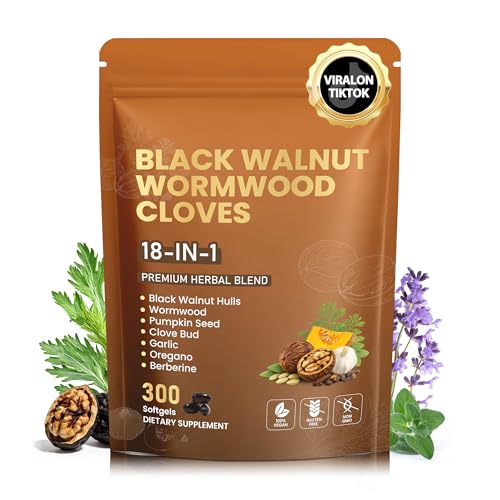
🛒 Where to Buy Wormwood (Artemisia absinthium)
- CleanseParasites Herbal Parasite Cleanse Powder Editor’s Pick
Contains wormwood alongside black walnut hull, cloves, and other traditional parasite-cleanse herbs. - Herb Pharm Intestinal Tract Defense with Wormwood
liquid, 1 fl oz — A Herb Pharm herbal formula containing wormwood extract, not a single-herb wormwood tincture - AlchePharma Organic Wormwood Capsules
capsules, 90 vegan capsules — Single-herb organic Artemisia absinthium, non-GMO and gluten-free - Nature’s Answer Black Walnut and Wormwood Alcohol-Free Extract
liquid, 2 fl oz, 2,000 mg per serving — Alcohol-free dropper extract; a black walnut and wormwood combination, not single-herb wormwood - Frontier Co-op Wormwood Herb, Cut and Sifted
cut and sifted dried herb, 16 oz bulk bag — Bulk dried herb for traditional tea preparation, kosher certified
As an Amazon Associate we earn from qualifying purchases. Quality varies widely — always choose a product with a published third-party test (COA) before buying.
A Note on the Evidence
Wormwood contains neurotoxic thujone; human anti-parasitic data are limited to traditional and preclinical evidence. It must not replace medical diagnosis or treatment. Consult a healthcare professional before use, especially if you take medications, have a seizure history, or are pregnant or breastfeeding.
Frequently Asked Questions
What is the typical dose for wormwood tea?
Traditional practice uses 0.5–1 g dried herb steeped in 150 mL hot water, taken up to three times daily before meals for no more than 2–4 weeks.
How does thujone content differ between tea, tincture, and essential oil?
Tea extracts minimal thujone (poor water solubility); tinctures extract moderate to high amounts depending on ethanol strength; essential oil concentrates it, though measured chemotypes vary widely (about 1% to 19% in published GC/MS analyses), which is why an oil without a certificate of analysis should never be taken orally.
Can wormwood treat a confirmed parasitic infection?
No. Human evidence is limited to traditional use and preclinical studies. Confirmed infections require medical diagnosis and prescription antiparasitic therapy.
Is wormwood safe during pregnancy or breastfeeding?
No. It is not recommended in pregnancy or breastfeeding. Wormwood is a traditional emmenagogue, an ethanolic wormwood extract reduced implantation sites and the rate of born pups in pregnant rats, and thujone is neurotoxic; whether thujone reaches human breast milk has never been measured.
What drugs interact with wormwood?
Anticonvulsants, antidepressants, anticoagulants, and other drugs metabolized by CYP450 enzymes; thujone opposes GABAergic drugs and may alter hepatic clearance.
How do I choose a safe wormwood product?
Select thujone-controlled or thujone-free extracts with third-party certificates of analysis; avoid essential oil for oral use; follow short-course limits.
References
- Judžentienė A et al. Low-Thujone A. absinthium L. (Wormwood) Essential Oils and Extracts with Potential Antioxidative/Prooxidant Activity. Molecules (2026). PMID 42197106
- Rezaeinodehi A, Khangholi S. Chemical composition of the essential oil of Artemisia absinthium growing wild in Iran. Pakistan Journal of Biological Sciences (2008). PMID 18814663
- Committee on Herbal Medicinal Products (HMPC). Public statement on the use of herbal medicinal products containing thujone, EMA/HMPC/732886/2010. European Medicines Agency. EMA public statement (PDF)
- Weisbord SD, Soule JB, Kimmel PL. Poison on line — acute renal failure caused by oil of wormwood purchased through the Internet. The New England Journal of Medicine (1997). PMID 9297113
- Lachenmeier DW, Uebelacker M. Risk assessment of thujone in foods and medicines containing sage and wormwood — evidence for a need of regulatory changes? Regulatory Toxicology and Pharmacology (2010). PMID 20727933
- Höld KM et al. Alpha-thujone (the active component of absinthe): gamma-aminobutyric acid type A receptor modulation and metabolic detoxification. Proceedings of the National Academy of Sciences of the United States of America (2000). PMID 10725394
These statements have not been evaluated by the Food and Drug Administration. This information is not intended to diagnose, treat, cure, or prevent any disease. Content is for informational purposes only and is not medical advice; consult a qualified healthcare provider before starting any supplement. As an Amazon Associate we earn from qualifying purchases.