Wormwood (Artemisia absinthium) is best known as the bitter herb behind absinthe and vermouth, and as a traditional remedy for digestive complaints and intestinal parasites. Its essential oil, distilled from the leaves and flowering tops, is a concentrated mixture of dozens of volatile compounds rather than a single active ingredient, and its composition varies noticeably depending on where and when the plant is harvested.
This article summarizes what chemical analyses have actually found in wormwood essential oil, what researchers have tested it against in the lab, and why the same oil that’s chemically interesting is also one that toxicologists watch closely. It is not a guide to using wormwood oil at home, and nothing here should be read as medical advice.
Key Takeaways
- Wormwood essential oil is a complex mixture of monoterpenes and sesquiterpenes, including compounds like absinthin and artabsin, and its exact composition varies significantly by region and growing conditions
- Thujone, a known neurotoxin linked to seizures at high doses, is a defining and concerning component; extracts intended for study or use should be thujone-controlled
- Laboratory research has flagged potential hepatic cell toxicity, so ‘natural’ does not mean risk-free
- Most antiparasitic research is in-vitro or agricultural (e.g., insecticidal studies), not human clinical trials
- Wormwood (Artemisia absinthium) is chemically and clinically distinct from Artemisia annua, the source of the antimalarial drug artemisinin
What's Actually in Wormwood Essential Oil
Gas chromatography studies of Artemisia absinthium essential oil consistently identify it as a complex blend of monoterpenes, sesquiterpenes, and their oxygenated derivatives, with the specific dominant compounds shifting by region, growing conditions, and extraction method. A 2024 analysis of essential oil components alongside smoke components from A. absinthium and Hagenia abyssinica documented this chemical complexity directly [1].
Regional comparisons make the variability clear. An analysis of essential oils from wild-growing Artemisia absinthium and Artemisia vulgaris in Serbia characterized the distinct volatile profiles of these related species [2], while a separate study of wild Artemisia absinthium growing in Iran found its own characteristic composition [3]. A broader review of the Artemisia genus’s chemical composition and pharmacological and toxicological profile situates these individual findings within the wider pattern seen across Artemisia species [4].

Because composition is not fixed, any claim about wormwood oil’s effects has to be read alongside the specific chemotype and extraction that was actually tested, not treated as a property of ‘wormwood oil’ in general.
The Thujone Question
Thujone is the compound most associated with wormwood and with absinthe’s historical reputation. It is a monoterpene ketone found in variable concentrations in Artemisia absinthium oil, and it is neurotoxic at sufficiently high doses, with documented links to seizures when the compound accumulates or is used over prolonged periods. This is the central reason regulatory bodies restrict thujone content in food and beverage products and why any extract intended for internal or topical research use is described as needing to be thujone-controlled.
The genus-wide toxicological review notes thujone as part of a broader pattern of bioactive but potentially harmful constituents across Artemisia species, underscoring that chemical complexity and safety risk are two sides of the same coin here [4].
Hepatic and Cellular Toxicity Research
Beyond thujone’s neurotoxic potential, laboratory research has examined how the whole essential oil interacts with liver cells. A 2024 study modeled the predictive toxicological effects of Artemisia absinthium essential oil on hepatic stellate cells, a cell type central to liver fibrosis and injury responses [5].

This kind of cell-based toxicology work is a reminder that ‘natural’ and ‘safe’ are not synonyms. The same sesquiterpene lactones and volatile compounds proposed to disrupt parasite membranes and metabolism in vitro can also act on human cells, which is why concentration, exposure duration, and formulation all matter to the risk profile.
Antiparasitic and Insecticidal Research Uses
Most of the research interest in wormwood oil’s ‘anti-parasitic’ properties comes from studies against agricultural pests and in-vitro models, not human clinical trials. A study of Moroccan Mentha spicata and Artemisia absinthium essential oils examined their chemical composition and toxicity against Pthorimaea operculella, the potato moth, an economically important agricultural pest [6].
This kind of insecticidal research is scientifically useful for understanding how wormwood’s sesquiterpene lactones (compounds like absinthin and artabsin) and volatile oil fractions act on insect physiology, but it does not establish that the oil is safe or effective against parasites in humans. The proposed mechanism, membrane and metabolic disruption in the target organism, is the same one cited for its historical use against intestinal parasites, though that traditional use predates the controlled dosing and safety data modern research requires.
It’s also worth distinguishing wormwood (Artemisia absinthium) clearly from its relative Artemisia annua (sweet wormwood), whose derived compound artemisinin is a validated, extensively studied antimalarial drug. The two plants share a genus and a common name pattern, but very different evidence bases.
Why Chemical Composition Varies So Much
The regional studies cited above [2] [3] point to a practical problem for anyone trying to generalize about ‘wormwood essential oil’: plant genetics, soil, climate, harvest timing, and distillation method all shift the relative proportions of thujone, sesquiterpene lactones, and other volatiles. The genus-wide review frames this variability as a defining feature of Artemisia chemistry rather than an exception [4].
This matters practically because a study result from one chemotype of wormwood oil does not automatically transfer to a different batch, region, or commercial product. Any research use or reported effect needs to be tied to the specific composition that was actually analyzed.
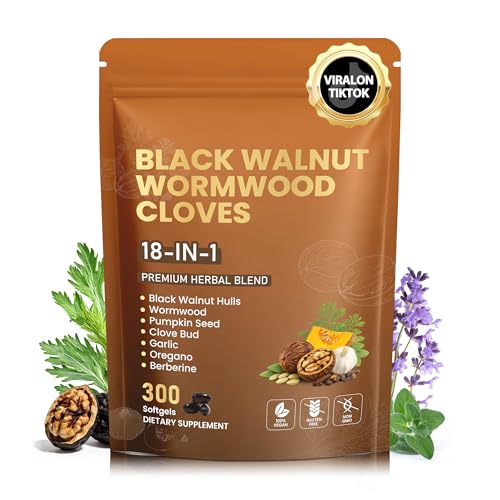
🛒 Where to Buy Wormwood (Artemisia absinthium)
- CleanseParasites Herbal Parasite Cleanse Powder Editor’s Pick
Contains wormwood alongside black walnut hull, cloves, and other traditional parasite-cleanse herbs. - Herb Pharm Intestinal Tract Defense with Wormwood
liquid, 1 fl oz — A Herb Pharm herbal formula containing wormwood extract, not a single-herb wormwood tincture - AlchePharma Organic Wormwood Capsules
capsules, 90 vegan capsules — Single-herb organic Artemisia absinthium, non-GMO and gluten-free - Nature’s Answer Black Walnut and Wormwood Alcohol-Free Extract
liquid, 2 fl oz, 2,000 mg per serving — Alcohol-free dropper extract; a black walnut and wormwood combination, not single-herb wormwood - Frontier Co-op Wormwood Herb, Cut and Sifted
cut and sifted dried herb, 16 oz bulk bag — Bulk dried herb for traditional tea preparation, kosher certified
As an Amazon Associate we earn from qualifying purchases. Quality varies widely — always choose a product with a published third-party test (COA) before buying.

A Note on the Evidence
Most of the antiparasitic evidence for wormwood essential oil comes from traditional use, in-vitro studies, and agricultural/insect research rather than large human clinical trials, and the oil carries real risks from thujone neurotoxicity and potential hepatic cell effects. It is contraindicated in pregnancy and breastfeeding, can interact with anticonvulsants, antidepressants, and liver-metabolized drugs, and should not replace medical diagnosis or treatment of a suspected parasitic infection; consult a doctor before use. This is informational only, not medical advice.
Frequently Asked Questions
Is wormwood essential oil the same as absinthium extract used in absinthe?
They come from the same plant, Artemisia absinthium, but absinthe production is regulated to limit thujone content, while an unregulated essential oil may have a very different and higher thujone concentration depending on distillation [4].
What is thujone and why is it a concern?
Thujone is a neurotoxic ketone compound found in wormwood oil that can trigger seizures at high doses or with prolonged use, which is why thujone-controlled formulations and short-course use are emphasized in safety discussions.
Does wormwood oil actually kill parasites?
Its sesquiterpene lactones and volatile compounds appear to disrupt parasite membranes and metabolism in in-vitro and insect studies, such as research on the potato moth [6], but there isn’t strong human clinical trial evidence to confirm this translates to treating human parasitic infections.

Is wormwood oil safe for the liver?
Toxicology research on hepatic stellate cells has modeled potentially harmful effects of the essential oil on liver cells, which is a reason for caution rather than casual use [5].
Is wormwood the same herb as sweet wormwood (Artemisia annua)?
No. Artemisia absinthium (wormwood) and Artemisia annua (sweet wormwood) are related but distinct species. Sweet wormwood is the source of artemisinin, a validated frontline antimalarial drug, while common wormwood’s compounds have a much thinner and mostly preclinical evidence base.
Why do studies report different chemical compositions for the same plant?
Essential oil composition is highly sensitive to growing region, climate, and extraction method, as shown by differing profiles reported in Serbian [2] and Iranian [3] wild-growing samples.
References
- Kebie N et al. Essential Oil and Smoke Components of Artemisia absinthium and Hagenia abyssinica. International journal of food science (2024). PMID 38938551
- Blagojević P et al. Chemical composition of the essential oils of serbian wild-growing Artemisia absinthium and Artemisia vulgaris. Journal of agricultural and food chemistry (2006). PMID 16787028
- Rezaeinodehi A et al. Chemical composition of the essential oil of Artemisia absinthium growing wild in Iran. Pakistan journal of biological sciences : PJBS (2008). PMID 18814663
- Sharifi-Rad J et al. Artemisia spp.: An Update on Its Chemical Composition, Pharmacological and Toxicological Profiles. Oxidative medicine and cellular longevity (2022). PMID 36105486
- Barreto II et al. Predictive toxicological effects of Artemisia absinthium essential oil on hepatic stellate cells. Toxicology in vitro : an international journal published in association with BIBRA (2024). PMID 38000518
- Mahboub F et al. Chemical composition and toxicity of Moroccan mentha spicata and Artemisia absinthium essential oils against Pthorimaea operculella, the potato moth. Natural product research (2025). PMID 38403974
These statements have not been evaluated by the Food and Drug Administration. This information is not intended to diagnose, treat, cure, or prevent any disease. Content is for informational purposes only and is not medical advice; consult a qualified healthcare provider before starting any supplement. As an Amazon Associate we earn from qualifying purchases.