Wormwood (Artemisia absinthium) is a bitter herb with a long history in traditional digestive tonics and as the flavoring behind absinthe and vermouth. It is sometimes marketed alongside other traditional botanicals for gut health or as a general ‘cleansing’ herb, which is part of why questions about its safety and drug interactions come up so often.
Because no specific clinical trial data on wormwood’s interactions with prescription drugs was available to draw on for this article, what follows is a conservative, mechanism-based discussion rather than a list of confirmed interaction studies. The goal is to explain plausible risks based on what is known about wormwood’s chemistry, especially thujone, so readers can have an informed conversation with a pharmacist or physician before combining it with any medication.
Key Takeaways
- Wormwood contains thujone, a neurotoxic compound that is the main driver of interaction concerns with anticonvulsants and other CNS-active drugs.
- Because wormwood constituents are processed by the liver, caution is warranted with any liver-metabolized medication.
- Wormwood is contraindicated in pregnancy and breastfeeding regardless of other medications involved.
- Human clinical trial data on wormwood’s drug interactions is limited; most evidence is traditional, in-vitro, or animal-based.
- Anyone on anticonvulsants, antidepressants, or liver-metabolized drugs should talk to a doctor or pharmacist before using wormwood.
Why Wormwood Is Different From Most Herbal Supplements
Wormwood contains thujone, a compound that acts on the central nervous system and is recognized as neurotoxic at high doses or with prolonged use. This is a meaningfully different risk profile than many gentler digestive herbs, because thujone’s effects are dose-dependent. It is worth being precise about the mechanism here, because the popular version of it is wrong: thujone is not a compound that stockpiles in the body between doses. It is metabolised quickly by cytochrome P450 enzymes [1], and in human liver preparations a single enzyme, CYP2A6, accounts for roughly 70 to 80 percent of that clearance [2]. What the data actually show is something more specific than accumulation: thujone inhibits CYP2A6 and CYP2B6, the very enzymes that clear it [2], and in rats and mice peak concentrations and total exposure rose more than proportionally as the dose went up, which points to elimination becoming saturated at higher intakes [3]. Those are in-vitro human and animal-model findings rather than human dosing studies, but the practical implication is the same one and it is the reason dose and duration both matter: clearance is efficient at low exposure and less so as exposure climbs.
Historically, thujone-related toxicity became well known through absinthe, and modern thujone-controlled extracts exist specifically to limit exposure. That regulatory response is itself a signal that wormwood is not a ‘take freely’ herb, and it is the main reason drug interaction questions matter more here than for something like ginger or peppermint.
Anticonvulsant Medications
Because thujone can affect neurological excitability and has been associated with seizures at high doses, combining wormwood with anticonvulsant medications raises an obvious theoretical concern: the herb could work against the very effect the medication is meant to provide, or lower the seizure threshold in someone whose epilepsy is otherwise controlled.
The mechanism behind that concern is reasonably well characterised. Alpha-thujone acts on the GABA-A receptor: it competitively inhibits binding at the channel site, suppresses GABA-induced currents in neurons, and produces poisoning signs closely resembling those of the classical GABA-A channel blocker picrotoxinin — signs that are relieved by diazepam and phenobarbital [1]. Since GABA is the brain’s principal inhibitory signal and several anticonvulsants work by enhancing it, a compound that blunts the same system is working against them by design rather than by coincidence. There is also a documented human poisoning: a case reported in the New England Journal of Medicine describes acute renal failure caused by oil of wormwood purchased over the internet [4]. That is a single case report involving concentrated essential oil rather than a supplement dose, but it establishes that the harm is real and not merely theoretical.
This concern is grounded in wormwood’s known neurotoxic profile rather than in dedicated interaction trials. Anyone taking anticonvulsants should treat wormwood as an herb to avoid or discuss directly with the prescribing physician, rather than something to try cautiously on their own.

Antidepressants and Other CNS-Active Drugs
Wormwood’s central nervous system activity also raises questions about interactions with antidepressants and other psychiatric medications. Combining a compound with neurotoxic potential and a drug that already modulates brain chemistry is the kind of pairing that warrants caution even in the absence of a specific documented case.
This is especially relevant for anyone on medications with a narrow safety margin or a history of mood instability, since unpredictable CNS effects are harder to attribute to a single cause once multiple substances are involved.
Liver-Metabolized Drugs
Many of wormwood’s active constituents, including sesquiterpene lactones and volatile oil compounds, are processed by the liver. Drugs that are also metabolized hepatically could theoretically compete for the same metabolic pathways, potentially altering how much of either substance ends up active in the bloodstream.
This is a principle that applies to herbs generally, but for wormwood it is not only that: the specific enzymes have been identified. Work in human liver preparations showed that alpha-thujone is metabolised principally by CYP2A6, with CYP3A4 and CYP2B6 contributing less [2], and a regulatory toxicological assessment reached the same ordering and explicitly flagged the potential for pharmacogenetic and metabolic interaction consequences [5].
One detail is worth stating plainly, because it points the opposite way to the usual ‘competition’ framing. Thujone does not merely get metabolised by CYP2A6 and CYP2B6, it inhibits both of them [2]. Inhibiting an enzyme that clears another drug tends to raise that drug’s levels rather than lower them, so the plausible risk for someone taking a medication handled by those pathways is more drug in circulation, not less. That is a mechanistic finding from laboratory preparations, not a measured clinical interaction, and it should not be read as a prediction about any particular prescription — but it is a concrete reason for caution in anyone taking medications with a narrow therapeutic window, or anyone with existing liver impairment.
Pregnancy, Breastfeeding, and Other High-Risk Groups
Wormwood is contraindicated in pregnancy and breastfeeding. This is a firm caution independent of any specific drug interaction, since thujone exposure in these contexts carries risks that go beyond medication interactions.
People with a seizure disorder, a history of neurological conditions, or significant liver disease should also treat wormwood as higher-risk, given its mechanism of action and how it is processed by the body.

What the Evidence Actually Supports
It’s worth being direct about the state of the evidence: most of what is known about wormwood’s anti-parasitic and digestive effects comes from traditional use and in-vitro or animal studies, not large randomized controlled trials in humans. That evidence gap extends to drug interactions specifically, where dedicated clinical interaction studies are not something this article can point to.
That absence of data is not reassurance. It means the safest approach is to assume caution is warranted wherever a plausible mechanism exists, rather than assuming no formal studies means no risk.
🛒 Where to Buy Wormwood (Artemisia absinthium)
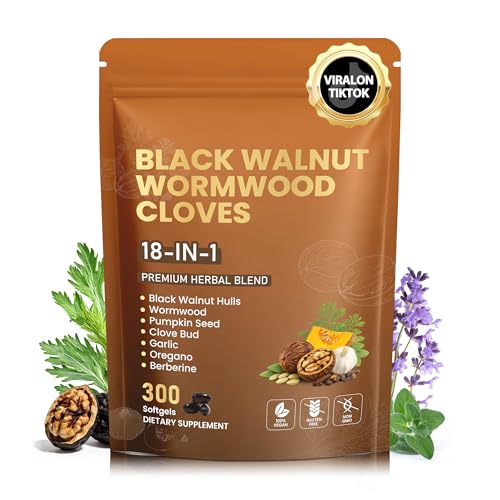
- CleanseParasites Herbal Parasite Cleanse Powder Editor’s Pick
Contains wormwood alongside black walnut hull, cloves, and other traditional parasite-cleanse herbs. - Herb Pharm Intestinal Tract Defense with Wormwood
liquid, 1 fl oz — A Herb Pharm herbal formula containing wormwood extract, not a single-herb wormwood tincture - AlchePharma Organic Wormwood Capsules
capsules, 90 vegan capsules — Single-herb organic Artemisia absinthium, non-GMO and gluten-free - Nature’s Answer Black Walnut and Wormwood Alcohol-Free Extract
liquid, 2 fl oz, 2,000 mg per serving — Alcohol-free dropper extract; a black walnut and wormwood combination, not single-herb wormwood - Frontier Co-op Wormwood Herb, Cut and Sifted
cut and sifted dried herb, 16 oz bulk bag — Bulk dried herb for traditional tea preparation, kosher certified
As an Amazon Associate we earn from qualifying purchases. Quality varies widely — always choose a product with a published third-party test (COA) before buying.
A Note on the Evidence
This article is informational, not medical advice, and reflects mechanism-based caution rather than confirmed interaction studies, since no specific clinical trial citations were available on wormwood’s drug interactions. Anyone taking anticonvulsants, antidepressants, or other prescription medications, or who is pregnant or breastfeeding, should consult a doctor before using wormwood in any form.
Frequently Asked Questions
Can I take wormwood with anticonvulsant medication?
This is not recommended without medical guidance. Wormwood’s thujone content has a known association with seizure risk at high doses, which could work directly against an anticonvulsant’s purpose.
Does wormwood interact with SSRIs or other antidepressants?
There is no dedicated interaction data to confirm or rule this out, but wormwood’s central nervous system activity makes combining it with antidepressants a reasonable thing to avoid or discuss with a prescriber first.
Is wormwood safe for someone with liver disease?
Caution is warranted. Wormwood’s active compounds are processed by the liver, and combining it with other liver-metabolized drugs, or using it with existing liver impairment, adds an avoidable variable.
Why is wormwood different from sweet wormwood (Artemisia annua)?
Sweet wormwood contains artemisinin, a validated antimalarial drug, while common wormwood (Artemisia absinthium) contains thujone and different sesquiterpene lactones like absinthin and artabsin. They are related plants but not interchangeable in terms of safety or evidence.
Is it safe to use wormwood during pregnancy?
No. Wormwood is contraindicated in pregnancy and breastfeeding, independent of any other medication a person may be taking.
What should I do before combining wormwood with a prescription medication?
Talk to a doctor or pharmacist first. Given wormwood’s thujone content and the lack of formal interaction studies, professional guidance is the safest way to assess risk for your specific medications and health history.
References
- Hold KM et al. Alpha-thujone (the active component of absinthe): gamma-aminobutyric acid type A receptor modulation and metabolic detoxification. Proc Natl Acad Sci U S A (2000). PMID 10725394
- Abass K et al. Metabolism of alpha-thujone in human hepatic preparations in vitro. Xenobiotica (2011). PMID 21087116
- Waidyanatha S et al. Toxicokinetics of alpha-thujone following intravenous and gavage administration of alpha-thujone or alpha- and beta-thujone mixture in male and female F344/N rats and B6C3F1 mice. Toxicol Appl Pharmacol (2013). PMID 23669748
- Weisbord SD et al. Poison on line – acute renal failure caused by oil of wormwood purchased through the Internet. N Engl J Med (1997). PMID 9297113
- Pelkonen O et al. Thujone and thujone-containing herbal medicinal and botanical products: toxicological assessment. Regul Toxicol Pharmacol (2013). PMID 23201408
These statements have not been evaluated by the Food and Drug Administration. This information is not intended to diagnose, treat, cure, or prevent any disease. Content is for informational purposes only and is not medical advice; consult a qualified healthcare provider before starting any supplement. As an Amazon Associate we earn from qualifying purchases.
