Wormwood (Artemisia absinthium) has a long history of traditional use for parasitic infections, and modern research has begun investigating its bioactive constituents — particularly sesquiterpene lactones such as absinthin and artabsin, along with volatile oil components — for effects against a range of parasites. Laboratory and veterinary studies suggest these compounds may disrupt parasite membranes, interfere with energy metabolism, and inhibit larval development.
Despite promising preclinical data, human clinical evidence remains limited, and safety concerns around the neurotoxic constituent thujone necessitate caution. This review summarizes the available research on wormwood’s antiparasitic activity, proposed mechanisms, and important limitations.
Key Takeaways
- Wormwood’s antiparasitic activity is primarily attributed to sesquiterpene lactones (absinthin, artabsin) and volatile oils, which may disrupt parasite membranes, metabolism, and development in vitro and in animal models.
- Veterinary studies show promise against nematodes (ovine, swine, feline), coccidia in poultry, and some protozoa, but extracts are often unstandardized and thujone content is rarely controlled.
- Human clinical evidence is absent; no randomized controlled trials support wormwood as a treatment for parasitic infections in people.
- Thujone neurotoxicity poses a real risk: extracts should be thujone-limited, used only short-term, and avoided in pregnancy, breastfeeding, seizure disorders, and with certain medications.
- Wormwood should not replace medical diagnosis or prescription antiparasitic therapy; consult a healthcare provider for suspected parasitic infections.
Key Bioactive Compounds and Proposed Mechanisms
Wormwood’s antiparasitic properties are primarily attributed to its sesquiterpene lactones (including absinthin and artabsin) and volatile oil constituents such as thujone, camphor, and 1,8-cineole. A comprehensive 2022 review of Artemisia species chemistry and pharmacology notes that sesquiterpene lactones can alkylate proteins and disrupt cellular processes in parasites, while volatile oils may compromise membrane integrity and mitochondrial function [1]. These mechanisms appear distinct from those of Artemisia annua (sweet wormwood), whose antimalarial activity is driven by the endoperoxide bridge in artemisinin.
In vitro studies have demonstrated that wormwood extracts can inhibit egg hatching and larval development in nematodes. For example, methanolic extracts from several medicinal plants including Artemisia absinthium reduced the embryonation rate of Ascaridia galli eggs in a dose-dependent manner, suggesting interference with early parasite developmental stages [2]. Similarly, aqueous extracts from six medicinal plants, including wormwood, showed anthelmintic activity against donkey strongyle larvae in vitro, with effects attributed to the combined action of polar and non-polar constituents [3].

Evidence Against Nematodes (Roundworms)
Several veterinary studies have evaluated wormwood against gastrointestinal nematodes in livestock and companion animals. A 2009 study found that extracts of Artemisia absinthium exhibited anthelmintic activity against ovine nematodes, with both aqueous and ethanolic extracts reducing larval viability and egg hatching in vitro [4]. In a 2024 trial on low-input swine farms, Artemisia absinthium administered in vivo reduced gastrointestinal parasite burdens, though the effect varied by parasite species and farm conditions [5].
Research on Haemonchus contortus (barber’s pole worm) — a major pathogenic nematode in ruminants — has included related Artemisia species. A 2025 study reported that Artemisia herba-alba (white wormwood) showed anthelmintic activity against H. contortus in beef cattle [6]. Another 2024 study explored peruvin and long-chain alcohols from Artemisia species for effects on H. contortus in a rodent model (Meriones unguiculatus), noting synergistic antiparasitic effects [7]. While these findings are relevant to the genus, direct extrapolation to A. absinthium requires caution.
Activity Against Protozoan Parasites
A 2018 review examined the activity of Artemisia species and their constituents against Trypanosoma species, the causative agents of trypanosomiasis (sleeping sickness and Chagas disease). The review highlighted that several Artemisia species, including A. absinthium, contain compounds with in vitro trypanocidal activity, likely mediated through oxidative stress induction and interference with parasite redox metabolism [8]. However, most data derive from cell-based assays rather than animal models or human studies.
A 2022 study investigated a potential herbal therapeutic for trichinellosis (caused by Trichinella spiralis), testing an ethanolic extract of Artemisia annua (sweet wormwood), a related species, in infected mice. The extract reduced adult worm counts in the intestine, but A. absinthium itself was not tested [9].

Veterinary Applications: Coccidia and Other Parasites
A 2024 systematic review and meta-analysis assessed the effects of Artemisia absinthium on coccidiosis in broiler chickens, caused by Eimeria species. The analysis found that supplementation with A. absinthium reduced oocyst shedding and improved performance parameters in infected birds, with the authors proposing that sesquiterpene lactones and flavonoids disrupt coccidian parasite development and host inflammatory responses [10]. This represents one of the more robust evidence syntheses for wormwood’s antiparasitic use in a veterinary context.
In naturally infected cats, a 2011 study evaluated the antiparasitic efficiency of Artemisia absinthium against Toxocara cati (feline roundworm). The treatment reduced egg counts in feces, though the study lacked a controlled design and used a crude extract without standardization of thujone content [11].
Safety Profile and Toxicological Considerations
The 2022 comprehensive review of Artemisia species toxicology underscores that thujone, a major component of wormwood volatile oil, is neurotoxic and can induce seizures at high doses or with prolonged exposure [1]. Thujone acts as a GABA-A receptor antagonist, lowering seizure threshold. Regulatory bodies in multiple jurisdictions limit thujone levels in food and herbal products. Wormwood extracts intended for therapeutic use should be thujone-controlled and restricted to short-term courses.
Additional safety concerns include contraindication in pregnancy and breastfeeding due to potential uterine stimulation and neurotoxicity risk to the fetus/infant. Wormwood may interact with anticonvulsants (by lowering seizure threshold), antidepressants, and drugs metabolized by hepatic cytochrome P450 enzymes. The same 2022 review notes that while traditional use supports a degree of tolerability, standardized toxicological data for chronic human use are lacking [1].
Limitations of Current Evidence and Research Gaps
The majority of antiparasitic evidence for wormwood comes from in vitro assays, animal models, and veterinary applications. No large, well-controlled randomized clinical trials in humans have been published to establish efficacy, optimal dosing, or safety for treating parasitic infections. Studies often use crude extracts with variable phytochemical profiles, making it difficult to attribute effects to specific constituents or to standardize preparations.
Species confusion is another limitation: several cited studies examine Artemisia herba-alba, Artemisia pallens, or unspecified Artemisia spp., not A. absinthium specifically [6][7][12]. While genus-level similarities exist, chemical composition varies significantly between species. Furthermore, a study on sesquiterpenoids from A. pallens for parkinsonism in C. elegans [12] is unrelated to antiparasitic mechanisms and should not be cited as evidence for wormwood’s antiparasitic effects.
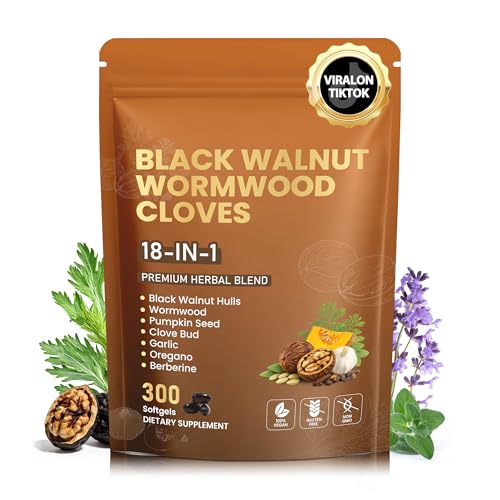
🛒 Where to Buy Wormwood (Artemisia absinthium)
- CleanseParasites Herbal Parasite Cleanse Powder Editor’s Pick
Contains wormwood alongside black walnut hull, cloves, and other traditional parasite-cleanse herbs. - Herb Pharm Intestinal Tract Defense with Wormwood
liquid, 1 fl oz — A Herb Pharm herbal formula containing wormwood extract, not a single-herb wormwood tincture - AlchePharma Organic Wormwood Capsules
capsules, 90 vegan capsules — Single-herb organic Artemisia absinthium, non-GMO and gluten-free - Nature’s Answer Black Walnut and Wormwood Alcohol-Free Extract
liquid, 2 fl oz, 2,000 mg per serving — Alcohol-free dropper extract; a black walnut and wormwood combination, not single-herb wormwood - Frontier Co-op Wormwood Herb, Cut and Sifted
cut and sifted dried herb, 16 oz bulk bag — Bulk dried herb for traditional tea preparation, kosher certified
As an Amazon Associate we earn from qualifying purchases. Quality varies widely — always choose a product with a published third-party test (COA) before buying.

A Note on the Evidence
This article summarizes preclinical and veterinary research; human clinical evidence is lacking. Wormwood contains neurotoxic thujone and is contraindicated in pregnancy, breastfeeding, and seizure disorders. It should not replace medical diagnosis or prescribed antiparasitic treatment. Consult a qualified healthcare provider before use.
Frequently Asked Questions
Does wormwood kill parasites in humans?
There are no published randomized controlled trials demonstrating that wormwood effectively treats parasitic infections in humans. Evidence comes from in vitro studies, animal models, and veterinary use [4][10][11].
What compounds in wormwood are responsible for antiparasitic effects?
Sesquiterpene lactones (absinthin, artabsin) and volatile oil constituents (including thujone, camphor, 1,8-cineole) are thought to disrupt parasite membranes, energy metabolism, and larval development [1][2].
Is wormwood safe for long-term use?
No. Wormwood contains thujone, which is neurotoxic and can trigger seizures with high doses or prolonged use. It should be used only in short courses with thujone-controlled extracts [1].

Can wormwood be used during pregnancy or breastfeeding?
Wormwood is contraindicated in pregnancy and breastfeeding due to thujone neurotoxicity and potential uterine stimulant effects [1].
How does wormwood differ from sweet wormwood (Artemisia annua)?
Artemisia absinthium (wormwood) contains absinthin and thujone; Artemisia annua (sweet wormwood) contains artemisinin, a validated antimalarial drug with a distinct endoperoxide mechanism. They are different species with different primary actives and safety profiles [1].
Are there drug interactions with wormwood?
Yes. Wormwood may interact with anticonvulsants (lowers seizure threshold), antidepressants, and drugs metabolized by liver cytochrome P450 enzymes. Consult a healthcare provider before combining with medications [1].
References
- Sharifi-Rad J et al. Artemisia spp.: An Update on Its Chemical Composition, Pharmacological and Toxicological Profiles. Oxidative medicine and cellular longevity (2022). PMID 36105486
- Poulopoulou I et al. In vitro evaluation of the effects of methanolic plant extracts on the embryonation rate of Ascaridia galli eggs. Veterinary research communications (2023). PMID 35727416
- Buza V et al. In vitro anthelmintic activity assessment of six medicinal plant aqueous extracts against donkey strongyles. Journal of helminthology (2020). PMID 32430089
- Tariq KA et al. Anthelmintic activity of extracts of Artemisia absinthium against ovine nematodes. Veterinary parasitology (2009). PMID 19070963
- Băieş MH et al. In vivo assessment of the antiparasitic effects of Allium sativum L. and Artemisia absinthium L. against gastrointestinal parasites in swine from low-input farms. BMC veterinary research (2024). PMID 38561770
- Hoshiki A et al. The anthelmintic activity of the white wormwood (Artemisia herba Alba) against Haemonchus contortus in beef cattle. Scientific reports (2025). PMID 39754020
- Arango-De la Pava LD et al. Exploring alternative anthelmintic compounds: Impact of peruvin, hentriacontane/1-nonacosanol and their synergistic effect on the health of Meriones unguiculatus infected with Haemonchus contortus. Veterinary parasitology (2024). PMID 39243681
- Naß J et al. The activity of Artemisia spp. and their constituents against Trypanosomiasis. Phytomedicine : international journal of phytotherapy and phytopharmacology (2018). PMID 30166103
- El-Kady AM et al. A potential herbal therapeutic for trichinellosis. Frontiers in veterinary science (2022). PMID 36082215
- Hezil N et al. Effects of Artemisia absinthium on broiler chicken coccidiosis: a systematic review and meta-analysis. Avian pathology : journal of the W.V.P.A (2024). PMID 38616734
- Yıldız K et al. Antiparasitic efficiency of Artemisia absinthium on Toxocara cati in naturally infected cats. Turkiye parazitolojii dergisi (2011). PMID 21618184
- Trivedi M et al. Sesquiterpenoids isolated from davana (Artemisia pallens Wall. ex DC) mitigates parkinsonism in Caenorhabditis elegans disease model. Biochemical and biophysical research communications (2022). PMID 35413535
These statements have not been evaluated by the Food and Drug Administration. This information is not intended to diagnose, treat, cure, or prevent any disease. Content is for informational purposes only and is not medical advice; consult a qualified healthcare provider before starting any supplement. As an Amazon Associate we earn from qualifying purchases.