Wormwood (Artemisia absinthium) has a long history of traditional use for digestive complaints and parasitic infections, and modern research has begun to characterize its antimicrobial potential. The plant’s essential oils and extracts contain diverse phytochemicals — including sesquiterpene lactones, volatile monoterpenes, and phenolic compounds — that demonstrate antibacterial and antifungal activity in laboratory settings.
This article summarizes findings from peer-reviewed studies on Artemisia absinthium and related Artemisia species, focusing on in vitro antimicrobial effects, proposed mechanisms, and the gap between laboratory data and clinical application. It is intended for informational purposes and does not constitute medical advice.
Key Takeaways
- Wormwood (Artemisia absinthium) essential oils and extracts show broad-spectrum antibacterial and antifungal activity in vitro, primarily attributed to thujone, chamazulene, sesquiterpene lactones, and other terpenes.
- Gram-positive bacteria (e.g., Staphylococcus aureus) are generally more susceptible than Gram-negative species; activity against H. pylori and Candida has also been reported in laboratory studies.
- Preliminary evidence from related Artemisia species suggests potential antibiotic adjuvant effects, such as reversing resistance to cefixime, but this has not been confirmed for A. absinthium in clinical settings.
- No human clinical trials support the use of wormwood extracts as primary treatment for any infectious disease; current evidence is preclinical and cannot replace standard antimicrobial therapy.
- Safety risks — notably thujone neurotoxicity, contraindications in pregnancy, and drug interactions — necessitate thujone-controlled, short-course use under professional guidance if used at all.
Phytochemical Basis of Antimicrobial Activity
The antimicrobial properties of wormwood are attributed to its complex essential oil composition and non-volatile constituents. A 2022 phytochemical profiling study of essential oils isolated from Artemisia absinthium leaves identified oleic acid derivatives as the most abundant compounds in the Artemisia absinthium oil (41.45%), and reported antimicrobial activity against bacterial and fungal strains, with fungal growth strongly inhibited [1]. The same study noted antioxidant and cholinesterase inhibitory effects, suggesting multi-target bioactivity.
Earlier work on Turkish Artemisia species characterized the essential oil of A. absinthium and confirmed antibacterial and antifungal effects against organisms including Staphylococcus aureus, Escherichia coli, and Candida species [2]. The oil’s composition varied by chemotype, with thujone, camphor, and 1,8-cineole as dominant constituents, and the authors linked antimicrobial potency to these volatile terpenes.

A 2022 review of Artemisia species with high biological value highlighted that sesquiterpene lactones (such as absinthin and artabsin) and flavonoids contribute to the genus’s broad-spectrum antimicrobial profile, and noted that A. absinthium extracts have shown activity against both Gram-positive and Gram-negative bacteria in multiple in vitro assays [3].
Antibacterial Effects Against Pathogenic Bacteria
Several studies have evaluated wormwood essential oils and extracts against clinically relevant bacteria. The 2005 study of Turkish Artemisia oils found that A. absinthium oil inhibited the growth of S. aureus, Bacillus subtilis, E. coli, and Pseudomonas aeruginosa, with minimum inhibitory concentrations (MICs) varying by strain [2]. Gram-positive bacteria were generally more susceptible than Gram-negative species, a pattern consistent with the outer membrane barrier in Gram-negative organisms.
A 2023 study on Artemisia lerchiana (a related species) compared its antibacterial effect with standard antibiotics and reported notable activity against S. aureus and E. coli, suggesting that Artemisia-derived compounds may offer complementary mechanisms to conventional drugs [4]. While not A. absinthium specifically, the findings support a broader genus-level antimicrobial potential.
Research on Artemisia afra (African wormwood) tested its extracts against S. aureus and E. coli with varying results, and some extracts promoted bacterial growth; the textile coating that showed antibacterial activity used Eucalyptus globulus extract, and activity fell significantly after washing [5]. These results offer limited support for material-based antimicrobial applications of Artemisia afra extracts.

Antifungal Activity and Anti-Biofilm Potential
Wormwood essential oils have demonstrated antifungal effects against Candida albicans and other yeasts. The 2005 Turkish Artemisia study reported that A. absinthium oil inhibited C. albicans and Aspergillus niger, with activity comparable to some synthetic antifungals at higher concentrations [2].
A 2004 phytochemical investigation isolated 3-butylisocoumarins from Asteraceae-Anthemideae (the tribe containing Artemisia) and identified antifungal constituents, providing a chemical basis for observed activity [6]. Though not exclusive to A. absinthium, these compounds are present in the genus.
Biofilm disruption is a critical challenge in persistent infections. While a 2021 study on silver nanoparticles and domiphen showed anti-biofilm effects against common pathogens, it tested silver nanoparticles synthesized with Artemisia argyi leaf extract rather than Artemisia absinthium [7]. However, the 2020 development of hydroxyapatite composites coated with A. absinthium demonstrated antimicrobial properties in a biomaterial context, suggesting potential for anti-biofilm surfaces [8].
Synergy with Conventional Antibiotics and Resistance Modulation
Emerging evidence suggests Artemisia compounds may potentiate existing antibiotics. A 2023 study on Artemisia brevifolia found that its extract enhanced the susceptibility of resistant bacterial strains to cefixime, a third-generation cephalosporin, by modulating resistance mechanisms such as efflux pump activity and membrane permeability [9]. Although this species differs from A. absinthium, the shared phytochemical classes (sesquiterpene lactones, flavonoids) imply a plausible genus-wide adjuvant effect.
The 2024 study on eight essential oils against bovine mastitis pathogens characterized the primary mode of action for Thymus capitatus oil (membrane disruption) and noted variable efficacy across the panel, which included several Artemisia oils [10]. While A. absinthium was not the focus, the comparative framework underscores that essential oil composition dictates mechanism — whether membrane damage, metabolic inhibition, or quorum sensing interference — and that wormwood’s specific profile warrants dedicated synergy studies.
Activity Against Helicobacter pylori and Gastrointestinal Relevance
A 2014 study screening Jordanian medicinal plants for anti-Helicobacter pylori activity included Artemisia species and found that certain extracts inhibited H. pylori growth in vitro [11]. This aligns with wormwood’s traditional use for gastric complaints and suggests a possible role in managing H. pylori-associated gastritis, though clinical validation is lacking.
The mechanism may involve sesquiterpene lactones disrupting bacterial membrane integrity and urease inhibition, but human data are absent. Any application for H. pylori would require standardized, thujone-controlled extracts and integration with established eradication regimens, not monotherapy.
Limitations of Current Evidence and Translational Gaps
The vast majority of antimicrobial data for wormwood derive from in vitro (test tube) and animal studies. No large, randomized controlled trials have evaluated A. absinthium extracts for treating bacterial, fungal, or parasitic infections in humans. The 2023 in vitro study showing Artemisia annua (sweet wormwood, not A. absinthium) hot water extracts active against SARS-CoV-2 Omicron variants [12] illustrates the risk of extrapolating between species and from cell culture to clinical outcomes.

Phytochemical variability — due to chemotype, geography, harvest time, and extraction method — leads to inconsistent essential oil composition and, consequently, variable antimicrobial potency. Standardization (e.g., thujone content, sesquiterpene lactone markers) is essential for reproducible research and any future therapeutic use.
Safety concerns, particularly neurotoxicity from thujone at high doses or with prolonged use, contraindication in pregnancy and breastfeeding, and potential interactions with anticonvulsants, antidepressants, and hepatically metabolized drugs, limit the feasibility of high-dose or long-term antimicrobial regimens. These constraints must be weighed against the modest and largely preclinical efficacy data.
🛒 Where to Buy Wormwood (Artemisia absinthium)
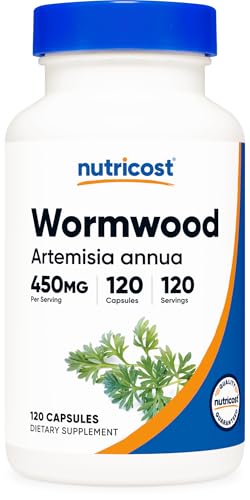
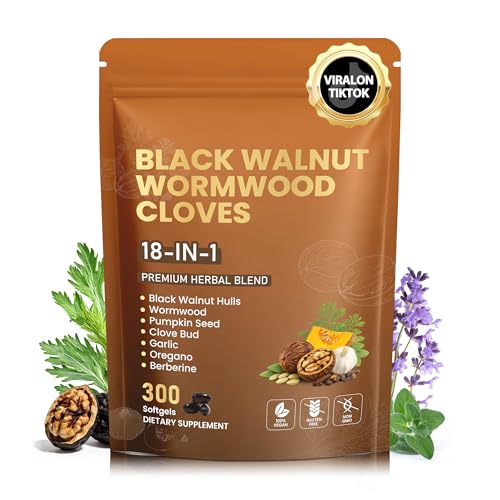
- CleanseParasites Herbal Parasite Cleanse Powder Editor’s Pick
Contains wormwood alongside black walnut hull, cloves, and other traditional parasite-cleanse herbs. - Herb Pharm Intestinal Tract Defense with Wormwood
liquid, 1 fl oz — A Herb Pharm herbal formula containing wormwood extract, not a single-herb wormwood tincture - AlchePharma Organic Wormwood Capsules
capsules, 90 vegan capsules — Single-herb organic Artemisia absinthium, non-GMO and gluten-free - Nature’s Answer Black Walnut and Wormwood Alcohol-Free Extract
liquid, 2 fl oz, 2,000 mg per serving — Alcohol-free dropper extract; a black walnut and wormwood combination, not single-herb wormwood - Frontier Co-op Wormwood Herb, Cut and Sifted
cut and sifted dried herb, 16 oz bulk bag — Bulk dried herb for traditional tea preparation, kosher certified
As an Amazon Associate we earn from qualifying purchases. Quality varies widely — always choose a product with a published third-party test (COA) before buying.

A Note on the Evidence
Wormwood’s antimicrobial effects are supported only by in vitro and animal data; no clinical trials validate its use for treating infections in humans. Thujone neurotoxicity, contraindication in pregnancy, and drug interactions require caution. Consult a healthcare provider before using wormwood products, especially if you have a seizure disorder, take medications, or suspect a parasitic or bacterial infection.
Frequently Asked Questions
Does wormwood extract kill bacteria in the human body?
Laboratory studies show wormwood essential oil inhibits growth of bacteria like Staphylococcus aureus and Escherichia coli in vitro [2][1], but there are no clinical trials demonstrating antibacterial efficacy in humans. It should not be used as a substitute for prescribed antibiotics.
Can wormwood treat H. pylori infection?
A 2014 study found that extracts from Artemisia species inhibited H. pylori in vitro [11], but human data are absent. Standard H. pylori eradication requires multi-drug regimens; wormwood is not a validated alternative.
Is wormwood effective against fungal infections like Candida?
In vitro studies report that A. absinthium essential oil inhibits Candida albicans and Aspergillus niger [2], and 3-butylisocoumarins from the Asteraceae family show antifungal activity [6]. Clinical evidence in humans is lacking.
Can wormwood extracts enhance the effect of antibiotics?
A study on Artemisia brevifolia showed its extract increased bacterial susceptibility to cefixime by modulating resistance mechanisms [9]. Similar effects have not been proven for A. absinthium in humans, and combining herbal products with antibiotics should only be done under medical supervision.
What are the main safety concerns with using wormwood for antimicrobial purposes?
Wormwood contains thujone, which is neurotoxic and can cause seizures at high doses or with prolonged use. It is contraindicated in pregnancy and breastfeeding, and may interact with anticonvulsants, antidepressants, and drugs metabolized by the liver. Extracts should be thujone-controlled and limited to short courses.
How does wormwood (Artemisia absinthium) differ from sweet wormwood (Artemisia annua) regarding antimicrobial use?
They are distinct species with different primary constituents: A. absinthium is rich in thujone and absinthin, while A. annua contains artemisinin, a validated antimalarial. Antimicrobial studies on one do not apply to the other; for example, in vitro anti-SARS-CoV-2 activity was shown for A. annua hot water extracts [12], not A. absinthium.
References
- Khan FA et al. Phytochemical Profiling, Antioxidant, Antimicrobial and Cholinesterase Inhibitory Effects of Essential Oils Isolated from the Leaves of Artemisia scoparia and Artemisia absinthium. Pharmaceuticals (Basel, Switzerland) (2022). PMID 36297333
- Kordali S et al. Determination of the chemical composition and antioxidant activity of the essential oil of Artemisia dracunculus and of the antifungal and antibacterial activities of Turkish Artemisia absinthium, A. dracunculus, Artemisia santonicum, and Artemisia spicigera essential oils. Journal of agricultural and food chemistry (2005). PMID 16302761
- Ekiert H et al. Artemisia Species with High Biological Values as a Potential Source of Medicinal and Cosmetic Raw Materials. Molecules (Basel, Switzerland) (2022). PMID 36234965
- Nametov A et al. Evaluation of the antibacterial effect of Artemisia lerchiana compared with various medicines. Brazilian journal of biology = Revista brasleira de biologia (2023). PMID 37971091
- Nortjie E et al. Assessing the Efficiency of Antimicrobial Plant Extracts from Artemisia afra and Eucalyptus globulus as Coatings for Textiles. Plants (Basel, Switzerland) (2024). PMID 38498494
- Engelmeier D et al. Antifungal 3-butylisocoumarins from Asteraceae-Anthemideae. Journal of natural products (2004). PMID 14738379
- Hu L et al. Combination of AgNPs and Domiphen is Antimicrobial Against Biofilms of Common Pathogens. International journal of nanomedicine (2021). PMID 34712048
- Raita MS et al. Multifunctional Hydroxyapatite Coated with Arthemisia absinthium Composites. Molecules (Basel, Switzerland) (2020). PMID 31963829
- Zafar A et al. Artemisia brevifolia Wall. Ex DC Enhances Cefixime Susceptibility by Reforming Antimicrobial Resistance. Antibiotics (Basel, Switzerland) (2023). PMID 37887253
- Aouadhi C et al. Antibacterial Effect of Eight Essential Oils against Bacteria Implicated in Bovine Mastitis and Characterization of Primary Action Mode of Thymus capitatus Essential Oil. Antibiotics (Basel, Switzerland) (2024). PMID 38534672
- Masadeh MM et al. Anti-Helicobactor pylori activity of some Jordanian medicinal plants. Pharmaceutical biology (2014). PMID 24251817
- Nair MS et al. SARS-CoV-2 omicron variants are susceptible in vitro to Artemisia annua hot water extracts. Journal of ethnopharmacology (2023). PMID 36804200
These statements have not been evaluated by the Food and Drug Administration. This information is not intended to diagnose, treat, cure, or prevent any disease. Content is for informational purposes only and is not medical advice; consult a qualified healthcare provider before starting any supplement. As an Amazon Associate we earn from qualifying purchases.