Wormwood (Artemisia absinthium) has a centuries-long reputation as a bitter digestive and anti-parasitic herb, showing up in traditional remedies long before anyone understood why it might work. Modern lab research has started to connect that traditional use to specific plant compounds, mainly a class of molecules called sesquiterpene lactones, that appear to interfere with the biology of single-celled parasites in test-tube and animal studies.
This article walks through what’s actually been studied: which compounds are involved, what mechanism has been proposed, and how far the evidence goes. It also draws a clear line between wormwood and its more famous relative, sweet wormwood (Artemisia annua), whose compound artemisinin is a proven malaria drug through a related but distinct pathway. None of this is a substitute for diagnosing or treating a parasitic infection medically.
Key Takeaways
- Wormwood’s traditional anti-parasitic reputation is tied to sesquiterpene lactones (absinthin, artabsin) and volatile oil compounds, a chemical class shared across the Asteraceae family.
- Lab studies on related Asteraceae sesquiterpene lactones show activity against trypanosomes and Leishmania, including visible damage to parasite structure, but this is largely in vitro evidence on related species, not clinical proof for wormwood itself.
- Wormwood (Artemisia absinthium) is chemically distinct from sweet wormwood (Artemisia annua), whose artemisinin is a proven anti-malarial through a different, better-established mechanism.
- Sesquiterpene lactones are being studied computationally as templates for future anti-parasitic drugs, which underscores how early-stage this research area still is.
- Wormwood contains thujone, a neurotoxic compound, so any use should be short-course, thujone-controlled, and never a substitute for a medical diagnosis of a suspected parasite infection.
Wormwood's Place in Traditional Medicine
Artemisia absinthium has long been used topically and internally across traditional medicine systems for gastrointestinal complaints, including formulations documented in Persian traditional medicine for digestive and GI-related conditions [1]. Its intensely bitter taste is itself part of the traditional rationale, bitters were thought to stimulate digestive function and create an inhospitable gut environment for parasites.
Bitter Artemisia species, wormwood included, also show up in a broader category of botanical anthelmintics (dewormers) that have drawn renewed research interest for managing gastrointestinal parasites, particularly in livestock and veterinary contexts where drug-resistant parasites are a growing problem [2]. That renewed interest is part of why the underlying chemistry is being studied more closely now.

The Sesquiterpene Lactones: Wormwood's Proposed Active Compounds
The compounds most closely linked to wormwood’s traditional anti-parasitic use are sesquiterpene lactones, a family that includes absinthin and artabsin, along with wormwood’s volatile oil constituents. Sesquiterpene lactones are widespread across the Asteraceae (daisy) family that wormwood belongs to, and multiple species in this family have been studied specifically for activity against single-celled parasites [3] [4].
Researchers have also tried to build structure-activity models, essentially, working out which specific molecular features of a sesquiterpene lactone predict stronger antiprotozoal effects. Quantitative structure-activity relationship (QSAR) studies of sesquiterpene lactones have looked at exactly this question, aiming to map chemical structure to potency against protozoan parasites [5]. This kind of modeling is part of why sesquiterpene lactones are treated as a research-worthy compound class rather than a folk remedy footnote.
The Proposed Mechanism: Disrupting Parasite Membranes and Metabolism
In laboratory (in vitro) studies, sesquiterpene lactones isolated from Asteraceae plants have shown trypanocidal activity, meaning activity against trypanosome parasites, the organisms behind diseases like Chagas disease and sleeping sickness [3]. Related work on Vernonieae species (also in the Asteraceae family) and their sesquiterpene lactones has similarly documented trypanocidal effects from plant-derived extracts [6].

Beyond trypanosomes, sesquiterpene lactones from other Asteraceae species have also demonstrated antileishmanial activity, activity against Leishmania parasites, with researchers documenting visible ultrastructural changes to the parasites after exposure, meaning the compounds appeared to physically disrupt the parasite’s internal structure and membranes rather than simply slowing its growth [4]. This ultrastructural damage is the closest thing to direct mechanistic evidence for how these compounds might interfere with parasite membranes and metabolism, though this evidence comes from a related sesquiterpene lactone-producing species, not from wormwood extract itself tested head-to-head.

Because this mechanism-level work spans multiple related Asteraceae species and several different parasite types, it should be read as evidence that the sesquiterpene lactone chemical class has anti-protozoal activity in the lab, not as direct proof that wormwood, specifically, produces the same effect in a living human gut.
Wormwood vs. Sweet Wormwood: Two Different Mechanisms
It’s worth being precise about which “wormwood” is doing what. Artemisia annua (sweet wormwood) contains artemisinin, a sesquiterpene lactone-related compound that is a validated, frontline treatment for malaria, a disease caused by a different type of parasite (Plasmodium) than the protozoans discussed above. Artemisinin’s core anti-malarial action is well established, and researchers have also studied its derivatives for entirely separate applications, including as potential anticancer agents, an area of ongoing investigation distinct from its anti-parasitic use [7].
Artemisia absinthium (common wormwood), the subject of this article, is a related but chemically distinct plant. Its sesquiterpene lactones (absinthin, artabsin) are structurally different from artemisinin, and its evidence base for anti-parasitic activity is much earlier-stage, built mostly from traditional use plus in vitro and animal data on related Asteraceae compounds, not large human trials. Conflating the two plants overstates what’s actually known about common wormwood.
From Lab Findings to Drug Design
Some of the more forward-looking research in this space isn’t testing wormwood extract directly at all, it’s using computational drug design methods to screen sesquiterpene lactones as potential starting points for new treatments against neglected tropical diseases, including parasitic infections that currently have few good treatment options [8]. This kind of computer-aided screening treats sesquiterpene lactones as a template for future drug candidates rather than as a ready-to-use herbal remedy.
That distinction matters for anyone considering wormwood itself: the research trajectory here is largely aimed at isolating, modifying, and testing individual compounds under controlled conditions, not at validating whole-plant wormwood extract as a treatment for a specific parasitic infection in humans.
🛒 Where to Buy Wormwood (Artemisia absinthium)
- CleanseParasites Herbal Parasite Cleanse Powder Editor’s Pick
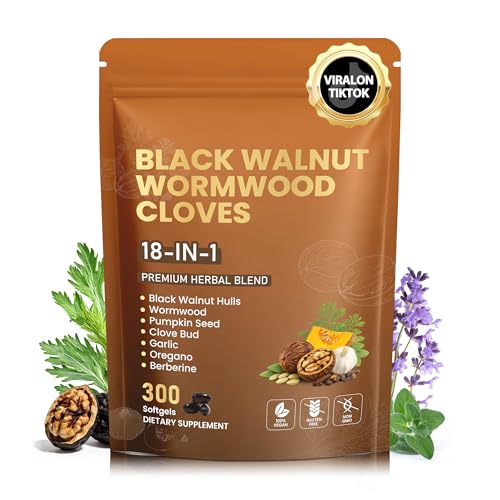
Contains wormwood alongside black walnut hull, cloves, and other traditional parasite-cleanse herbs. - Herb Pharm Intestinal Tract Defense with Wormwood
liquid, 1 fl oz — A Herb Pharm herbal formula containing wormwood extract, not a single-herb wormwood tincture - AlchePharma Organic Wormwood Capsules
capsules, 90 vegan capsules — Single-herb organic Artemisia absinthium, non-GMO and gluten-free - Nature’s Answer Black Walnut and Wormwood Alcohol-Free Extract
liquid, 2 fl oz, 2,000 mg per serving — Alcohol-free dropper extract; a black walnut and wormwood combination, not single-herb wormwood - Frontier Co-op Wormwood Herb, Cut and Sifted
cut and sifted dried herb, 16 oz bulk bag — Bulk dried herb for traditional tea preparation, kosher certified
As an Amazon Associate we earn from qualifying purchases. Quality varies widely — always choose a product with a published third-party test (COA) before buying.

A Note on the Evidence
The anti-parasitic mechanism described here is based on early-stage in vitro and animal research on sesquiterpene lactones from wormwood’s plant family, not large-scale human trials of wormwood itself, and thujone toxicity makes self-dosing risky. Anyone with a suspected parasitic infection, and especially pregnant or breastfeeding individuals or those on anticonvulsant or antidepressant medications, should consult a doctor rather than relying on wormwood alone.
Frequently Asked Questions
Is wormwood proven to kill parasites in humans?
No. Most of the anti-parasitic evidence comes from traditional use and in vitro or animal studies on sesquiterpene lactones from wormwood’s plant family, not large randomized human trials [3] [4]. It should not replace medical diagnosis or treatment of a suspected parasitic infection.
What compounds in wormwood are thought to be active against parasites?
Sesquiterpene lactones, particularly absinthin and artabsin, along with wormwood’s volatile oil, are the compounds most associated with its traditional anti-parasitic use, and this compound class has shown antiprotozoal activity in structure-activity studies [5].
Is wormwood the same as the herb used to make artemisinin?
No. Artemisinin comes from Artemisia annua (sweet wormwood), a related but distinct species. Artemisinin and its derivatives are studied separately, including for anticancer potential, and work through different, more thoroughly validated mechanisms than common wormwood [7].
How might wormwood's sesquiterpene lactones actually affect a parasite?
In vitro research on related Asteraceae sesquiterpene lactones has shown visible ultrastructural changes to parasites like Leishmania after exposure, suggesting disruption to the parasite’s internal structures and membranes [4]. Whether wormwood extract itself produces this same effect in the human body hasn’t been directly established.
Is wormwood safe to take for parasites?
Wormwood contains thujone, which is neurotoxic and can trigger seizures at high doses or with prolonged use. It’s contraindicated in pregnancy and breastfeeding, can interact with anticonvulsants and antidepressants, and should only be used short-term in thujone-controlled forms under professional guidance.
Could wormwood research lead to new anti-parasitic drugs?
That’s one of the more active research directions. Computer-aided drug design studies are using sesquiterpene lactones as starting templates to search for new treatments for neglected parasitic diseases, treating the compound class as a research lead rather than a finished remedy [8].
References
- Tafti LD et al. Traditional Persian topical medications for gastrointestinal diseases. Iranian journal of basic medical sciences (2017). PMID 28392893
- Jamil M et al. Botanical Anthelmintics: A Trending Approach to Control Gastrointestinal Diseases in Ruminants. Mini reviews in medicinal chemistry (2025). PMID 41169142
- Elso OG et al. Trypanocidal Activity of Four Sesquiterpene Lactones Isolated from Asteraceae Species. Molecules (Basel, Switzerland) (2020). PMID 32344932
- Caldas LA et al. Antileishmanial activity and ultrastructural changes of sesquiterpene lactones isolated from Calea pinnatifida (Asteraceae). Bioorganic chemistry (2019). PMID 30399466
- Schmidt TJ et al. Quantitative structure–antiprotozoal activity relationships of sesquiterpene lactones. Molecules (Basel, Switzerland) (2009). PMID 19513006
- Sosa A et al. Trypanocidal activity of South American Vernonieae (Asteraceae) extracts and its sesquiterpene lactones. Natural product research (2021). PMID 32182147
- Wen L et al. Artemisinin and Its Derivatives as Potential Anticancer Agents. Molecules (Basel, Switzerland) (2024). PMID 39202965
- Herrera Acevedo C et al. Computer-Aided Drug Design Using Sesquiterpene Lactones as Sources of New Structures with Potential Activity against Infectious Neglected Diseases. Molecules (Basel, Switzerland) (2017). PMID 28054952
These statements have not been evaluated by the Food and Drug Administration. This information is not intended to diagnose, treat, cure, or prevent any disease. Content is for informational purposes only and is not medical advice; consult a qualified healthcare provider before starting any supplement. As an Amazon Associate we earn from qualifying purchases.