Wormwood (Artemisia absinthium) has a long folk history as a bug deterrent, from sachets tucked into linens to sprigs rubbed on skin before outdoor work. That tradition has drawn some real laboratory attention in the last decade, with researchers testing wormwood essential oil and extracts against mosquitoes, ticks, flies, and other pests.
The evidence so far is almost entirely in vitro and laboratory-based: petri dish assays, treated filter paper, and small insect colonies, not field trials on human skin or clothing. This article walks through what the actual studies found, what compounds are thought to be responsible, and where the evidence stops short of supporting wormwood as a proven personal repellent.
Key Takeaways
- Lab studies show wormwood essential oil and extracts have measurable effects against ticks, flies, and other insects, spanning insecticidal and acaricidal activity and oviposition deterrence [1][2][3]
- Much of the evidence is in vitro, extract-based, or computational (molecular docking), not field or human-wear testing [4]
- Wormwood sits within a broader tradition of plant-based insect deterrents studied in ethnobotanical reviews and homemade-repellent comparisons [5][6]
- Wormwood contains thujone, a neurotoxic compound, so unregulated extracts or oils should not be applied liberally to skin without knowing concentration and thujone content
- No cited study demonstrates a finished, human-wear wormwood repellent product performing over realistic multi-hour outdoor exposure
The Core Evidence: Essential Oil Against Insects
One of the more direct data points comes from a 2014 study evaluating the antimicrobial, antioxidative, and insect repellent effects of Artemisia absinthium essential oil, which reported toxicity to fruit fly larvae alongside the oil’s antimicrobial and antioxidant properties [1]. This is one of the few studies to use the word ‘repellent’ directly in connection with wormwood essential oil, rather than ‘insecticidal’ or ‘acaricidal,’ which describe killing rather than deterring.
Insect-repellent research broadly separates two effects that matter for a plant like wormwood: repellency (the insect avoids the treated area or host) and toxicity/insecticidal action (the insect dies on contact or ingestion). Wormwood studies span both categories, and it’s worth keeping that distinction in mind when reading claims about it as a ‘repellent.’

Ticks: Acaricidal Activity Against Rhipicephalus sanguineus
A 2014 study tested Artemisia absinthium extract against Rhipicephalus sanguineus, the brown dog tick, and reported acaricidal activity, meaning the extract killed or impaired the ticks in the assay [2]. This falls under the insecticidal/acaricidal category rather than pure repellency, but it’s relevant to anyone interested in wormwood’s role in traditional pest control around animals.
Acaricidal lab results don’t translate automatically into a usable tick repellent for skin or clothing. Concentration, formulation, application method, and skin irritation thresholds (especially given wormwood’s thujone content) would all need separate testing before drawing conclusions about practical tick protection in humans.
Traditional Use in Iranian Medicine: A Review of Insecticidal Plants
A 2016 evidence-based review of medicinal plants used as insecticides and insect repellents in traditional Iranian medicine included Artemisia species among the plants surveyed, situating wormwood-type plants within a broader ethnobotanical tradition of pest deterrence [5]. Reviews like this compile historical and traditional use alongside available lab data, which is useful for context but is not itself new experimental evidence.

This kind of review is helpful for understanding why wormwood shows up in folk repellent preparations across different regions and eras, but it underscores that much of the ‘evidence’ behind these traditional uses is documentation of practice, not controlled trials of effectiveness.
Newer In Vitro and Molecular Docking Work
A 2025 study evaluated the insecticidal potential of five medicinal plants, including Artemisia absinthium, using in vitro assays combined with molecular docking analysis, a computational technique that models how plant compounds might bind to insect target proteins [4]. Molecular docking is a predictive, computer-based method; it suggests plausible mechanisms rather than confirming them in a living insect or on skin.

This kind of study adds mechanistic plausibility, helping explain which specific compounds (such as sesquiterpene lactones or volatile oil constituents) might interact with insect physiology, but it sits earlier in the research pipeline than whole-organism or field testing.
How Wormwood Compares to Homemade Repellent Traditions
A 2018 laboratory evaluation tested the repellency of traditional Czech homemade repellents against Aedes aegypti mosquitoes, a species relevant to disease transmission research [6]. Studies like this test folk repellent recipes as they’re actually made and used, which is a more realistic starting point than isolated essential oil in a lab flask, though Aedes aegypti lab assays still differ from real-world mosquito exposure and multi-hour wear testing.
Findings from this kind of study help calibrate expectations: some traditional recipes perform measurably in lab assays, others don’t, and effectiveness varies widely by formulation and mosquito species. Wormwood (Artemisia absinthium) was among the four recipes tested, and its solution showed no significant repellent effect against Aedes aegypti; only the clove and walnut leaf mixtures had a measurable initial effect, which faded within an hour.
Oviposition Deterrence: Stopping Flies From Laying Eggs
A 2024 study examined the oviposition deterrent activity of several wild plants against Chrysomya albiceps, a blowfly species of medical and veterinary importance (it can cause myiasis, a maggot infestation of tissue) [3]. Oviposition deterrence is a distinct and practically useful effect: rather than killing or repelling adult flies outright, it stops females from laying eggs on a treated substrate, which matters for wound care, livestock, and food storage contexts.
This adds another angle to wormwood-type plants’ pest-deterrent profile beyond skin-applied repellency, pointing toward potential agricultural or veterinary applications where research is still early.
Proposed Mechanisms Behind the Effects
Wormwood’s insect-active compounds are generally attributed to its essential oil constituents and sesquiterpene lactones such as absinthin and artabsin, the same broad compound classes linked to its historical use against internal parasites. In vitro, these compounds are thought to disrupt insect membrane integrity or interfere with normal metabolic processes, which could plausibly underlie both the acaricidal and oviposition-deterrent findings above.
It’s worth being direct about the gap between ‘a compound disrupts something in a dish’ and ‘a spray keeps mosquitoes off your arm for four hours outdoors.’ None of the cited studies test finished repellent products on human skin over realistic exposure times, so translating mechanism to real-world protection requires assumptions the current evidence doesn’t fully support.
🛒 Where to Buy Wormwood (Artemisia absinthium)

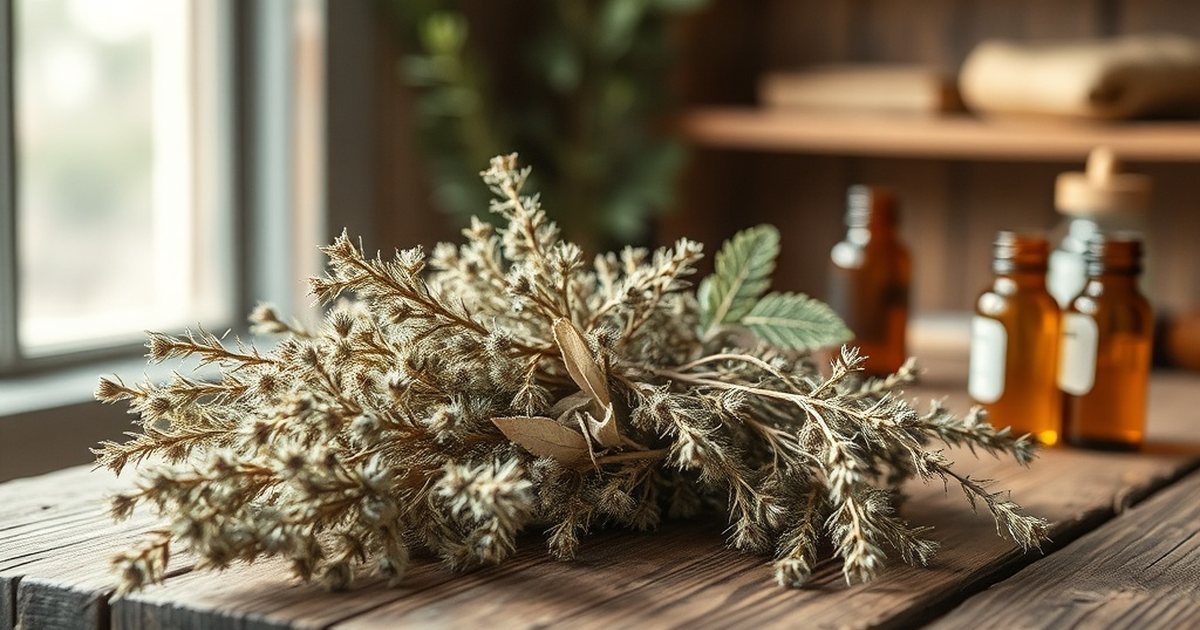
- CleanseParasites Herbal Parasite Cleanse Powder Editor’s Pick
Contains wormwood alongside black walnut hull, cloves, and other traditional parasite-cleanse herbs. - Herb Pharm Intestinal Tract Defense with Wormwood
liquid, 1 fl oz — A Herb Pharm herbal formula containing wormwood extract, not a single-herb wormwood tincture - AlchePharma Organic Wormwood Capsules
capsules, 90 vegan capsules — Single-herb organic Artemisia absinthium, non-GMO and gluten-free - Nature’s Answer Black Walnut and Wormwood Alcohol-Free Extract
liquid, 2 fl oz, 2,000 mg per serving — Alcohol-free dropper extract; a black walnut and wormwood combination, not single-herb wormwood - Frontier Co-op Wormwood Herb, Cut and Sifted
cut and sifted dried herb, 16 oz bulk bag — Bulk dried herb for traditional tea preparation, kosher certified
As an Amazon Associate we earn from qualifying purchases. Quality varies widely — always choose a product with a published third-party test (COA) before buying.
A Note on the Evidence
The evidence for wormwood’s insect-repellent and insecticidal effects comes from laboratory extract, essential oil, and computational studies, not from tested consumer repellent products or human-wear trials, and wormwood’s thujone content makes unregulated topical or internal use potentially unsafe. This is informational only; consult a healthcare provider or licensed pest-control professional before relying on wormwood for insect protection, especially around children, pregnancy, or areas with disease-carrying mosquitoes or ticks.
Frequently Asked Questions
Does wormwood repel mosquitoes on skin?
Lab evidence for wormwood essential oil’s effects on insects includes toxicity to fruit fly larvae [1], but no cited study tests a finished product worn on human skin over realistic outdoor exposure times, so real-world duration and effectiveness aren’t established.
Can wormwood be used against ticks?
A 2014 study found Artemisia absinthium extract had acaricidal (tick-killing) activity against Rhipicephalus sanguineus in lab assays [2]. This is contact toxicity in a controlled setting, not a demonstrated skin or clothing repellent against tick bites.
Is wormwood safe to apply directly to skin as a bug repellent?
Wormwood contains thujone, which is neurotoxic at high doses, and human insect-repellent testing on skin isn’t part of the cited evidence. Any topical use should rely on a thujone-controlled, properly formulated product, and this is not a substitute for EPA-registered repellents with established safety and efficacy data.
What is oviposition deterrence and why does it matter for wormwood?
Oviposition deterrence means a substance stops insects from laying eggs on a treated surface. A 2024 study found this effect in wild plants tested against the blowfly Chrysomya albiceps, relevant to wound myiasis and livestock contexts [3].
Is wormwood related to the other Artemisia used for malaria?
Yes, wormwood (Artemisia absinthium) is a relative of Artemisia annua (sweet wormwood), whose compound artemisinin is a validated antimalarial drug. They are different species with different primary active compounds; wormwood’s insect research centers on essential oil and sesquiterpene lactones, not artemisinin.
Do molecular docking studies prove wormwood repels insects?
No. A 2025 molecular docking study modeled how wormwood compounds might interact with insect target proteins computationally [4]. This predicts plausible mechanisms but does not confirm real-world insecticidal or repellent effects in living insects or on skin.
References
- Mihajilov-Krstev T et al. Antimicrobial, antioxidative, and insect repellent effects of Artemisia absinthium essential oil. Planta medica (2014). PMID 25317772
- Godara R et al. Acaricidal activity of extract of Artemisia absinthium against Rhipicephalus sanguineus of dogs. Parasitology research (2014). PMID 24288053
- Abu El-Ghiet UM et al. Oviposition Deterrent Activity of Some Wild Plants for Adult Females of Chrysomya albiceps with Medical and Veterinary Importance. Pakistan journal of biological sciences : PJBS (2024). PMID 38413393
- Yaseen M et al. Insecticidal potential of five medicinal plants: An In Vitro evaluation and molecular docking analysis of Artemisia absinthium. PloS one (2025). PMID 40591705
- Cheraghi Niroumand M et al. An Evidence-Based Review on Medicinal Plants Used as Insecticide and Insect Repellent in Traditional Iranian Medicine. Iranian Red Crescent medical journal (2016). PMID 27186389
- Kulma M et al. Laboratory evaluation of repellency of traditional Czech homemade repellents against Aedes aegypti. Epidemiologie, mikrobiologie, imunologie : casopis Spolecnosti pro epidemiologii a mikrobiologii Ceske lekarske spolecnosti J.E. Purkyne (2018). PMID 30602280
These statements have not been evaluated by the Food and Drug Administration. This information is not intended to diagnose, treat, cure, or prevent any disease. Content is for informational purposes only and is not medical advice; consult a qualified healthcare provider before starting any supplement. As an Amazon Associate we earn from qualifying purchases.