Wormwood (Artemisia absinthium) has a long folk history as a bitter tonic for infections, wounds, and intestinal complaints, and modern lab studies have taken a real interest in whether its essential oil and extracts actually kill or inhibit microbes. Much of this research happens in petri dishes and animal models rather than in people, so the honest answer is ‘promising in vitro, not proven in humans.’
This article walks through what laboratory and animal studies have found regarding wormwood’s activity against bacteria and fungi, the chemical compounds thought to be responsible, and where the evidence stops short of supporting any human treatment claim. This is informational content, not medical advice, and it should not be used to self-treat an active infection.
Key Takeaways
- Lab studies show wormwood essential oil and extracts have measurable activity against certain bacteria and fungi in culture [1] [2] [3]
- An animal model found wormwood extract helped against Staphylococcus aureus-infected wounds in rats [4]
- Proposed mechanisms center on sesquiterpene lactones and volatile oil compounds disrupting microbial membranes, based mostly on in vitro data [5]
- Related Artemisia research covers antiparasitic effects in trypanosomiasis and poultry coccidiosis, distinct from wormwood’s antimicrobial data [6] [7]
- Human clinical trial evidence is lacking, and thujone content makes wormwood unsuitable for casual or prolonged use
What the Antimicrobial Studies Have Found
Several lab studies have tested wormwood extracts and essential oils directly against bacteria in culture. A 2023 study screened phenolic compounds from Artemisia absinthium and found meaningful antimicrobial activity, proposing the plant as a potential complement to classical antibiotic approaches in future research [1]. Essential oil work from Croatia and France similarly demonstrated antimicrobial effects against a panel of test organisms [2].
In an animal model, wormwood extract was tested against Staphylococcus aureus-infected surgical wounds in rats, and researchers observed antimicrobial activity that supported its traditional use as a wound treatment [4]. A broader review of wormwood’s bioactive compounds, pharmacology, and pharmacokinetics also catalogs its antimicrobial reputation alongside other proposed effects [5].
These are laboratory and animal findings, not clinical trials in humans with infections. Antimicrobial activity ‘in a dish’ or in a rat model does not automatically translate into a safe or effective human treatment, especially given wormwood’s narrow safety margin from thujone content (more on that below).

Antifungal Activity in Lab Testing
Wormwood essential oil has also been screened against fungal organisms. The same Turkish study that evaluated antibacterial effects across several Artemisia species also tested antifungal activity of Artemisia absinthium essential oil specifically, alongside A. dracunculus, A. santonicum, and A. spicigera [3].
Separately, essential oils isolated from Artemisia scoparia and Artemisia absinthium leaves were phytochemically profiled and tested for antimicrobial effects, with researchers also measuring antioxidant activity and cholinesterase inhibition in the same study [8]. This kind of multi-target screening is common in early-stage plant compound research and doesn’t by itself establish a therapeutic dose or delivery method for fungal infections in people.
The Chemistry Behind the Activity
Wormwood’s proposed antimicrobial and antifungal effects are generally attributed to its essential oil constituents and phenolic compounds, rather than to a single ‘active ingredient.’ Reviews of the plant’s phytochemistry describe a mix of volatile oil compounds and sesquiterpene lactones (including absinthin and artabsin) that are thought to disrupt microbial cell membranes and metabolic processes in vitro [5] [9].
A broader survey of Artemisia species as sources of medicinal and cosmetic raw materials frames wormwood’s chemical profile within the wider genus, noting that related species share overlapping classes of bioactive compounds even though their concentrations and specific effects differ [10]. This is one reason wormwood is sometimes confused with its relative Artemisia annua (sweet wormwood): the two plants share a genus and some chemical overlap, but A. annua’s defining compound, artemisinin, is a distinct, clinically validated antimalarial drug, not something wormwood itself contains in meaningful amounts.

It’s worth being clear that ‘disrupts membranes in vitro’ is a mechanistic hypothesis drawn largely from lab conditions, not a demonstrated mechanism of action inside the human body at any specific dose.
Beyond Bacteria and Fungi: Related Antiparasitic and Antiparasitic-Adjacent Research
Wormwood’s antimicrobial reputation sits alongside a separate but related body of research on Artemisia species and parasites. A review of Artemisia species and their constituents examined activity against trypanosomiasis, a parasitic disease, again largely from lab and preclinical data [6].
In agricultural research, Artemisia absinthium has also been studied for its effects on coccidiosis in broiler chickens, a parasitic intestinal disease in poultry, with a systematic review and meta-analysis assessing the overall body of evidence [7]. This is animal husbandry research, not evidence of safety or efficacy in humans, but it does show that formal review-level scrutiny has been applied to wormwood’s antiparasitic claims in at least one production-animal context.
Alongside its antimicrobial profile, wormwood essential oil has also demonstrated antioxidative and insect-repellent effects in lab testing, suggesting the plant’s volatile compounds have several distinct biological activities rather than one single mechanism [11].
Historical Use Meets Modern Screening
Wormwood’s antimicrobial folklore is centuries old, tied to its use as a bitter digestive tonic, fever remedy, and wound wash, and its fame as the flavoring agent in absinthe and vermouth. A detailed historical and phytochemical review traces this lineage and catalogs modern advances in understanding the plant’s therapeutic, cosmetological, and culinary uses, including antimicrobial research [9].
What’s changed is that researchers are now trying to explain traditional use with modern lab methods: isolating specific compounds, testing them against named bacterial and fungal strains, and measuring inhibition zones or minimum inhibitory concentrations rather than relying on anecdote. That’s a meaningful step, but it is still early-stage screening work, not confirmation that a wormwood tea, tincture, or capsule will treat an infection in a person.
Why Lab Findings Don't Equal a Human Treatment
Almost all of the antimicrobial and antifungal evidence for wormwood comes from in vitro (test tube/petri dish) work or animal models, not large randomized controlled trials in humans [5]. Concentrations that inhibit microbes in a lab dish are often far higher, or delivered very differently, than what’s achievable or safe in a person taking an oral extract.
Wormwood also contains thujone, a compound that is neurotoxic and can trigger seizures at high doses or with prolonged use. Any responsible use of wormwood extracts should be thujone-controlled and limited to short courses, and it should not be used during pregnancy or breastfeeding. It can also interact with anticonvulsants, antidepressants, and other drugs metabolized by the liver.
For a suspected bacterial or fungal infection, lab evidence about wormwood should not substitute for medical diagnosis and treatment. These findings are a starting point for future research, not a green light for self-treatment.
🛒 Where to Buy Wormwood (Artemisia absinthium)

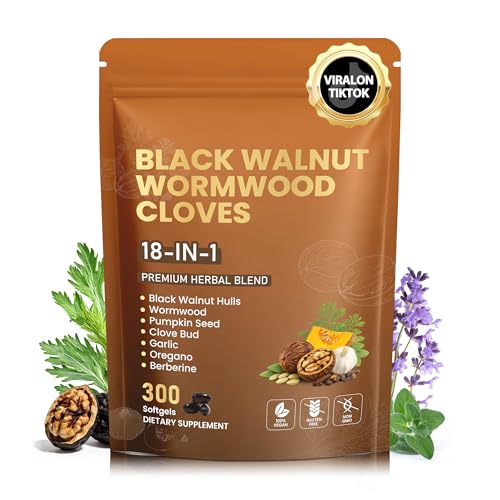
- CleanseParasites Herbal Parasite Cleanse Powder Editor’s Pick
Contains wormwood alongside black walnut hull, cloves, and other traditional parasite-cleanse herbs. - Herb Pharm Intestinal Tract Defense with Wormwood
liquid, 1 fl oz — A Herb Pharm herbal formula containing wormwood extract, not a single-herb wormwood tincture - AlchePharma Organic Wormwood Capsules
capsules, 90 vegan capsules — Single-herb organic Artemisia absinthium, non-GMO and gluten-free - Nature’s Answer Black Walnut and Wormwood Alcohol-Free Extract
liquid, 2 fl oz, 2,000 mg per serving — Alcohol-free dropper extract; a black walnut and wormwood combination, not single-herb wormwood - Frontier Co-op Wormwood Herb, Cut and Sifted
cut and sifted dried herb, 16 oz bulk bag — Bulk dried herb for traditional tea preparation, kosher certified
As an Amazon Associate we earn from qualifying purchases. Quality varies widely — always choose a product with a published third-party test (COA) before buying.
A Note on the Evidence
This article summarizes lab and animal research, not clinical evidence in humans, and wormwood carries real risks from thujone toxicity, drug interactions, and contraindications in pregnancy; anyone considering it, especially for a suspected infection, should consult a doctor rather than self-treat.
Frequently Asked Questions
Has wormwood been proven to treat infections in humans?
No. The antimicrobial and antifungal evidence for wormwood comes from lab (in vitro) and animal studies, not human clinical trials [5]. It should not replace medical diagnosis or treatment of a suspected infection.
What compounds in wormwood are thought to fight microbes?
Researchers point to sesquiterpene lactones like absinthin and artabsin, along with volatile essential oil compounds, as the likely active constituents behind its antimicrobial activity in lab testing [5] [9].

Does wormwood work against fungi as well as bacteria?
Lab studies have tested wormwood essential oil against both bacterial and fungal organisms, with antifungal activity reported alongside antibacterial effects in the same screening studies [3].
Is wormwood the same as the plant that makes the malaria drug artemisinin?
No. Artemisinin comes from Artemisia annua (sweet wormwood), a related but distinct species. Common wormwood (Artemisia absinthium) has its own separate chemical profile and is not a source of artemisinin.
Is wormwood safe to take for its antimicrobial effects?
Not without caution. Wormwood contains thujone, which is neurotoxic and can cause seizures at high doses or with prolonged use, and it’s contraindicated in pregnancy and breastfeeding. Extracts should be thujone-controlled and used only short-term, if at all, and only under medical guidance.
Has wormwood been studied for parasites too, not just bacteria and fungi?
Yes, separately from its antimicrobial research, Artemisia species including wormwood have been studied for activity against trypanosomiasis and, in poultry, coccidiosis, though this is a distinct body of evidence from the antibacterial/antifungal studies [6] [7].
References
- Liu Z et al. New Evidence for Artemisia absinthium as an Alternative to Classical Antibiotics: Chemical Analysis of Phenolic Compounds, Screening for Antimicrobial Activity. International journal of molecular sciences (2023). PMID 37569422
- Juteau F et al. Composition and antimicrobial activity of the essential oil of Artemisia absinthium from Croatia and France. Planta medica (2003). PMID 12624823
- Kordali S et al. Determination of the chemical composition and antioxidant activity of the essential oil of Artemisia dracunculus and of the antifungal and antibacterial activities of Turkish Artemisia absinthium, A. dracunculus, Artemisia santonicum, and Artemisia spicigera essential oils. Journal of agricultural and food chemistry (2005). PMID 16302761
- Moslemi HR et al. Antimicrobial Activity of Artemisia absinthium Against Surgical Wounds Infected by Staphylococcus aureus in a Rat Model. Indian journal of microbiology (2012). PMID 24293717
- Batiha GE et al. Bioactive Compounds, Pharmacological Actions, and Pharmacokinetics of Wormwood (Artemisia absinthium). Antibiotics (Basel, Switzerland) (2020). PMID 32585887
- Naß J et al. The activity of Artemisia spp. and their constituents against Trypanosomiasis. Phytomedicine : international journal of phytotherapy and phytopharmacology (2018). PMID 30166103
- Hezil N et al. Effects of Artemisia absinthium on broiler chicken coccidiosis: a systematic review and meta-analysis. Avian pathology : journal of the W.V.P.A (2024). PMID 38616734
- Khan FA et al. Phytochemical Profiling, Antioxidant, Antimicrobial and Cholinesterase Inhibitory Effects of Essential Oils Isolated from the Leaves of Artemisia scoparia and Artemisia absinthium. Pharmaceuticals (Basel, Switzerland) (2022). PMID 36297333
- Szopa A et al. Artemisia absinthium L.-Importance in the History of Medicine, the Latest Advances in Phytochemistry and Therapeutical, Cosmetological and Culinary Uses. Plants (Basel, Switzerland) (2020). PMID 32825178
- Ekiert H et al. Artemisia Species with High Biological Values as a Potential Source of Medicinal and Cosmetic Raw Materials. Molecules (Basel, Switzerland) (2022). PMID 36234965
- Mihajilov-Krstev T et al. Antimicrobial, antioxidative, and insect repellent effects of Artemisia absinthium essential oil. Planta medica (2014). PMID 25317772
These statements have not been evaluated by the Food and Drug Administration. This information is not intended to diagnose, treat, cure, or prevent any disease. Content is for informational purposes only and is not medical advice; consult a qualified healthcare provider before starting any supplement. As an Amazon Associate we earn from qualifying purchases.