Wormwood, or Artemisia absinthium, has a long history as a bitter digestive herb and a traditional dewormer for livestock. Because most of what’s known about its anti-parasitic effects comes from veterinary and animal-model research rather than human trials, it’s worth looking directly at what that research actually tested, in which animals, against which parasites, and with what results.
This article summarizes three specific studies: one in sheep, one in a rodent model of a livestock parasite, and one lab study on the plant’s essential oil against a protozoan parasite. None of this is a substitute for veterinary or medical care, and results in sheep or gerbils don’t automatically apply to humans.
Key Takeaways
- Wormwood (Artemisia absinthium) extracts showed anthelmintic activity against gastrointestinal nematodes in sheep [1]
- A gerbil model was used to compare artemisinin and Artemisia extracts against Haemonchus contortus, a major livestock nematode [2]
- Wormwood essential oil showed leishmanicidal activity against Leishmania parasites in lab testing [3]
- These studies involve different parasites, preparations, and species, they don’t add up to a single unified ‘wormwood cures parasites’ finding
- Human evidence remains limited to traditional use plus in-vitro/animal data; thujone toxicity and lack of clinical trials mean this shouldn’t replace medical diagnosis or treatment
The sheep study: wormwood extracts against gastrointestinal nematodes
One of the more direct pieces of evidence comes from a 2009 study testing extracts of Artemisia absinthium against ovine (sheep) gastrointestinal nematodes, the roundworms that cause major productivity losses in grazing livestock [1]. The study evaluated anthelmintic (worm-killing or worm-suppressing) activity of wormwood extracts, part of a broader effort to find plant-based alternatives to synthetic dewormers as parasite resistance to conventional drugs has grown in livestock populations.
This kind of research matters for farmers and veterinary scientists looking for adjunct or alternative deworming strategies, but it says nothing about dosing, safety, or efficacy in humans. Sheep physiology, the parasite species involved (nematodes that infect ruminants), and the extraction methods used in these veterinary studies are specific to that context.

The gerbil model: comparing wormwood extracts to artemisinin against Haemonchus contortus
A 2011 study used gerbils (Meriones unguiculatus) as a lab model to test the effects of artemisinin and Artemisia extracts against Haemonchus contortus, a blood-feeding nematode that is one of the most economically damaging parasites in sheep and goats [2]. Gerbils are used here as a laboratory stand-in that allows researchers to study the parasite’s lifecycle and drug response under controlled conditions, rather than working directly in livestock for early-stage testing.
It’s worth being precise about the chemistry here: artemisinin is the antimalarial sesquiterpene lactone found in Artemisia annua (sweet wormwood), a different species from Artemisia absinthium. This study compared artemisinin itself alongside Artemisia extracts, which is a useful reminder that ‘wormwood’ research spans at least two distinct plants with different dominant compounds. Artemisinin is a validated frontline malaria drug; that validation does not automatically extend to A. absinthium or to anti-parasitic use outside malaria.
Essential oil studies: activity against Leishmania in the lab
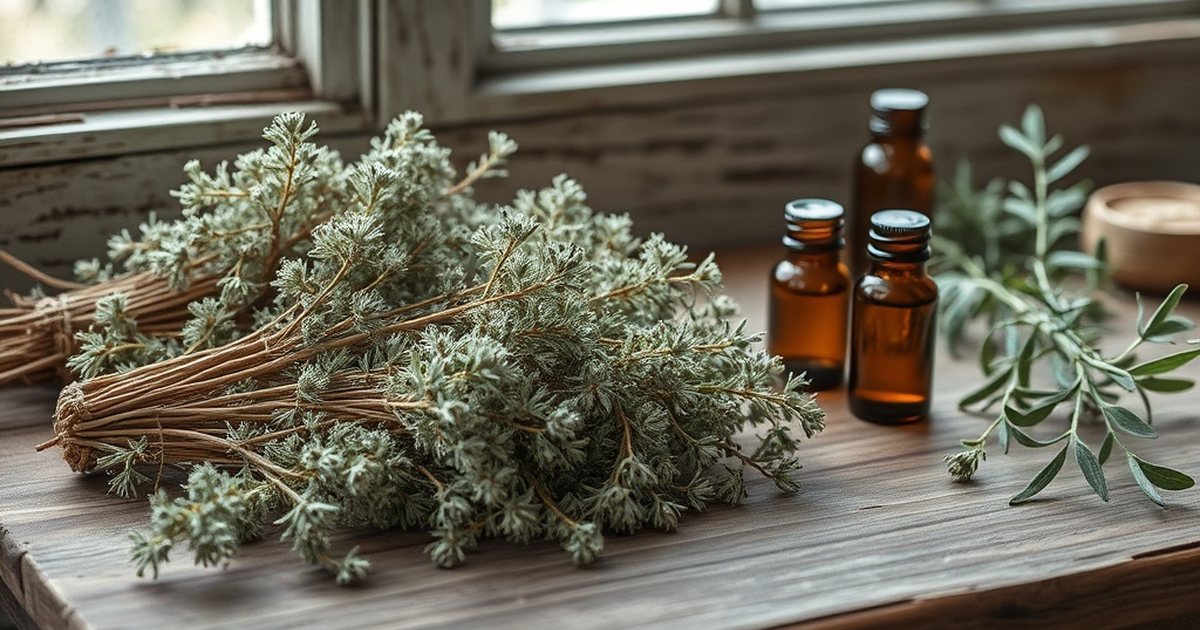
A 2014 study examined the chemistry and leishmanicidal (anti-Leishmania) activity of the essential oil extracted from Artemisia absinthium grown in Cuba [3]. Leishmania is a protozoan parasite, not a worm, transmitted by sandflies and responsible for leishmaniasis, a disease found in parts of the Americas, Africa, Asia, and southern Europe. This is a chemistry-and-lab-activity study, meaning the essential oil’s compounds were tested against the parasite outside a living animal, which is a common first step before any animal or clinical testing.
This kind of in-vitro finding establishes that certain compounds in wormwood essential oil can affect Leishmania in a laboratory dish or culture. It does not establish that ingesting or applying wormwood treats or prevents leishmaniasis in a living animal or person, or that it’s safe to use for that purpose.

What 'anti-parasitic' means across these three studies
It’s easy to lump all of this together as ‘wormwood kills parasites,’ but the three studies cited here test three different things: extracts against intestinal roundworms in sheep [1], extracts and artemisinin against a blood-feeding nematode in a gerbil model [2], and essential oil against a protozoan parasite in the lab [3]. Different parasites (nematodes vs. protozoa), different preparations (extracts vs. essential oil), and different testing stages (live animal vs. in-vitro) are all being described by the same general phrase.
The proposed mechanisms behind these effects are generally attributed to sesquiterpene lactones such as absinthin and artabsin, along with volatile oil compounds, which appear in laboratory settings to disrupt parasite cell membranes and interfere with their metabolism. That mechanistic picture comes mostly from in-vitro and animal-model work, not from tracing the compound’s action inside a treated human.
Why animal and lab findings don't translate directly to human use
Animal studies and in-vitro work are how anti-parasitic research typically starts, but the gap between ‘this worked in sheep’ or ‘this worked in a lab dish’ and ‘this is a safe, effective human treatment’ is large. Dosing that’s appropriate for a sheep’s body weight and digestive system doesn’t scale predictably to a human. Extraction methods, concentrations, and delivery routes used in these studies (oral extract in livestock, essential oil in a lab assay) are not the same as over-the-counter wormwood products.
Wormwood also contains thujone, a compound that is neurotoxic and can trigger seizures at high doses or with prolonged use. None of the three studies here were designed to establish safe human dosing, and thujone-related toxicity risk is a separate question from whether an extract shows anti-parasitic activity in a sheep or a gerbil.
The bigger picture: human evidence is limited
Most human evidence for wormwood’s anti-parasitic effects comes from traditional use and from in-vitro or animal studies, like the three summarized here, rather than large randomized controlled trials in people. That means the studies discussed in this article represent early-stage or preclinical evidence: useful for pointing researchers toward compounds worth studying further, but not evidence that wormwood extracts or essential oil are an established treatment for parasitic infection in humans.
Anyone with a suspected parasitic infection should get an actual diagnosis and treatment from a healthcare provider rather than relying on animal-study extrapolations.
🛒 Where to Buy Wormwood (Artemisia absinthium)
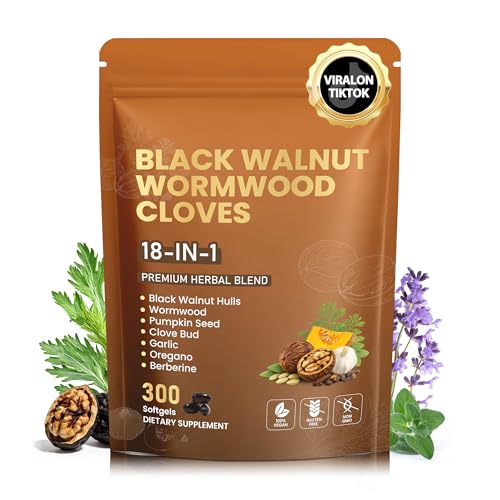
- CleanseParasites Herbal Parasite Cleanse Powder Editor’s Pick
Contains wormwood alongside black walnut hull, cloves, and other traditional parasite-cleanse herbs. - Herb Pharm Intestinal Tract Defense with Wormwood
liquid, 1 fl oz — A Herb Pharm herbal formula containing wormwood extract, not a single-herb wormwood tincture - AlchePharma Organic Wormwood Capsules
capsules, 90 vegan capsules — Single-herb organic Artemisia absinthium, non-GMO and gluten-free - Nature’s Answer Black Walnut and Wormwood Alcohol-Free Extract
liquid, 2 fl oz, 2,000 mg per serving — Alcohol-free dropper extract; a black walnut and wormwood combination, not single-herb wormwood - Frontier Co-op Wormwood Herb, Cut and Sifted
cut and sifted dried herb, 16 oz bulk bag — Bulk dried herb for traditional tea preparation, kosher certified
As an Amazon Associate we earn from qualifying purchases. Quality varies widely — always choose a product with a published third-party test (COA) before buying.

A Note on the Evidence
The studies referenced here are veterinary, animal-model, and in-vitro research, not human clinical trials, so they can’t establish safe dosing or effectiveness in people. Wormwood contains thujone, a neurotoxic compound with seizure risk at high doses, and is contraindicated in pregnancy and breastfeeding; anyone considering it, especially alongside anticonvulsants, antidepressants, or liver-metabolized medications, should talk to a doctor first, and this article is informational, not medical advice.
Frequently Asked Questions
Has wormwood been proven to kill parasites in humans?
No. The available evidence cited here comes from sheep [1], a gerbil model [2], and lab/essential-oil testing [3], not large human clinical trials. Human anti-parasitic use remains supported mainly by tradition and preclinical data.
What's the difference between wormwood and sweet wormwood (Artemisia annua)?
Artemisia absinthium (wormwood) is the classic bitter herb discussed in this article, while Artemisia annua (sweet wormwood) is a related but distinct species that produces artemisinin, a validated frontline antimalarial drug. The gerbil study tested artemisinin alongside Artemisia extracts, so it’s worth keeping the two plants separate when reading research [2].
Did wormwood work against intestinal worms or protozoa or both?
Different studies tested different parasite types: the sheep study looked at gastrointestinal nematodes (roundworms) [1], the gerbil study looked at Haemonchus contortus, another nematode [2], and the essential oil study looked at Leishmania, a protozoan parasite [3].

Is wormwood safe to use for parasites based on these studies?
These studies were not designed to establish human safety or dosing. Wormwood contains thujone, which is neurotoxic and can cause seizures at high doses or with prolonged use, and it’s contraindicated in pregnancy, breastfeeding, and alongside certain medications.
Why do researchers use gerbils to study a sheep parasite?
Gerbils serve as a controlled laboratory model that lets researchers study a parasite’s lifecycle and response to compounds without needing to run the experiment directly in livestock, which is more resource-intensive and harder to control [2].
Should someone with a parasitic infection try wormwood instead of seeing a doctor?
No. A suspected parasitic infection should be diagnosed and treated by a healthcare provider. The evidence discussed here is preclinical (animal and lab-based) and doesn’t establish wormwood as a substitute for medical treatment.
References
- Tariq KA et al. Anthelmintic activity of extracts of Artemisia absinthium against ovine nematodes. Veterinary parasitology (2009). PMID 19070963
- Squires JM et al. Effects of artemisinin and Artemisia extracts on Haemonchus contortus in gerbils (Meriones unguiculatus). Veterinary parasitology (2011). PMID 20943323
- Monzote L et al. Chemistry and leishmanicidal activity of the essential oil from Artemisia absinthium from Cuba. Natural product communications (2014). PMID 25632489
These statements have not been evaluated by the Food and Drug Administration. This information is not intended to diagnose, treat, cure, or prevent any disease. Content is for informational purposes only and is not medical advice; consult a qualified healthcare provider before starting any supplement. As an Amazon Associate we earn from qualifying purchases.