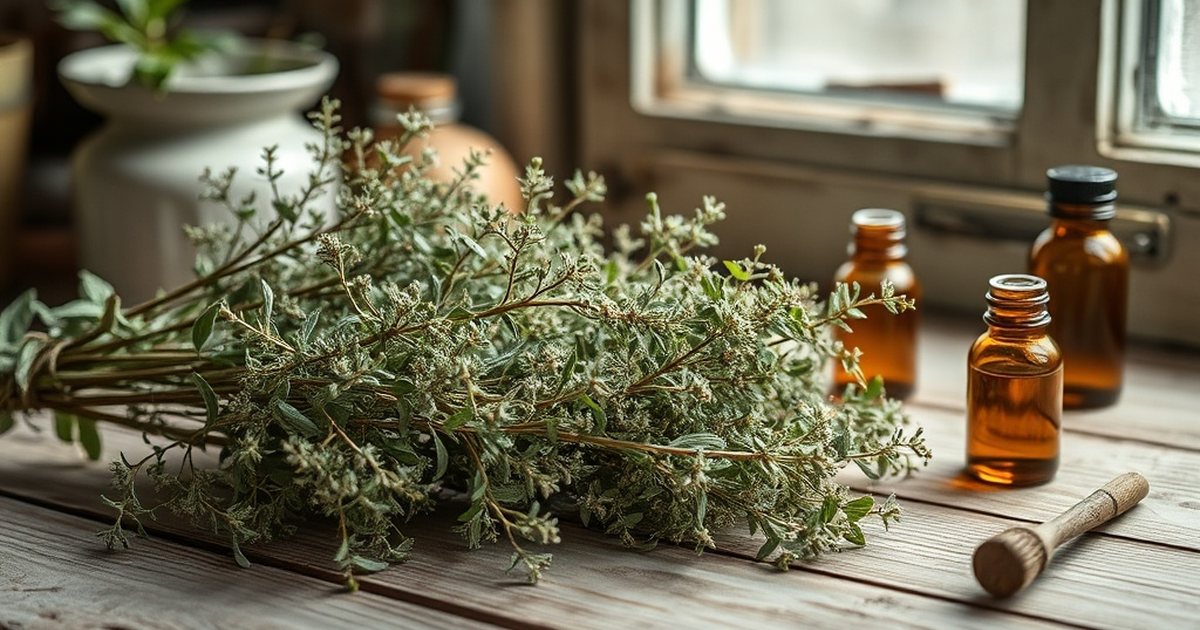
Wormwood (Artemisia absinthium) is one of the oldest bitter herbs in Western herbal medicine, historically used for digestive complaints, fevers, and intestinal worms, and later famous as the flavoring behind absinthe and vermouth. It’s also frequently confused with its relative Artemisia annua (sweet wormwood), whose compound artemisinin is a genuine frontline antimalarial drug backed by large clinical trials. Wormwood itself is a different plant with a different, much thinner evidence base.
This article separates what’s actually been tested in people from what’s only been shown in a petri dish or an animal model. That distinction matters most for wormwood’s best-known use, as an anti-parasitic, where the human clinical evidence is essentially absent, even though the traditional use and in-vitro rationale are old and consistent.
Key Takeaways
- Wormwood’s anti-parasitic reputation is based on traditional use and in-vitro mechanism studies, not human clinical trials measuring parasite clearance.
- Actual human RCTs exist for wormwood in Crohn’s disease inflammation, knee osteoarthritis (topical), and cosmetic dark circles, different conditions than the parasite use case.
- Cancer cell-line cytotoxicity studies (breast, colorectal, oral) are early lab findings, not evidence wormwood treats cancer in people.
- Thujone content makes wormwood genuinely risky at high doses or with prolonged use, seizure risk, liver drug interactions, and contraindication in pregnancy are documented concerns.
- Anyone considering wormwood for a suspected parasitic infection should get a proper medical diagnosis rather than relying on the herb alone.
The Anti-Parasitic Claim: Traditional Use, Not Clinical Proof
Wormwood’s proposed anti-parasitic mechanism centers on sesquiterpene lactones, compounds like absinthin and artabsin, along with volatile oil constituents that appear in vitro to disrupt parasite cell membranes and metabolic processes. This is a plausible pharmacological story, and it’s consistent with centuries of traditional use as a vermifuge (worm-expelling herb).
But none of the evidence in this review includes a randomized controlled trial of wormwood against a confirmed human parasitic infection. The anti-parasitic reputation rests on traditional use and on laboratory or animal-model work, not on trials measuring parasite clearance in real patients. That’s an important gap: a compound disrupting parasite membranes in a test tube doesn’t automatically translate into a safe, effective human dose, and no human trial closes that gap.

This pattern, strong traditional use plus in-vitro plausibility but no confirmatory human trial, is common across many herbal anti-parasitic claims, and wormwood is a clear example of it.
Where Wormwood DOES Have Human Trial Data
Wormwood isn’t untested in humans; it has been studied for other conditions, mostly inflammatory and dermatologic. A controlled clinical trial in Crohn’s disease patients found that wormwood was associated with suppressed tumor necrosis factor alpha (TNF-alpha) and accelerated healing markers compared to controls [1]. A broader meta-analysis of herbal medicines for inflammatory bowel disease also found herbal treatments, wormwood among them, associated with induction of clinical response and remission [2].
A small uncontrolled pilot trial looked at wormwood in poorly responsive early-stage IgA nephropathy, a kidney condition, and reported some benefit, but as an uncontrolled pilot, it can only generate a hypothesis, not confirm efficacy [3].

Topically, a randomized double-blind controlled trial compared a wormwood ointment and liniment against piroxicam gel (a standard NSAID topical) in knee osteoarthritis and found comparable effects [4]. And in a cosmetic context, a randomized double-blind placebo-controlled trial tested a wormwood eye cream for infra-orbital dark circles [5]. None of these trials tested wormwood for parasites, digestive complaints, or fever, the traditional uses most associated with the plant.
The In-Vitro and Preclinical Evidence: Interesting, Not Yet Clinical
A large share of recent wormwood research is laboratory-based cytotoxicity work, mostly in oncology contexts. A methanolic leaf extract showed in-vitro cytotoxic activity against MCF-7 human breast cancer cells, along with antibacterial and wound-healing activity in the same study [6]. Separate lab work found that a methanolic extract triggered apoptosis (programmed cell death) in HCT-116 human colorectal cancer cells, via changes in the Bax/Bcl-2 ratio, cell cycle arrest, caspase-3 activation, and mitochondrial membrane effects [7]. Another study found cytotoxic effects on an oral carcinoma cell line [8].
This is legitimate cell-culture research, but it is not the same thing as evidence that wormwood treats or prevents cancer in people. Cell-culture cytotoxicity is a first, exploratory step; the overwhelming majority of compounds that kill cancer cells in a dish never become viable human treatments, and none of these studies involved human dosing, safety data, or clinical outcomes.
Toxicology research adds a caution rather than a benefit: predictive toxicology work has evaluated wormwood essential oil’s effects on hepatic stellate cells (liver-related cells), flagging potential liver-relevant toxicity signals that deserve more attention rather than reassurance [9]. Separately, researchers have also characterized plant-derived nanoparticles with species-specific traits, including from Artemisia species, an early-stage materials-science line of inquiry unrelated to any therapeutic claim [10].
Thujone: The Safety Issue That Matters Most
The most clinically important fact about wormwood isn’t a benefit, it’s a risk. Wormwood contains thujone, a compound with documented neurotoxic potential; forensic and toxicological analysis has examined thujone as a possible cause of “absinthism,” the historical syndrome of seizures and neurological symptoms linked to habitual absinthe consumption, and concluded that thujone plays none, or only a minor role, in that syndrome at the concentrations found in absinthes made to historic recipes [11].
This is why any wormwood product intended for internal use should be thujone-controlled, and why extracts should be limited to short courses rather than ongoing daily use. High doses or prolonged use raise real seizure risk, and the drug interaction profile compounds the concern: wormwood can interact with anticonvulsants, antidepressants, and other medications metabolized by the liver, plus it is contraindicated in pregnancy and breastfeeding.
Allergy Considerations
Wormwood belongs to the Asteraceae (daisy/ragweed) plant family, and cross-reactive pollen allergies within this family are well documented clinically. Specific IgE antibody testing, the kind of laboratory allergen assay methodology described in clinical immunology literature [12], is the standard way allergy to a botanical like wormwood would be confirmed if a reaction were suspected, rather than guessing from symptoms alone. Anyone with known ragweed, chrysanthemum, or related plant allergies should be cautious with wormwood products, whether ingested or applied topically.
Reading the Evidence Gap Correctly
Put together, the picture is: real, if modest, human trial data for inflammatory bowel conditions, topical osteoarthritis pain, and a cosmetic dark-circle application; promising but purely preclinical cytotoxicity data in cancer cell lines; a documented, serious neurotoxicity risk from thujone; and essentially no human clinical trial evidence for the anti-parasitic use that made wormwood famous in the first place.

That last gap is the one worth sitting with. Traditional use over centuries is a reason to take a compound’s plausibility seriously, and in-vitro membrane disruption of parasites is a reasonable mechanistic story. But neither substitutes for a trial in people with a confirmed parasitic infection, measuring actual clearance and safety. Until that trial exists, anti-parasitic use of wormwood remains a traditional and laboratory-supported hypothesis, not a clinically proven treatment.
🛒 Where to Buy Wormwood (Artemisia absinthium)
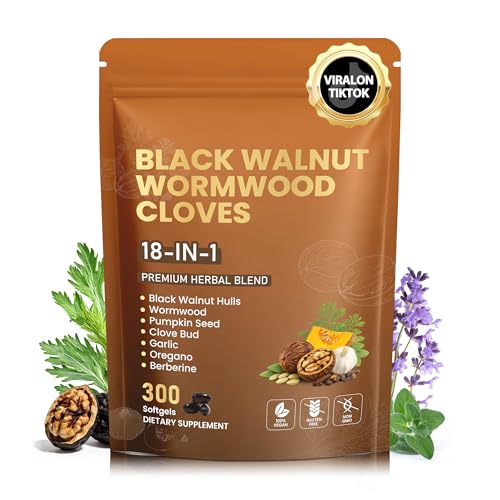
- CleanseParasites Herbal Parasite Cleanse Powder Editor’s Pick
Contains wormwood alongside black walnut hull, cloves, and other traditional parasite-cleanse herbs. - Herb Pharm Intestinal Tract Defense with Wormwood
liquid, 1 fl oz — A Herb Pharm herbal formula containing wormwood extract, not a single-herb wormwood tincture - AlchePharma Organic Wormwood Capsules
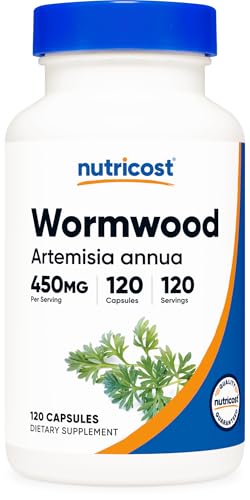
capsules, 90 vegan capsules — Single-herb organic Artemisia absinthium, non-GMO and gluten-free - Nature’s Answer Black Walnut and Wormwood Alcohol-Free Extract
liquid, 2 fl oz, 2,000 mg per serving — Alcohol-free dropper extract; a black walnut and wormwood combination, not single-herb wormwood - Frontier Co-op Wormwood Herb, Cut and Sifted
cut and sifted dried herb, 16 oz bulk bag — Bulk dried herb for traditional tea preparation, kosher certified
As an Amazon Associate we earn from qualifying purchases. Quality varies widely — always choose a product with a published third-party test (COA) before buying.
A Note on the Evidence
Most of wormwood’s anti-parasitic reputation comes from tradition and lab studies, not human trials, and thujone content makes it genuinely risky at high doses, with prolonged use, in pregnancy, or alongside anticonvulsant, antidepressant, or liver-metabolized medications. This information is educational, not medical advice, and shouldn’t replace a proper diagnosis and treatment plan from a healthcare provider for a suspected parasitic infection or any other condition.

Frequently Asked Questions
Is wormwood the same as the herb used to make artemisinin for malaria?
No. Artemisinin comes from Artemisia annua (sweet wormwood), a related but distinct species with a large, well-established clinical trial record as an antimalarial. Artemisia absinthium (common wormwood), the plant discussed here, has a different chemical profile and a much thinner human trial base.
Has wormwood actually been tested in a clinical trial against parasites?
Not in any published human trial. The anti-parasitic mechanism (disruption of parasite membranes and metabolism by sesquiterpene lactones) has only been studied in vitro or inferred from traditional use, not confirmed in a human trial measuring parasite clearance.
What conditions does wormwood have real human trial evidence for?
Controlled trials and a meta-analysis support benefit in Crohn’s disease inflammation markers [1][2], topical knee osteoarthritis pain compared to piroxicam gel [4], and cosmetic reduction of under-eye dark circles [5]. A small uncontrolled pilot also explored IgA nephropathy [3].
Is wormwood safe to take regularly?
It shouldn’t be used long-term. Thujone, a compound in wormwood, is neurotoxic and has been linked to seizure risk with prolonged or high-dose use [11], so extracts should be thujone-controlled and limited to short courses.
Does wormwood interact with medications?
Yes. It can interact with anticonvulsants, antidepressants, and other drugs metabolized by the liver. Anyone on these medications should talk to a doctor or pharmacist before using wormwood in any form.
Can wormwood cure cancer based on the cell-line studies?
No. Studies showing wormwood extracts kill breast [6], colorectal [7], and oral cancer cells [8] in a lab dish are early exploratory research. None involved human patients, dosing, or clinical outcomes, so they don’t support using wormwood as a cancer treatment.
References
- Krebs S et al. Wormwood (Artemisia absinthium) suppresses tumour necrosis factor alpha and accelerates healing in patients with Crohn's disease – A controlled clinical trial. Phytomedicine : international journal of phytotherapy and phytopharmacology (2010). PMID 19962291
- Rahimi R et al. Induction of clinical response and remission of inflammatory bowel disease by use of herbal medicines: a meta-analysis. World journal of gastroenterology (2013). PMID 24039370
- Krebs S et al. Wormwood (Artemisia absinthium) for poorly responsive early-stage IgA nephropathy: a pilot uncontrolled trial. American journal of kidney diseases : the official journal of the National Kidney Foundation (2010). PMID 20843592
- Basiri Z et al. Topical Effects of Artemisia Absinthium Ointment and Liniment in Comparison with Piroxicam Gel in Patients with Knee Joint Osteoarthritis: A Randomized Double-Blind Controlled Trial. Iranian journal of medical sciences (2017). PMID 29184260
- Hamdi H et al. Evaluation of the Effect of Artemisia Absinthium L. Eye-Cream on Infra-Orbital Dark Circle: A Randomized, Double-Blind, Placebo-Controlled Clinical Trial. Galen medical journal (2023). PMID 38774851
- Sultan MH et al. Bioactive Principles and Potentiality of Hot Methanolic Extract of the Leaves from Artemisia absinthium L "in vitro Cytotoxicity Against Human MCF-7 Breast Cancer Cells, Antibacterial Study and Wound Healing Activity". Current pharmaceutical biotechnology (2020). PMID 32988347
- Nazeri M et al. Methanolic extract of Artemisia absinthium prompts apoptosis, enhancing expression of Bax/Bcl-2 ratio, cell cycle arrest, caspase-3 activation and mitochondrial membrane potential destruction in human colorectal cancer HCT-116 cells. Molecular biology reports (2020). PMID 33141288
- Tsamesidis I et al. Investigating the Cytotoxic Effects of Artemisia absinthium Extract on Oral Carcinoma Cell Line. Biomedicines (2024). PMID 39767582
- Barreto II et al. Predictive toxicological effects of Artemisia absinthium essential oil on hepatic stellate cells. Toxicology in vitro : an international journal published in association with BIBRA (2024). PMID 38000518
- Viršilė A et al. Species-Specific Plant-Derived Nanoparticle Characteristics. Plants (Basel, Switzerland) (2022). PMID 36432868
- Lachenmeier DW et al. Thujone–cause of absinthism?. Forensic science international (2006). PMID 15896935
- Banfi G et al. Multicentre evaluation of Capture Assay Radim Liquid Allergen for measurement of specific IgE antibodies. European journal of clinical chemistry and clinical biochemistry : journal of the Forum of European Clinical Chemistry Societies (1995). PMID 8608200
These statements have not been evaluated by the Food and Drug Administration. This information is not intended to diagnose, treat, cure, or prevent any disease. Content is for informational purposes only and is not medical advice; consult a qualified healthcare provider before starting any supplement. As an Amazon Associate we earn from qualifying purchases.