Artemisia absinthium, commonly known as wormwood, has a documented history spanning millennia as a medicinal herb, culinary bitter, and the defining flavor of absinthe. Its trajectory from a staple in ancient pharmacopeias to a banned spirit ingredient and back to regulated use reflects shifting cultural attitudes and scientific understanding.
Today, wormwood supplements are marketed for digestive support and parasitic concerns, yet the human evidence base remains thin compared to its long tradition. This article reviews the historical record, the science of its key constituents — particularly thujone — and the practical cautions that accompany its modern use.
Key Takeaways
- Wormwood has a documented medicinal history exceeding 3,500 years, primarily as a bitter digestive stimulant and vermifuge.
- Absinthe’s prohibition was driven by thujone fears and social politics; modern analysis shows pre-ban thujone levels were generally too low to cause neurotoxicity independent of alcohol.
- The herb’s key bitter compounds (absinthin, artabsin) trigger reflex digestive secretions, providing a plausible mechanism for traditional dyspepsia use.
- Wormwood (Artemisia absinthium) and sweet wormwood (Artemisia annua) are chemically and pharmacologically distinct; the latter yields the antimalarial drug artemisinin.
- Human clinical trials for wormwood’s anti-parasitic effects are lacking; supplements vary widely in thujone content and should be used cautiously, if at all, and only for short durations.
Ancient and Medieval Medicinal Uses
Wormwood appears in the Ebers Papyrus (circa 1550 BCE) as a remedy for expelling worms and soothing digestive complaints. Greek physicians including Hippocrates and Dioscorides prescribed it for fevers, menstrual disorders, and as a general tonic. The name ‘absinthium’ derives from the Greek apsinthion, meaning ‘undrinkable’ — a nod to its intense bitterness.
Throughout the Middle Ages, European monastic gardens cultivated wormwood for its anthelmintic (anti-parasitic) reputation and as a digestive stimulant. Hildegard of Bingen, the 12th-century abbess and herbalist, recommended it for ‘melancholy’ and stomach ailments. These uses were empirical, grounded in observation rather than controlled study, and they established the herb’s enduring association with gut health.
The Rise of Absinthe: From Tonic to Cultural Phenomenon
In the late 18th century, a French doctor named Pierre Ordinaire formulated a wormwood-based elixir in Couvet, Switzerland, intended as a patent medicine. The recipe passed to the Henriod sisters and then to Major Dubied, who opened the first commercial absinthe distillery in 1797. Pernod Fils followed in 1805, industrializing production in Pontarlier, France.

Absinthe’s popularity exploded in the 19th century, fueled by its adoption by French soldiers in Algeria (who mixed it with water as a prophylactic against dysentery) and its embrace by artists and writers in Paris. By 1910, France consumed roughly 36 million liters annually. The ritual — dripping ice water over a sugar cube on a slotted spoon into the green liquid — became a cultural touchstone.
Thujone, Neurotoxicity, and the Absinthe Bans
The compound thujone, a monoterpene ketone present in wormwood’s essential oil, became the focus of controversy. Animal studies in the late 19th century showed that high doses of isolated thujone caused convulsions. Temperance advocates and winemakers’ lobbyists seized on this, blaming absinthe for a syndrome dubbed ‘absinthism’ — hallucinations, seizures, and madness — distinct from alcoholism.
Modern analysis of pre-ban absinthe bottles reveals thujone levels typically well below the thresholds that produce neurotoxicity in animals. The primary driver of absinthe’s harm was almost certainly its high alcohol content (45–74% ABV) and the volume consumed. Nevertheless, bans swept Europe and the United States between 1908 and 1915. The U.S. ban persisted until 2007, when the TTB (Alcohol and Tobacco Tax and Trade Bureau) established a thujone limit of 10 ppm for finished beverages, effectively re-legalizing absinthe.

Chemical Constituents and Proposed Mechanisms
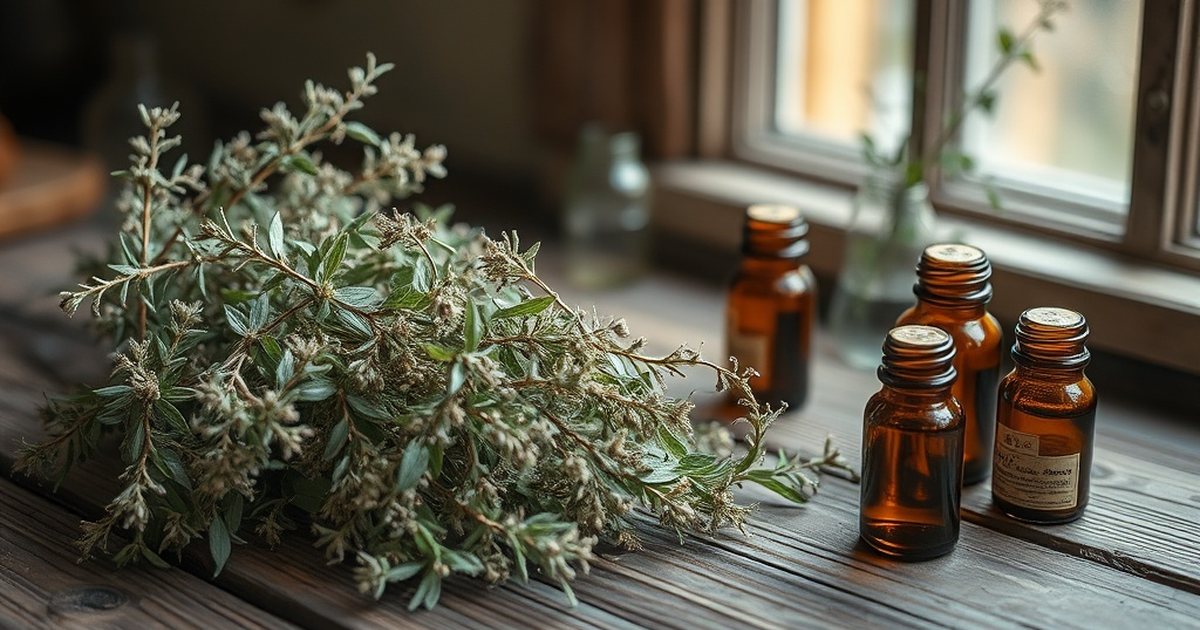
Wormwood’s bitterness comes from sesquiterpene lactones, chiefly absinthin and artabsin. These compounds stimulate bitter receptors (T2Rs) on the tongue and in the gut, triggering reflexive increases in saliva, gastric acid, bile flow, and pancreatic enzymes — the physiological basis for its traditional use as an appetizer and digestive aid.
The essential oil (0.2–1.5% of dry weight) contains thujone (alpha- and beta-isomers), along with camphor, cineole, and other terpenes. In vitro, thujone acts as a GABA-A receptor antagonist, explaining its convulsant potential at high doses. The sesquiterpene lactones and volatile oil components have demonstrated anti-parasitic and antimicrobial activity in laboratory models, though the concentrations and exposure times used often exceed what is achievable with oral dosing in humans.

Wormwood vs. Sweet Wormwood: A Critical Distinction
Artemisia absinthium (common wormwood) is frequently confused with Artemisia annua (sweet wormwood or qinghao). The latter is the source of artemisinin, a sesquiterpene lactone endoperoxide that is the cornerstone of modern artemisinin-based combination therapies (ACTs) for malaria. Artemisinin’s mechanism — iron-mediated cleavage generating free radicals that damage parasite proteins — is distinct and clinically validated.
Common wormwood does not contain meaningful amounts of artemisinin. Its anti-parasitic reputation rests on traditional use, in vitro data on its own lactones and volatile oils, and a small number of animal studies. It is not a substitute for artemisinin or for standard-of-care antiparasitic drugs.
Modern Supplement Use and Regulatory Status
In the United States, wormwood is sold as a dietary supplement (capsules, tinctures, teas) under DSHEA. The FDA does not evaluate these products for efficacy before market. Thujone content is not standardized across brands; some manufacturers offer ‘thujone-free’ or ‘thujone-controlled’ extracts, typically achieved by using water or glycerin extraction rather than alcohol, which pulls more volatile oil.
The 0.01 mg/kg body weight per day tolerable daily intake often quoted for thujone comes from the Council of Europe (1999), not from an EU food authority: the Scientific Committee on Food reviewed the same evidence in 2002 and found the data inadequate to establish a TDI or ADI at all[1]. For herbal preparations specifically, EMA sets a ceiling of 3 mg of thujone per person per day from wormwood herb, for a maximum of two weeks[1]. Germany’s Commission E monograph (now archived) approved wormwood herb for loss of appetite and dyspeptic complaints, specifying short-term use (2–4 weeks) and contraindicating it in pregnancy, breastfeeding, and seizure disorders. No major regulatory body has approved wormwood for treating parasitic infections in humans.
🛒 Where to Buy Wormwood (Artemisia absinthium)
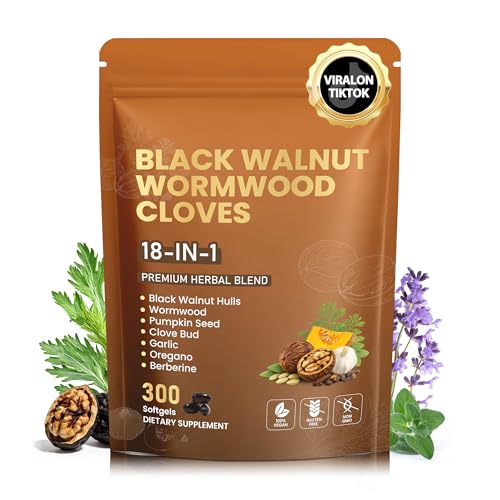
- CleanseParasites Herbal Parasite Cleanse Powder Editor’s Pick
Contains wormwood alongside black walnut hull, cloves, and other traditional parasite-cleanse herbs. - Herb Pharm Intestinal Tract Defense with Wormwood
liquid, 1 fl oz — A Herb Pharm herbal formula containing wormwood extract, not a single-herb wormwood tincture - AlchePharma Organic Wormwood Capsules
capsules, 90 vegan capsules — Single-herb organic Artemisia absinthium, non-GMO and gluten-free - Nature’s Answer Black Walnut and Wormwood Alcohol-Free Extract
liquid, 2 fl oz, 2,000 mg per serving — Alcohol-free dropper extract; a black walnut and wormwood combination, not single-herb wormwood - Frontier Co-op Wormwood Herb, Cut and Sifted
cut and sifted dried herb, 16 oz bulk bag — Bulk dried herb for traditional tea preparation, kosher certified
As an Amazon Associate we earn from qualifying purchases. Quality varies widely — always choose a product with a published third-party test (COA) before buying.
A Note on the Evidence
Wormwood contains thujone, a neurotoxic compound that can lower the seizure threshold; it is contraindicated in pregnancy, breastfeeding, and seizure disorders, and may interact with anticonvulsants, antidepressants, and hepatically metabolized drugs. Human evidence for anti-parasitic effects is limited to traditional use and preclinical studies; wormwood should not replace medical evaluation or prescription treatment for suspected parasitic infections.
Frequently Asked Questions
Is wormwood the same as the wormwood in absinthe?
Yes. The defining botanical in traditional absinthe is Artemisia absinthium, the same species used historically as a medicinal herb. Modern absinthe sold legally in the US must be thujone-free as the TTB defines it, meaning below 10 ppm. The EU limit is different and higher: absinthe is produced from Artemisia, which places it in the 35 mg/kg tier rather than the 10 mg/kg one[2].
Can wormwood treat a parasitic infection?
There are no large, well-controlled human trials demonstrating that wormwood effectively treats parasitic infections. In vitro and animal data show some anti-parasitic activity, but this does not translate to proven clinical efficacy. Suspected parasitic infections require medical diagnosis and prescription treatment.
Why is thujone a concern?
Thujone is a GABA-A receptor antagonist that can cause seizures at high doses or with prolonged exposure. It is the reason wormwood is contraindicated in people with seizure disorders and why regulatory bodies limit its concentration in foods, beverages, and supplements.
Is wormwood safe during pregnancy?
No. Wormwood is a known uterine stimulant and contains thujone, which is neurotoxic. It is contraindicated in pregnancy and breastfeeding across all major herbal safety guidelines.
What is the difference between wormwood and sweet wormwood?
They are different species. Artemisia absinthium (common wormwood) contains absinthin and thujone. Artemisia annua (sweet wormwood) contains artemisinin, a clinically validated antimalarial. They are not interchangeable.
How should I choose a wormwood supplement if I decide to use one?
Look for products that specify thujone content (ideally low or controlled), use water or glycerin extraction rather than high-alcohol tinctures, and provide third-party testing certificates. Limit use to 2–4 weeks, and consult a healthcare provider if you take medications metabolized by the liver, anticonvulsants, or antidepressants.
References
- Committee on Herbal Medicinal Products (HMPC). Public statement on the use of herbal medicinal products containing thujone, EMA/HMPC/732886/2010. European Medicines Agency. EMA public statement (PDF)
- Regulation (EC) No 1334/2008 of the European Parliament and of the Council on flavourings, Annex III Part B (maximum levels of thujone in compound food as consumed). EUR-Lex
- Lachenmeier DW, Uebelacker M. Risk assessment of thujone in foods and medicines containing sage and wormwood — evidence for a need of regulatory changes? Regulatory Toxicology and Pharmacology (2010). PMID 20727933
These statements have not been evaluated by the Food and Drug Administration. This information is not intended to diagnose, treat, cure, or prevent any disease. Content is for informational purposes only and is not medical advice; consult a qualified healthcare provider before starting any supplement. As an Amazon Associate we earn from qualifying purchases.