Wormwood (Artemisia absinthium) is a bitter herb with a long history in European folk medicine, used for digestive complaints, fevers, and intestinal worms long before modern pharmacology existed. It’s the same plant that gives absinthe and vermouth their signature bitterness, and its traditional uses across generations are documented in ethnobotanical records, including 19th-century Latvian folklore archives that catalog it among commonly used medicinal plants [1].
This guide walks through how wormwood is typically taken, in tea, tincture, and capsule form, and why dosage guidance for this herb is unusually cautious compared to milder botanicals. Wormwood contains thujone, a neurotoxic compound linked to seizures at high doses or with prolonged use, which is the central reason every credible dosage discussion of this plant leans conservative. Nothing here is a recommendation to self-treat a suspected parasitic infection; it’s a plain-language explanation of what’s known, what’s not, and where the real risks sit.
Key Takeaways
- Wormwood tea, tincture, and capsules differ mainly in potency and consistency, not in the strength of the underlying human evidence.
- Most support for wormwood’s anti-parasitic effects comes from traditional use records and in-vitro/animal studies, not large human trials.
- Thujone is the key safety concern: it’s neurotoxic at high doses or with prolonged use, so any use should be short-course and, ideally, thujone-controlled.
- Wormwood is not the same plant as Artemisia annua (source of the antimalarial artemisinin), despite the shared genus name.
- Pregnancy, breastfeeding, seizure history, and certain medications (anticonvulsants, antidepressants, liver-metabolized drugs) are reasons to avoid wormwood or use it only under medical supervision.
What Wormwood Is Traditionally Used For
Wormwood has a documented history as a bitter digestive tonic, a folk remedy for fevers, and a traditional anti-parasitic herb, particularly against intestinal worms. Ethnobotanical surveys of traditional medicine, including the 19th-century Latvian folklore archive, list wormwood among plants regularly used by ordinary households for these purposes [1]. This kind of record tells us the plant was widely used and trusted historically, but it doesn’t establish that any particular dose was effective or safe by modern standards, folk use predates controlled dosing studies entirely.
It’s worth separating wormwood (Artemisia absinthium) clearly from its relative Artemisia annua (sweet wormwood), whose compound artemisinin is a validated, prescription-grade antimalarial drug. They are different plants with different chemistry. Artemisia absinthium’s proposed anti-parasitic activity is attributed to sesquiterpene lactones like absinthin and artabsin, plus volatile oil compounds thought to interfere with parasite membranes and metabolism in laboratory (in vitro) settings, not the artemisinin pathway.

Tea (Infusion): The Traditional Form
Wormwood tea, made by steeping the dried aerial parts in hot water, is the oldest and mildest way the herb has traditionally been consumed. Because wormwood is intensely bitter, traditional preparations typically use small amounts of dried herb steeped briefly, and folk practice generally treats it as a short-course remedy rather than a daily long-term drink. There is no controlled human dosing trial establishing a precise ‘effective’ cup count or steep time for any specific outcome; what exists is generations of traditional use recorded in ethnobotanical archives [1], not clinical measurement.
Because tea extraction pulls out volatile oils (including thujone) less predictably than alcohol-based tinctures, cup-to-cup potency can vary with steep time, water temperature, and plant material quality. That variability is itself a reason to keep any wormwood tea use short-term and modest, and to stop if any unusual symptoms (nausea, restlessness, disorientation) appear.
Tincture: Stronger, More Variable, More Caution Needed
Tinctures are alcohol-based extracts that concentrate wormwood’s bitter compounds, including thujone, far more efficiently than a water infusion. This makes tinctures a more potent delivery form, and also the form where thujone-related risk is highest if a product isn’t clearly labeled as thujone-controlled or thujone-free. Commercial tincture concentrations vary widely by manufacturer, so a ‘standard’ drop count doesn’t translate reliably across brands.
Because there is no large-scale human trial establishing a validated tincture dose for any specific anti-parasitic outcome, and because thujone content in unregulated products can be inconsistent, tincture use (if considered at all) should be short-course, at the low end of any label guidance, and ideally discussed with a knowledgeable practitioner rather than self-escalated.

Capsules: More Consistent Dosing, Same Underlying Caution
Standardized capsules are generally the most consistent way to control intake, since a manufacturer can specify a fixed amount of dried herb or extract per capsule and, ideally, disclose thujone content. That consistency is an advantage over loose tea or homemade tincture, where potency is harder to pin down. It doesn’t, however, change the underlying evidence picture: most of what’s known about wormwood’s anti-parasitic activity still comes from traditional use and in-vitro or animal research rather than large randomized controlled trials in humans.
Animal research offers one illustrative, if indirect, data point: a study using homeopathic (highly diluted) preparations tested in mice infected with the parasite Trichinella spiralis found reductions in the number of infective larvae recovered [2]. This involved homeopathic dilutions rather than standard herbal-strength capsule doses, and mouse data doesn’t establish a human dose, but it’s part of why wormwood is grouped with ‘traditional anti-parasitic’ botanicals worth researching further, not part of an established human dosing protocol.

Why Thujone Makes Dosage Guidance Conservative
Thujone is the compound responsible for most of wormwood’s safety concerns. At high doses, or with prolonged repeated use, thujone has neurotoxic effects and has been linked to seizures. This is the core reason reputable sourcing distinguishes thujone-controlled extracts (where thujone is measured and limited) from unregulated whole-herb products, and why ‘more is better’ does not apply to wormwood the way it might to a gentler bitter herb.
Because of this risk profile, any wormwood use is generally framed as short-course only, not a daily long-term supplement. It is contraindicated in pregnancy and breastfeeding, and it can interact with anticonvulsant medications, antidepressants, and other drugs processed by the liver. None of this is a suggestion that a specific milligram ceiling is ‘safe’, it’s a reason to treat wormwood as a plant that needs professional guidance, not internet-sourced self-dosing.
Wormwood / Black Walnut Blend Dosage & Cost Calculator
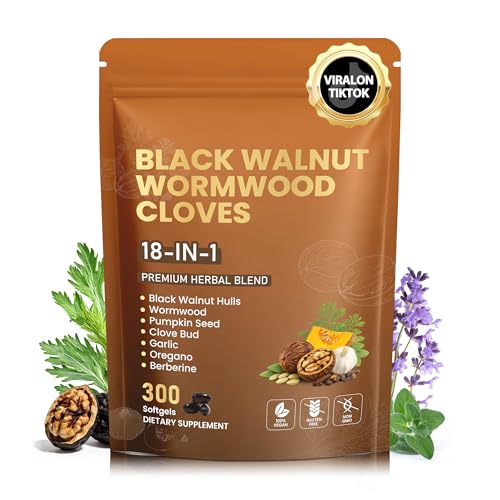
Based on the labeled dose options for Para Defend Wormwood Black Walnut Cleanse (Clean Nutra) and the published 30-count bottle at $29.95.
Open the full dosage & cost calculator →
Estimate only – based on the current listed price of the 30-count Para Defend Wormwood Black Walnut Cleanse (Clean Nutra) bottle. Actual Amazon price can change; check the live price before buying.
Why no height/weight input? Unlike per-kg supplements (creatine, protein), Wormwood / Black Walnut Blend has no published bodyweight-adjusted dosing in the research behind it. This calculator doesn't fabricate a per-kg formula that doesn't exist in the literature.
Get Para Defend Wormwood Black Walnut Cleanse (Clean Nutra) on Amazon(paid link) As an Amazon Associate we earn from qualifying purchases.
Price and bottle format, checked 1 October 2026. The $29.95 figure the calculator above works from is the Amazon buy-box price for Para Defend Wormwood Black Walnut Cleanse (Clean Nutra), ASIN B0D75PSYZV, retrieved on 1 October 2026. Amazon pricing changes without notice, so read it as a snapshot from that date rather than a live quote, and check the listing before buying. One clarification on the unit: this product is a 2 fl oz (about 59 mL) amber dropper bottle, not a 30-capsule count. The figure of 30 is how many 2 mL servings that volume holds at the labeled once-daily dose, which is what the calculator counts when it plans bottles.
Who Should Not Use Wormwood, and When to See a Doctor Instead
Wormwood should not be used during pregnancy or breastfeeding. People taking anticonvulsant medications, antidepressants, or drugs metabolized by the liver should not use it without medical supervision, given the interaction risk. Anyone with a seizure history has additional reason for caution given thujone’s neurotoxic profile.
Most importantly, a suspected parasitic infection is a medical diagnosis, not a self-assessment. Intestinal parasites can sometimes cause serious complications, and the evidence for wormwood’s anti-parasitic effect in humans is traditional and preclinical, not the kind of large randomized trial evidence that supports a validated antiparasitic drug. Wormwood should not replace proper diagnosis and treatment; a doctor can confirm what’s actually present and recommend treatment with an established evidence base.
🛒 Where to Buy Wormwood (Artemisia absinthium)
- CleanseParasites Herbal Parasite Cleanse Powder Editor’s Pick
Contains wormwood alongside black walnut hull, cloves, and other traditional parasite-cleanse herbs. - Herb Pharm Intestinal Tract Defense with Wormwood
liquid, 1 fl oz — A Herb Pharm herbal formula containing wormwood extract, not a single-herb wormwood tincture - AlchePharma Organic Wormwood Capsules
capsules, 90 vegan capsules — Single-herb organic Artemisia absinthium, non-GMO and gluten-free - Nature’s Answer Black Walnut and Wormwood Alcohol-Free Extract
liquid, 2 fl oz, 2,000 mg per serving — Alcohol-free dropper extract; a black walnut and wormwood combination, not single-herb wormwood - Frontier Co-op Wormwood Herb, Cut and Sifted
cut and sifted dried herb, 16 oz bulk bag — Bulk dried herb for traditional tea preparation, kosher certified
As an Amazon Associate we earn from qualifying purchases. Quality varies widely — always choose a product with a published third-party test (COA) before buying.

A Note on the Evidence
This article is informational, not medical advice: most wormwood evidence comes from traditional use and lab/animal studies rather than robust human trials, and thujone content makes over-use genuinely risky, so anyone considering it, especially with a suspected infection, pregnancy, seizure history, or relevant medications, should consult a doctor first.
Frequently Asked Questions
Is there a standard, clinically validated wormwood dose?
No. There isn’t a large randomized controlled trial in humans that establishes a specific validated dose for tea, tincture, or capsules. Most historical guidance comes from traditional use, as documented in folk medicine archives [1], rather than modern clinical dosing studies.
Is wormwood the same as the herb used to make artemisinin?
No. Artemisinin comes from Artemisia annua (sweet wormwood), a related but distinct plant and a validated frontline antimalarial drug. Artemisia absinthium (common wormwood) has different proposed anti-parasitic compounds, mainly sesquiterpene lactones like absinthin and artabsin, studied mostly in vitro.
Can wormwood actually kill parasites?
Laboratory and animal research suggests some anti-parasitic activity. One mouse study using homeopathic dilutions found a reduction in infective Trichinella spiralis larvae [2], but this used highly diluted homeopathic preparations, not standard herbal doses, and doesn’t establish effectiveness in humans.
Why is thujone such a big deal?
Thujone is neurotoxic and can trigger seizures at high doses or with prolonged use. It’s the main reason wormwood dosing guidance stays conservative and why thujone-controlled extracts are preferred over unregulated whole-herb products.
Who definitely shouldn't take wormwood?
Pregnant or breastfeeding people, anyone with a seizure history, and anyone taking anticonvulsants, antidepressants, or drugs metabolized by the liver should avoid wormwood or use it only with direct medical supervision, due to interaction and neurotoxicity risk.
Should I use wormwood instead of seeing a doctor for a suspected parasite?
No. A suspected parasitic infection should be diagnosed and treated medically. Wormwood’s human evidence base is traditional and preclinical, not the kind of trial evidence behind established antiparasitic treatments, so it shouldn’t replace proper diagnosis or care.
References
- Sile I et al. Medicinal plants and their uses recorded in the Archives of Latvian Folklore from the 19th century. Journal of ethnopharmacology (2020). PMID 31707047
- Sukul NC et al. Reduction in the number of infective Trichinella spiralis larvae in mice by use of homeopathic drugs. Forschende Komplementarmedizin und klassische Naturheilkunde = Research in complementary and natural classical medicine (2005). PMID 16137982
These statements have not been evaluated by the Food and Drug Administration. This information is not intended to diagnose, treat, cure, or prevent any disease. Content is for informational purposes only and is not medical advice; consult a qualified healthcare provider before starting any supplement. As an Amazon Associate we earn from qualifying purchases.