Wormwood (Artemisia absinthium) is a bitter herb traditionally used for digestive complaints and parasitic infections, and it is the defining botanical in absinthe and vermouth. Modern research has focused on its essential oil and extract components — particularly sesquiterpene lactones like absinthin and volatile compounds such as thujone — for antimicrobial properties, including activity against fungal pathogens.
While laboratory studies show promising antifungal effects, especially against Candida albicans and some dermatophytes, nearly all data come from in vitro or animal models. Human clinical trials are lacking, and the presence of neurotoxic thujone requires careful dosing and thujone-controlled preparations. This article summarizes the available evidence without overstating its clinical relevance.
Key Takeaways
- Wormwood (Artemisia absinthium) essential oil and hydroalcoholic extracts show in vitro antifungal activity against Candida albicans, including biofilm forms, and against Malassezia species.
- Key bioactive constituents include thujone, chamazulene, and sesquiterpene lactones (absinthin, artabsin), which likely disrupt fungal membranes and metabolism.
- Evidence is preclinical only; no human clinical trials support wormwood as a treatment for fungal infections.
- Thujone neurotoxicity mandates thujone-controlled preparations, short-term use, and avoidance in pregnancy, seizure disorders, and with certain medications.
- Species authentication and chemical standardization are essential; other Artemisia species (e.g., A. annua, A. persica) have different profiles and should not be substituted.
In Vitro Activity Against Candida albicans
Several studies have tested wormwood volatile fractions and hydroalcoholic extracts against Candida albicans in vitro. A 2014 GC-MS characterization of volatile fractions from four Artemisia species, including A. absinthium, reported inhibitory activity against C. albicans, with the wormwood fraction showing measurable antifungal effects [1]. The same study noted chemical differences among species that may influence potency.
A Romanian study evaluated hydroalcoholic extracts of medicinal plants on both planktonic and adhered (biofilm) Candida cells. The extracts, including the wormwood extract, acted mainly against planktonic growth, and biofilm effects were reported only against Staphylococcus aureus and Candida albicans [2]. Biofilm inhibition is noteworthy because Candida biofilms are inherently more resistant to conventional antifungals.

Essential oil from A. absinthium collected in Croatia and France was analyzed for composition, and the French oil was screened for antimicrobial activity. The oil from the French plants, which contained no thujone, inhibited the growth of both yeasts tested, Candida albicans and Saccharomyces cerevisiae [3]. Geographic variation in chemotype appeared to affect the oil’s composition, with thujone present in the Croatian oil but not the French oil.
Activity Against Other Pathogenic Fungi
Beyond Candida, wormwood essential oil has been screened against Malassezia species, which are associated with seborrheic dermatitis and dandruff. A 2020 study testing multiple essential oils against pathogenic Malassezia spp. included Artemisia oils and reported inhibitory activity [4]. However, the specific contribution of A. absinthium versus other Artemisia species in that panel is not always delineated.
Research on Cuban medicinal plants assessed the antimicrobial activity of A. absinthium L. alongside other botanicals. The ethanol extracts were screened in vitro against protozoa, fungi and bacteria, and only the Melaleuca leucadendron extract showed selective activity, so the wormwood extract was not shown to be selectively active [5]. These findings do not clearly support traditional uses for skin and mucosal infections.
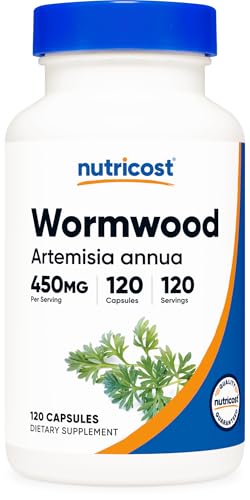
It is important to distinguish A. absinthium from other Artemisia species also called “wormwood.” For example, Artemisia annua (sweet wormwood) essential oil has been studied for vapor-phase and liquid activity against Malassezia spp. [6] and for antipathogenic effects [7]. Artemisia persica [8], Artemisia serotina [9], and Artemisia capillaris [10] have also shown antifungal properties in vitro, but they are distinct species with different phytochemical profiles.
Phytochemical Basis of Antifungal Effects
The antifungal activity of wormwood is largely attributed to its essential oil constituents. Thujone (both α- and β-isomers) is a major component, along with chamazulene, sabinene, and various sesquiterpene lactones such as absinthin and artabsin. These compounds are thought to disrupt fungal cell membranes, interfere with mitochondrial function, and inhibit biofilm formation [3][1].

Sesquiterpene lactones are known for their reactive α,β-unsaturated carbonyl groups, which can alkylate thiol groups in proteins and enzymes, potentially impairing fungal metabolism. Volatile monoterpenes and sesquiterpenes in the oil may increase membrane permeability and cause leakage of cellular contents. The relative contribution of each compound class varies by chemotype and extraction method.
Hydroalcoholic extracts contain both volatile oils and more polar constituents (flavonoids, phenolic acids, sesquiterpene lactones), which may act synergistically. The Romanian study on planktonic and adhered Candida cells used a hydroalcoholic extract, suggesting that non-volatile compounds also contribute to antifungal activity [2].
Comparative Perspective: Other Artemisia Species
The genus Artemisia includes over 400 species, many with documented antimicrobial properties. Artemisia annua is the source of artemisinin, a frontline antimalarial, and its essential oil has shown antifungal activity against Malassezia and other fungi [7][6]. However, artemisinin content is low or absent in A. absinthium, and the two species should not be conflated.
Artemisia persica essential oil from Iran demonstrated antifungal effects against several plant and human pathogens [8]. Artemisia serotina (winter wormwood) from Kazakhstan showed a distinct phytochemical profile and bioactivity [9]. Artemisia capillaris oil was active against Alternaria species causing pear black spot [10]. These studies illustrate a genus-wide trend but do not directly predict A. absinthium efficacy.
When evaluating wormwood products, species authentication is critical. Adulteration or misidentification could lead to variable thujone levels and unpredictable antifungal potency. Chemical standardization by GC-MS is recommended for any therapeutic preparation.
Safety, Thujone Toxicity, and Contraindications
Thujone is a known neurotoxin that can cause seizures, hallucinations, and convulsions at high doses or with prolonged exposure. Regulatory bodies in the EU and US set limits on thujone in food and beverages (e.g., absinthe). Wormwood extracts intended for medicinal use should be thujone-controlled and used only for short courses under professional guidance.
Wormwood is contraindicated in pregnancy and breastfeeding due to potential uterine stimulation and neurotoxicity risk to the infant. It may interact with anticonvulsants (lowering seizure threshold), antidepressants, and drugs metabolized by CYP450 enzymes. Individuals with seizure disorders, porphyria, or liver disease should avoid wormwood.
Topical application of diluted essential oil may cause contact dermatitis in sensitive individuals. A patch test is advisable. Internal use of essential oil is not recommended without expert supervision due to narrow therapeutic index.

Limitations of Current Evidence and Research Gaps
The antifungal evidence for wormwood rests almost entirely on in vitro assays (disk diffusion, microdilution, biofilm models) and a few animal studies. No randomized controlled trials in humans have evaluated wormwood for candidiasis, seborrheic dermatitis, or other fungal infections. Pharmacokinetic data on antifungal constituents after oral or topical administration are lacking.
Standardization is a major hurdle. Chemotypic variation (thujone-rich vs. chamazulene-rich oils), extraction solvent, plant part, harvest time, and geographic origin all affect composition and activity. Studies often report results for a single batch, limiting generalizability.
Future research should prioritize: (1) phytochemically characterized, thujone-standardized extracts; (2) in vivo efficacy and safety models; (3) synergy studies with conventional antifungals; and (4) well-designed clinical trials for defined indications such as recurrent vulvovaginal candidiasis or Malassezia-associated dermatitis.
🛒 Where to Buy Wormwood (Artemisia absinthium)

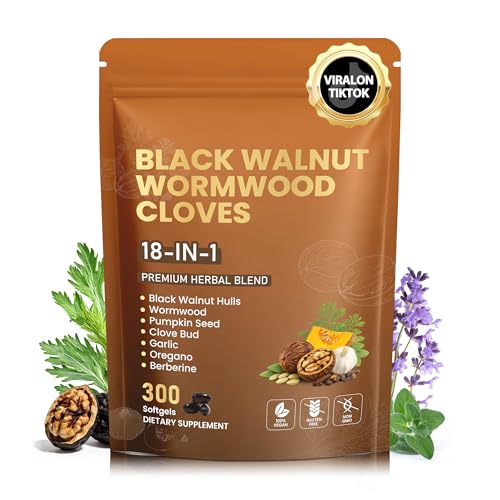
- CleanseParasites Herbal Parasite Cleanse Powder Editor’s Pick
Contains wormwood alongside black walnut hull, cloves, and other traditional parasite-cleanse herbs. - Herb Pharm Intestinal Tract Defense with Wormwood
liquid, 1 fl oz — A Herb Pharm herbal formula containing wormwood extract, not a single-herb wormwood tincture - AlchePharma Organic Wormwood Capsules
capsules, 90 vegan capsules — Single-herb organic Artemisia absinthium, non-GMO and gluten-free - Nature’s Answer Black Walnut and Wormwood Alcohol-Free Extract
liquid, 2 fl oz, 2,000 mg per serving — Alcohol-free dropper extract; a black walnut and wormwood combination, not single-herb wormwood - Frontier Co-op Wormwood Herb, Cut and Sifted
cut and sifted dried herb, 16 oz bulk bag — Bulk dried herb for traditional tea preparation, kosher certified
As an Amazon Associate we earn from qualifying purchases. Quality varies widely — always choose a product with a published third-party test (COA) before buying.
A Note on the Evidence
This article summarizes preclinical research and is for informational purposes only. Wormwood has not been proven to treat any fungal infection in humans. Thujone content poses serious safety risks. Consult a qualified healthcare professional before using wormwood for any health condition.
Frequently Asked Questions
Can wormwood essential oil cure a Candida infection?
No. Current evidence is limited to laboratory studies showing growth inhibition of Candida albicans in vitro [1][2]. There are no clinical trials demonstrating cure of human candidiasis with wormwood. Medical diagnosis and prescribed antifungals remain the standard of care.
Is wormwood effective against dandruff or seborrheic dermatitis caused by Malassezia?
In vitro studies indicate that essential oils from Artemisia species, including wormwood, can inhibit Malassezia species [4][6]. However, no human trials have tested wormwood formulations for dandruff or seborrheic dermatitis. Medicated shampoos with proven antifungal agents (e.g., ketoconazole) are evidence-based first-line options.
What is the difference between wormwood (Artemisia absinthium) and sweet wormwood (Artemisia annua)?
They are distinct species. A. absinthium contains thujone and sesquiterpene lactones like absinthin; A. annua is the source of artemisinin, an antimalarial drug. Their essential oils and antifungal profiles differ [7][6]. Do not substitute one for the other.
Is it safe to take wormwood supplements daily for fungal prevention?
No. Due to thujone neurotoxicity, wormwood should not be used continuously or in high doses. Regulatory limits exist for thujone in food and supplements. Long-term safety data are lacking. Consult a healthcare provider before using any wormwood product.
Can wormwood essential oil be applied directly to the skin for fungal infections?
Undiluted essential oil can cause irritation and sensitization. If used topically, it must be heavily diluted in a carrier oil (typically ≤1% concentration) and patch-tested first. Even then, systemic absorption of thujone is possible. Professional guidance is strongly recommended.
Are there any drug interactions with wormwood?
Yes. Wormwood may lower the seizure threshold, interacting with anticonvulsants. It can affect CYP450 enzymes, altering metabolism of many drugs, including antidepressants. It is contraindicated with medications that have narrow therapeutic indices. Always disclose supplement use to your prescriber.
References
- Obistioiu D et al. Chemical characterization by GC-MS and in vitro activity against Candida albicans of volatile fractions prepared from Artemisia dracunculus, Artemisia abrotanum, Artemisia absinthium and Artemisia vulgaris. Chemistry Central journal (2014). PMID 24475951
- Stanciuc AM et al. In vitro antimicrobial activity of Romanian medicinal plants hydroalcoholic extracts on planktonic and adhered cells. Roumanian archives of microbiology and immunology (2011). PMID 21717806
- Juteau F et al. Composition and antimicrobial activity of the essential oil of Artemisia absinthium from Croatia and France. Planta medica (2003). PMID 12624823
- Donato R et al. Antifungal activity of different essential oils against Malassezia pathogenic species. Journal of ethnopharmacology (2020). PMID 31704415
- Valdés AF et al. In vitro anti-microbial activity of the Cuban medicinal plants Simarouba glauca DC, Melaleuca leucadendron L and Artemisia absinthium L. Memorias do Instituto Oswaldo Cruz (2008). PMID 18949336
- Santomauro F et al. Liquid and Vapor-Phase Activity of Artemisia annua Essential Oil against Pathogenic Malassezia spp. Planta medica (2018). PMID 28877539
- Marinas IC et al. Chemical Composition and Antipathogenic Activity of Artemisia annua Essential Oil from Romania. Chemistry & biodiversity (2015). PMID 26460560
- Dehghani Bidgoli R et al. Chemical composition of essential oil and antifungal activity of Artemisia persica Boiss. from Iran. Journal of food science and technology (2021). PMID 33746259
- Kadyrbay A et al. Essential Oil from the Aerial Parts of Artemisia serotina Bunge (Winter Wormwood) Growing in Kazakhstan-Phytochemical Profile and Bioactivity. Molecules (Basel, Switzerland) (2025). PMID 40733222
- Kou ZX et al. Antifungal Activity of Artemisia capillaris Essential Oil Against Alternaria Species Causing Black Spot on Yanbian Pingguoli Pear in China. Plants (Basel, Switzerland) (2025). PMID 41157705
These statements have not been evaluated by the Food and Drug Administration. This information is not intended to diagnose, treat, cure, or prevent any disease. Content is for informational purposes only and is not medical advice; consult a qualified healthcare provider before starting any supplement. As an Amazon Associate we earn from qualifying purchases.