Wormwood (Artemisia absinthium) is a bitter herb historically used for digestive complaints, fevers, and intestinal parasites. It contains sesquiterpene lactones such as absinthin and artabsin, along with volatile oils including thujone. It is botanically and chemically distinct from sweet wormwood (Artemisia annua), which is the primary source of the antimalarial compound artemisinin.
Laboratory studies have investigated cytotoxic effects of A. absinthium extracts and artemisinin derivatives against various cancer cell lines, often using nanoparticle formulations to enhance delivery. However, no large randomized controlled trials exist in humans, and safety concerns—particularly thujone neurotoxicity—restrict therapeutic use. This article summarizes the early research and its limitations.
Key Takeaways
- Wormwood (Artemisia absinthium) and sweet wormwood (Artemisia annua) are different plants with distinct phytochemical profiles; anticancer research often focuses on artemisinin from A. annua, not A. absinthium.
- Preclinical studies show cytotoxic effects of A. absinthium extracts and artemisinin derivatives against various cancer cell lines, frequently using nanoparticle delivery systems.
- Proposed mechanisms include microtubule disruption, oxidative stress, apoptosis, ferroptosis, and modulation of signaling pathways, but these are not validated in humans.
- Thujone in A. absinthium poses neurotoxicity risks; extracts must be thujone-controlled and are contraindicated in pregnancy, breastfeeding, and with certain medications.
- No clinical trials support wormwood as a cancer treatment; it should not substitute conventional oncology care.
Wormwood Species and Key Phytochemicals
Artemisia absinthium (common wormwood) and Artemisia annua (sweet wormwood) belong to the same genus but differ markedly in their major bioactive constituents. A. absinthium is characterized by the bitter sesquiterpene lactones absinthin and artabsin, and the monoterpene thujone, which is neurotoxic at high doses. A. annua produces artemisinin, a sesquiterpene lactone with an endoperoxide bridge that underpins its antimalarial and investigated anticancer activity. A broad screening of medicinal plants noted cytotoxic activity of Artemisia species across multiple cancer cell lines [1].
The distinction is critical because much of the “wormwood” anticancer literature actually focuses on artemisinin and its semi-synthetic derivatives (e.g., artesunate, dihydroartemisinin) derived from A. annua, not on A. absinthium extracts. Reviews highlight artemisinin derivatives as a distinct class of potential anticancer agents with multiple molecular targets [2][3].

Preclinical Evidence for Artemisia absinthium Extracts
Several in vitro studies have examined A. absinthium extracts, sometimes formulated as polymeric nanoparticles, against cancer cell lines. An extract showed dose-dependent cytotoxicity in an oral carcinoma cell line [4]. Nanoparticle-loaded A. absinthium extract reduced viability and altered the secretome of MCF-7 and MDA-MB-231 breast cancer cells, with observed perturbations in microtubule assembly and cell migration [5]. A related study identified protein targets involved in the cytotoxic response of breast cancer cells to the nanoparticle formulation [6].
Combined extracts of A. absinthium and Citrus paradisi demonstrated antioxidant and antibacterial properties that repressed viability of an aggressive liver cancer cell line [7]. Additionally, umbelliprenin, a sesquiterpene coumarin found in some Artemisia species, exhibited antitumor potential in preclinical models [8]. These findings remain limited to cell culture and animal models; no human clinical data support efficacy.
Artemisinin and Derivatives: A Separate but Related Research Track
Artemisinin and its derivatives (e.g., dihydroartemisinin, artesunate) have been extensively reviewed for anticancer potential. They are reported to induce apoptosis, cell cycle arrest, and ferroptosis, and to inhibit angiogenesis and metastasis in preclinical models [9][10]. A comprehensive overview details their multi-target mechanisms and structure-activity relationships [3].

Molecular hybridization strategies have been explored to create novel artemisinin-derived candidates with improved potency and selectivity [11]. Notably, artemisinin derivatives also show anti-fibrotic effects, which may be relevant in tumor microenvironment modulation [12]. Despite promising mechanistic data, clinical evidence in oncology remains scarce and largely confined to case reports or small pilot studies not included in the cited literature.
Proposed Mechanisms of Anticancer Activity
For A. absinthium, proposed mechanisms include direct cytotoxicity via sesquiterpene lactones, oxidative stress modulation, and disruption of microtubule dynamics and cell migration, as evidenced by secretome profiling of nanoparticle-treated breast cancer cells [5]. Protein target analysis suggests involvement of pathways related to cell proliferation and survival [6]. The antioxidant properties of A. absinthium extracts may also contribute to reduced cancer cell viability in combination with other botanicals [7].
Artemisinin derivatives act through iron-dependent generation of reactive oxygen species, alkylation of cellular proteins, and modulation of signaling pathways such as Wnt/β-catenin, NF-κB, and mTOR [10][3]. Dihydroartemisinin has been shown to induce ferroptosis, a form of iron-dependent cell death, in cancer cells [10]. These mechanisms are distinct from the thujone-mediated neurotoxicity associated with A. absinthium essential oil.
Safety Profile and Translational Gaps
A. absinthium contains thujone, a GABA_A receptor antagonist that can cause seizures and neurotoxicity at high doses or with prolonged use. Regulatory bodies limit thujone content in food and beverages. Consequently, any therapeutic extract should be thujone-controlled and restricted to short courses. The herb is contraindicated in pregnancy and breastfeeding and may interact with anticonvulsants, antidepressants, and drugs metabolized by hepatic cytochrome P450 enzymes.
The anticancer evidence for both A. absinthium and artemisinin derivatives is almost entirely preclinical (in vitro and animal). No large, well-designed randomized controlled trials have established efficacy or safety in cancer patients. Therefore, wormwood products should not replace standard medical diagnosis or treatment of suspected or confirmed malignancy. Consultation with an oncologist is essential before considering any herbal adjunct.
🛒 Where to Buy Wormwood (Artemisia absinthium)
- CleanseParasites Herbal Parasite Cleanse Powder Editor’s Pick
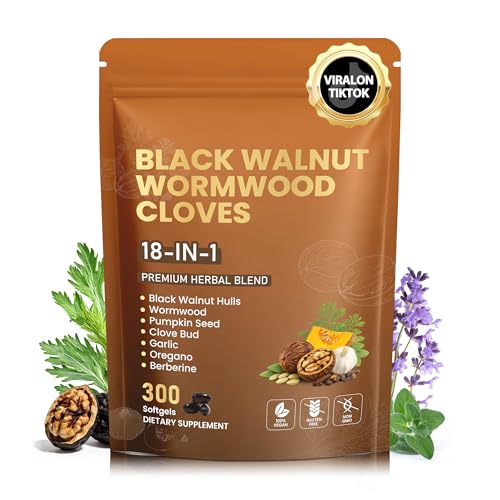
Contains wormwood alongside black walnut hull, cloves, and other traditional parasite-cleanse herbs. - Herb Pharm Intestinal Tract Defense with Wormwood
liquid, 1 fl oz — A Herb Pharm herbal formula containing wormwood extract, not a single-herb wormwood tincture - AlchePharma Organic Wormwood Capsules
capsules, 90 vegan capsules — Single-herb organic Artemisia absinthium, non-GMO and gluten-free - Nature’s Answer Black Walnut and Wormwood Alcohol-Free Extract
liquid, 2 fl oz, 2,000 mg per serving — Alcohol-free dropper extract; a black walnut and wormwood combination, not single-herb wormwood - Frontier Co-op Wormwood Herb, Cut and Sifted
cut and sifted dried herb, 16 oz bulk bag — Bulk dried herb for traditional tea preparation, kosher certified
As an Amazon Associate we earn from qualifying purchases. Quality varies widely — always choose a product with a published third-party test (COA) before buying.
A Note on the Evidence
This article is for informational purposes only and does not constitute medical advice. Wormwood contains neurotoxic thujone and lacks clinical evidence for cancer treatment; consult a qualified healthcare provider before using any herbal product, especially if you have a medical condition or take medications.

Frequently Asked Questions
Is wormwood proven to treat cancer in humans?
No. Current evidence comes from laboratory studies on cells and animals. No large randomized controlled trials have demonstrated efficacy or safety in human cancer patients [4][5][2].
What is the difference between wormwood and sweet wormwood?
Wormwood (Artemisia absinthium) contains absinthin and thujone; sweet wormwood (Artemisia annua) produces artemisinin, an antimalarial drug also studied for anticancer effects. They are different species with different safety profiles [1][2].
Can artemisinin derivatives be used as cancer therapy?
Artemisinin derivatives show promising preclinical anticancer activity, but clinical data are limited. They are not approved as standard cancer treatments and should only be used within clinical trials or under specialist supervision [3][10].

What are the main safety concerns with wormwood?
Thujone in wormwood essential oil can cause seizures and neurotoxicity at high doses. It is contraindicated in pregnancy and breastfeeding and may interact with anticonvulsants, antidepressants, and liver-metabolized drugs.
Do nanoparticle formulations of wormwood extract improve anticancer effects?
In vitro studies report enhanced cytotoxicity and specific effects on microtubule assembly and cell migration when A. absinthium extract is loaded into polymeric nanoparticles [5][6]. These are early findings without clinical confirmation.
Should I take wormwood supplements if I have cancer?
No. Wormwood supplements are not a substitute for evidence-based cancer treatment. They carry safety risks and lack clinical validation. Always discuss any herbal product with your oncology team before use.
References
- Uğur D et al. Cytotoxic Activities of Certain Medicinal Plants on Different Cancer Cell Lines. Turkish journal of pharmaceutical sciences (2017). PMID 32454617
- Wen L et al. Artemisinin and Its Derivatives as Potential Anticancer Agents. Molecules (Basel, Switzerland) (2024). PMID 39202965
- Zeng ZW et al. A comprehensive overview of Artemisinin and its derivatives as anticancer agents. European journal of medicinal chemistry (2023). PMID 36538859
- Tsamesidis I et al. Investigating the Cytotoxic Effects of Artemisia absinthium Extract on Oral Carcinoma Cell Line. Biomedicines (2024). PMID 39767582
- Kauser S et al. Secretome profiling of Artemisia absinthium extract-loaded polymeric nanoparticle-treated MCF-7 and MDA-MB-231 revealed perturbation in microtubule assembly and cell migration. Frontiers in oncology (2023). PMID 37719007
- Mughees M et al. Cytotoxic potential of Artemisia absinthium extract loaded polymeric nanoparticles against breast cancer cells: Insight into the protein targets. International journal of pharmaceutics (2020). PMID 32603837
- Ali M et al. Antioxidant and antibacterial activities of Artemisia absinthium and Citrus paradisi extracts repress viability of aggressive liver cancer cell line. Molecular biology reports (2021). PMID 34755263
- Shahzadi I et al. Assessment of the Antitumor Potential of Umbelliprenin, a Naturally Occurring Sesquiterpene Coumarin. Biomedicines (2020). PMID 32443431
- Slezakova S et al. Anticancer Activity of Artemisinin and its Derivatives. Anticancer research (2017). PMID 29061778
- Dai X et al. Dihydroartemisinin: A Potential Natural Anticancer Drug. International journal of biological sciences (2021). PMID 33613116
- Marchesi E et al. Molecular Hybridization as a Strategy for Developing Artemisinin-Derived Anticancer Candidates. Pharmaceutics (2023). PMID 37765156
- Dolivo D et al. Artemisinin and artemisinin derivatives as anti-fibrotic therapeutics. Acta pharmaceutica Sinica. B (2021). PMID 33643815
These statements have not been evaluated by the Food and Drug Administration. This information is not intended to diagnose, treat, cure, or prevent any disease. Content is for informational purposes only and is not medical advice; consult a qualified healthcare provider before starting any supplement. As an Amazon Associate we earn from qualifying purchases.