Wormwood (Artemisia absinthium) and clove (Syzygium aromaticum) show up together constantly in traditional parasite-cleanse formulas, often alongside black walnut. The pairing isn’t arbitrary in traditional use logic: wormwood is positioned as the herb that targets adult organisms, while clove is positioned as the one that addresses eggs. Whether that division of labor holds up under modern evidence is a separate question, and one worth answering honestly before anyone builds a protocol around it.
This article breaks down what each herb is traditionally used for, what mechanisms have been proposed, and what the actual evidence does and doesn’t support. Neither herb should be mistaken for a diagnosed or medically supervised anti-parasitic treatment, and the cautions here matter as much as the mechanisms.
Key Takeaways
- Wormwood is traditionally positioned as the ‘adult organism’ herb; clove as the ‘egg’ herb, but this division of labor is traditional reasoning, not something confirmed by large human trials.
- Wormwood’s anti-parasitic mechanism is attributed to sesquiterpene lactones (absinthin, artabsin); it is chemically distinct from Artemisia annua, whose artemisinin is a validated antimalarial.
- Clove’s eugenol has documented effects on invertebrate muscle physiology [1], but no cited evidence confirms it clears parasite eggs in humans.
- Delivery format changes what a compound can plausibly do; nanoemulsion research on other essential-oil actives shows formulation affects permeation and stability [2].
- Wormwood’s thujone content requires thujone-controlled extracts, short courses only, and avoidance in pregnancy, breastfeeding, and with anticonvulsant, antidepressant, or liver-metabolized medications.
Wormwood's Traditional Role: The 'Adult Organism' Herb
Wormwood is the classic bitter herb of Western herbal medicine, historically used for digestive complaints, fevers, and intestinal parasites, and it’s also the flavoring agent that gives absinthe and vermouth their name and character. In traditional parasite-cleanse logic, wormwood is typically framed as the component that acts on adult worms and protozoa, distinct from clove’s egg-focused role.
The proposed anti-parasitic mechanism centers on sesquiterpene lactones, primarily absinthin and artabsin, along with wormwood’s volatile oil compounds. These are thought to disrupt parasite cell membranes and metabolic processes in vitro. It’s worth being precise here: Artemisia absinthium is a different plant from its relative Artemisia annua (sweet wormwood), whose sesquiterpene lactone artemisinin is a validated, frontline antimalarial drug with a large body of clinical evidence behind it. Common wormwood’s anti-parasitic evidence base is not in the same category; most of what exists comes from traditional use and in-vitro or animal studies, not large randomized controlled trials in humans.

Clove's Traditional Role: The 'Egg' Herb
Clove’s inclusion in cleanse protocols is usually justified by a different logic than wormwood’s. Where wormwood is framed as acting on adult parasites, clove is traditionally positioned as the herb that helps address parasite eggs, on the theory that a complete protocol needs to interrupt the life cycle at more than one stage.
Clove’s active compound, eugenol, does have documented pharmacological activity beyond folklore. One study examined the influence of clove oil and eugenol on muscle contraction in silkworm (Bombyx mori), a piece of evidence that speaks to eugenol’s effect on invertebrate muscle physiology [1]. That’s a genuinely interesting data point about how eugenol interacts with invertebrate tissue, but it’s an insect-muscle model, not a human parasite-egg study, and it should not be read as confirmation that clove destroys parasite eggs in the human gut. The gap between ‘eugenol affects invertebrate muscle contraction’ and ‘clove clears parasite eggs’ is large, and no evidence in this article’s citation list closes it.

Why the Two Are Paired, and Why That Logic Deserves Scrutiny
The traditional rationale for combining wormwood and clove (often with black walnut) is a division-of-labor idea: different herbs, different life-cycle stages, more complete coverage. This is a coherent piece of traditional reasoning, and it’s part of why these three herbs appear together so often in commercial cleanse products.
But coherence within a traditional framework isn’t the same as clinical validation. There is no large randomized controlled trial establishing that a wormwood-clove combination clears a specific parasite species in humans, nor is there dose-response data showing what ratio or duration would be needed to reliably affect adult organisms versus eggs. The ‘complementary roles’ framing is a useful way to understand why these herbs are traditionally combined, not a claim this article can verify as clinically established.

Delivery Matters More Than People Assume
One underappreciated issue with essential-oil-derived compounds like eugenol (from clove) is that raw essential oils are poorly absorbed, unstable, and can be irritating to mucous membranes when taken directly. Formulation science has been working on this problem for other essential-oil actives: a study on hydrogel-thickened nanoemulsions for topical delivery of psoralen demonstrated how emulsion-based systems can improve permeation and stability of essential-oil-derived compounds compared to the raw oil [2].
That research was conducted on psoralen for topical delivery, not on clove eugenol for oral anti-parasitic use, so it shouldn’t be over-extended. But it illustrates a real principle: how a compound is delivered changes what it can plausibly do in the body. A capsule, a tincture, and raw clove oil are not interchangeable, and cleanse products rarely specify enough about extraction method or standardization for a consumer to know what they’re actually getting.
Wormwood's Safety Profile Deserves More Attention Than It Usually Gets
Wormwood contains thujone, a compound that is neurotoxic and can trigger seizures at high doses or with prolonged use. This is not a theoretical concern from centuries-old absinthe lore; it’s the reason modern wormwood extracts are formulated to be thujone-controlled and are generally recommended only for short courses rather than ongoing daily use.
Wormwood is contraindicated in pregnancy and breastfeeding, and it can interact with anticonvulsants, antidepressants, and other drugs metabolized by the liver. Anyone taking prescription medication, especially anything affecting the central nervous system or liver enzymes, should not add wormwood without talking to a prescriber first. Clove, by comparison, has a milder traditional safety profile at food-level and typical supplemental doses, but concentrated clove oil can still irritate the gut and mucous membranes.
What a Reasonable, Honest Approach Looks Like
If someone is considering a wormwood-and-clove protocol, the most defensible approach is to treat both herbs as traditional, unproven-in-large-trials tools rather than validated anti-parasitic treatments. That means favoring short, thujone-controlled wormwood courses over prolonged use, being skeptical of any product claiming a precise ‘adult worm vs egg’ division of labor as settled science, and paying attention to formulation and standardization rather than assuming all extracts are equivalent.
Most importantly, a suspected parasitic infection is a diagnosis, not a guess. Stool testing and a clinician’s evaluation are the tools that actually confirm what’s present and what treats it. Herbs like wormwood and clove, whatever their traditional pedigree, are not a substitute for that process.
🛒 Where to Buy Wormwood (Artemisia absinthium)
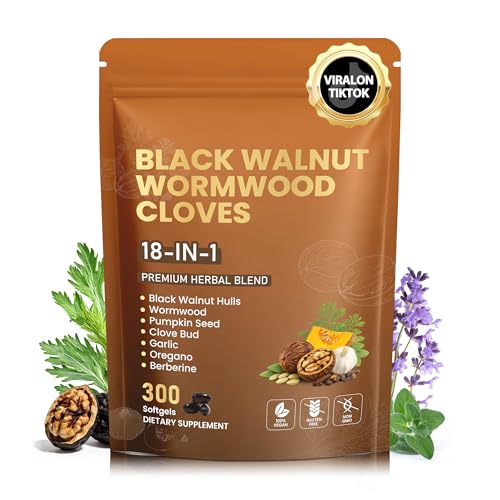
- CleanseParasites Herbal Parasite Cleanse Powder Editor’s Pick
Contains wormwood alongside black walnut hull, cloves, and other traditional parasite-cleanse herbs. - Herb Pharm Intestinal Tract Defense with Wormwood
liquid, 1 fl oz — A Herb Pharm herbal formula containing wormwood extract, not a single-herb wormwood tincture - AlchePharma Organic Wormwood Capsules
capsules, 90 vegan capsules — Single-herb organic Artemisia absinthium, non-GMO and gluten-free - Nature’s Answer Black Walnut and Wormwood Alcohol-Free Extract
liquid, 2 fl oz, 2,000 mg per serving — Alcohol-free dropper extract; a black walnut and wormwood combination, not single-herb wormwood - Frontier Co-op Wormwood Herb, Cut and Sifted
cut and sifted dried herb, 16 oz bulk bag — Bulk dried herb for traditional tea preparation, kosher certified
As an Amazon Associate we earn from qualifying purchases. Quality varies widely — always choose a product with a published third-party test (COA) before buying.

A Note on the Evidence
Most human evidence for wormwood and clove’s anti-parasitic effects comes from traditional use, in-vitro work, and animal or invertebrate models rather than large randomized controlled trials, so neither herb should replace medical diagnosis or treatment of a suspected parasitic infection. Anyone with a suspected infection, especially if pregnant, breastfeeding, or on anticonvulsant, antidepressant, or liver-metabolized medications, should consult a doctor before using wormwood or clove; this article is informational, not medical advice.
Frequently Asked Questions
Do wormwood and clove need to be taken together to work?
Traditional protocols pair them on a division-of-labor theory (adult organisms vs eggs), but there’s no large clinical trial confirming this combination clears a specific parasite in humans. Neither herb’s role in this framing has been validated beyond traditional use and preliminary lab research.
Is wormwood the same as the herb used to make artemisinin?
No. Artemisia absinthium (common wormwood) is a different species from Artemisia annua (sweet wormwood), which produces artemisinin, a validated antimalarial drug. Common wormwood’s anti-parasitic activity is attributed to different compounds (absinthin, artabsin) with a much thinner evidence base.
Is clove oil safe to take directly for a cleanse?
Raw essential oils, including clove oil, are poorly absorbed and can irritate mucous membranes and the gut when taken undiluted. Formulation research on other essential-oil compounds shows that emulsion-based delivery systems improve stability and permeation compared to raw oil [2], which suggests format matters even though that specific study wasn’t done on clove.
Can wormwood be used long-term for maintenance?
This isn’t advisable. Wormwood contains thujone, a neurotoxic compound linked to seizure risk at high doses or with prolonged use, which is why extracts are formulated to control thujone content and are generally intended for short courses only.
Who should avoid wormwood specifically?
Pregnant or breastfeeding people should avoid it entirely, and anyone on anticonvulsants, antidepressants, or medications metabolized by the liver should talk to a prescriber first because of interaction risk. This is a stricter caution list than clove’s typical safety profile at supplemental doses.
Does the eugenol research on silkworm muscle mean clove kills parasites?
Not directly. That study examined eugenol’s effect on muscle contraction in silkworm (Bombyx mori) [1], which is informative about eugenol’s pharmacology in an invertebrate model, but it is not a study of clove’s effect on parasite eggs or adult organisms in the human gut.
References
- Kheawfu K et al. Influence of clove oil and eugenol on muscle contraction of silkworm (Bombyx mori). Drug discoveries & therapeutics (2017). PMID 28458297
- Barradas TN et al. Hydrogel-thickened nanoemulsions based on essential oils for topical delivery of psoralen: Permeation and stability studies. European journal of pharmaceutics and biopharmaceutics : official journal of Arbeitsgemeinschaft fur Pharmazeutische Verfahrenstechnik e.V (2017). PMID 27867112
These statements have not been evaluated by the Food and Drug Administration. This information is not intended to diagnose, treat, cure, or prevent any disease. Content is for informational purposes only and is not medical advice; consult a qualified healthcare provider before starting any supplement. As an Amazon Associate we earn from qualifying purchases.