Wormwood (Artemisia absinthium) has a long history as a bitter medicinal plant, used across generations for digestive complaints, intestinal parasites, and fevers. It’s the same plant famous for flavoring absinthe and vermouth, and it’s often confused with its relative Artemisia annua (sweet wormwood), whose compound artemisinin is a proven antimalarial drug. Wormwood itself is a different plant with a different, far less established evidence base.
This article looks specifically at wormwood’s traditional reputation as a fever remedy, what’s actually been tested in animal studies, and why that’s a long way from proof that it works in people. This is informational only, not medical advice, and fever, especially in children, infants, or if it’s high or persistent, should be evaluated by a doctor.
Key Takeaways
- Wormwood (Artemisia absinthium) has a long traditional history of use for fevers, including use documented back to the Upper Palaeolithic in the Western Georgia region [1]
- Animal studies, including a 2024 rat study, show measurable antipyretic activity from wormwood extract, alone and combined with barley water [2]
- Older Pakistani research screened wormwood among other indigenous plants for antipyretic effects [3]
- None of this evidence comes from human clinical trials, so effective and safe human dosing for fever is not established
- Wormwood is distinct from Artemisia annua (sweet wormwood), the source of the clinically validated antimalarial artemisinin, don’t confuse the two
- Thujone content makes wormwood unsuitable for prolonged use, pregnancy, breastfeeding, or combination with certain medications
A Long History of Use Against Fever
Wormwood’s use as a fever remedy isn’t a recent wellness trend. Archaeobotanical and ethnobotanical research has traced medicinal plant use, including plants in the Artemisia family, back to the Upper Palaeolithic in Western Georgia, where certain plants were associated with treating fevers and other ailments among early human populations in the region [1]. This kind of evidence tells us wormwood and related plants have been part of human medicine for an extremely long time, but it describes historical and cultural use, not a controlled test of whether the plant actually lowers fever or by how much.
Traditional medicine systems in South Asia and the Middle East also list wormwood among plants used for fever. That kind of longstanding, cross-cultural use is worth noting as context, but it functions as a hypothesis generator for researchers, not as proof of efficacy on its own.

What Animal Studies Actually Show
The most direct evidence for wormwood’s antipyretic (fever-reducing) potential comes from a 2024 study testing a hydro-alcoholic extract of Artemisia absinthium in albino Wistar rats with yeast-induced pyrexia, a standard lab model for inducing fever to test candidate treatments. The extract showed antipyretic activity both on its own and when combined with barley water as an adjuvant [2]. This is a genuine finding, but it’s a single study, in rats, using an artificially induced fever model, which doesn’t necessarily translate to how the plant behaves in a person with a fever from, say, a viral infection.
Older research from Pakistan screened a range of indigenous medicinal plants, wormwood included in the broader category of plants tested, for antipyretic activity, part of a systematic look at traditional remedies used in that region [3]. Screening studies like this are useful for identifying which plants merit further investigation, but they are not equivalent to clinical trials and don’t establish a reliable dose or mechanism for human use.

The Proposed Mechanism
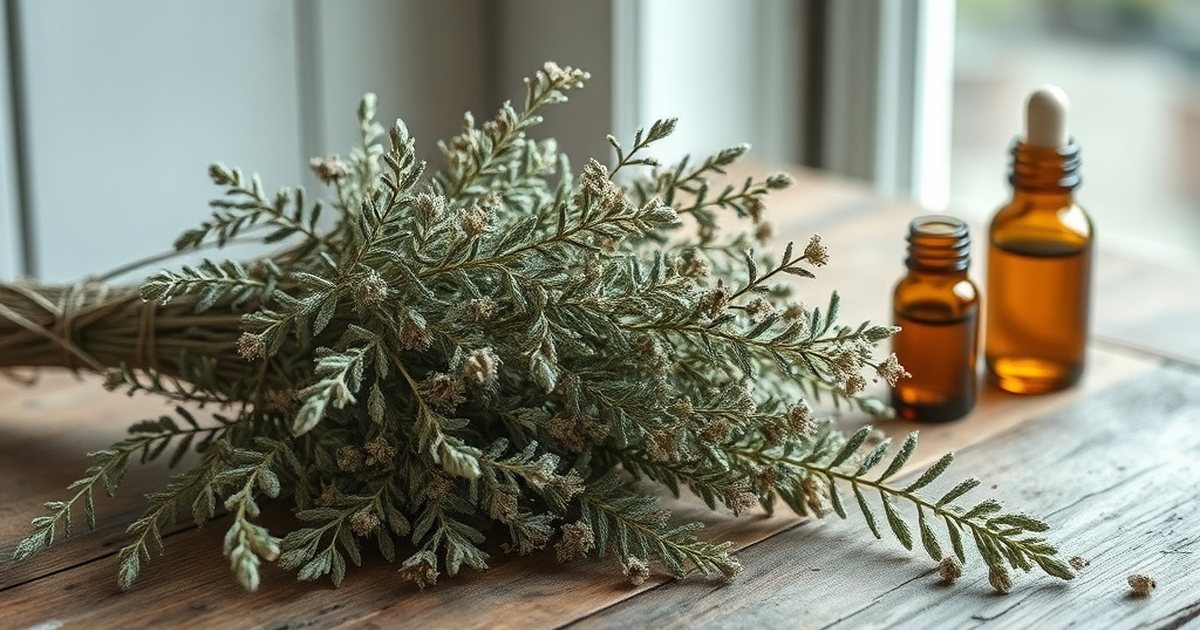
Wormwood contains bitter sesquiterpene lactones, including absinthin and artabsin, along with volatile oil compounds. These are generally discussed in the context of the plant’s antiparasitic and digestive-stimulant reputation, where the lactones and oils are proposed to disrupt parasite membranes and metabolism in vitro. How, or whether, these same compounds produce an antipyretic effect is far less clear. The animal studies above demonstrate an effect on measured body temperature, but they don’t establish which specific compound is responsible or the exact biological pathway involved.
It’s worth repeating that wormwood (Artemisia absinthium) is a different species from sweet wormwood (Artemisia annua), the source of artemisinin. Artemisinin has a well-characterized mechanism and decades of clinical validation as an antimalarial. None of that evidence transfers to Artemisia absinthium, and conflating the two plants is one of the most common sources of confusion in discussions of “wormwood.”
Why This Isn't the Same as Clinical Proof
Most of the evidence behind wormwood as a fever remedy sits in traditional use records and small animal studies, not large randomized controlled trials in humans. A rat model of yeast-induced fever can tell researchers a compound has some biological activity worth studying further, but rat physiology, dosing, and the artificial nature of the fever model all limit how confidently that finding can be extended to a person running a fever from, say, flu or a bacterial infection.

There’s also the matter of what’s actually in a given wormwood product. Extracts vary widely in thujone content and concentration of active compounds depending on preparation, and none of the cited studies used a standardized human-equivalent dose. Without that standardization, and without human trials, wormwood remains a traditionally used plant with some early laboratory support, not an established fever treatment.
Safety Considerations
Wormwood contains thujone, a compound with known neurotoxic effects that can trigger seizures at high doses or with prolonged use. For this reason, any wormwood extract should be thujone-controlled and used only for short courses. It is contraindicated in pregnancy and breastfeeding, and it can interact with anticonvulsants, antidepressants, and other drugs metabolized by the liver.
Because a fever is the body’s response to an underlying cause, infection, inflammation, or something else, self-treating a fever with wormwood instead of identifying and addressing that cause carries real risk, especially for high, prolonged, or recurrent fevers, or fevers in children.
🛒 Where to Buy Wormwood (Artemisia absinthium)
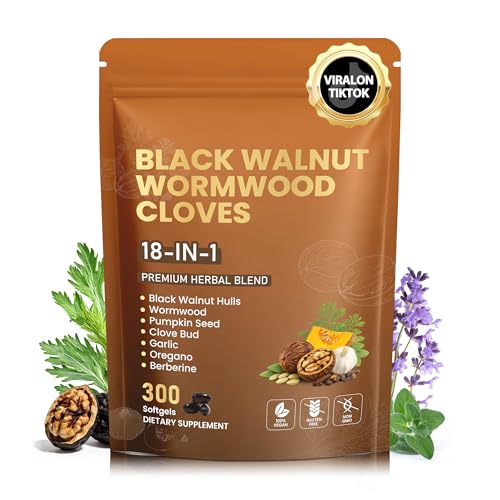
- CleanseParasites Herbal Parasite Cleanse Powder Editor’s Pick
Contains wormwood alongside black walnut hull, cloves, and other traditional parasite-cleanse herbs. - Herb Pharm Intestinal Tract Defense with Wormwood
liquid, 1 fl oz — A Herb Pharm herbal formula containing wormwood extract, not a single-herb wormwood tincture - AlchePharma Organic Wormwood Capsules
capsules, 90 vegan capsules — Single-herb organic Artemisia absinthium, non-GMO and gluten-free - Nature’s Answer Black Walnut and Wormwood Alcohol-Free Extract
liquid, 2 fl oz, 2,000 mg per serving — Alcohol-free dropper extract; a black walnut and wormwood combination, not single-herb wormwood - Frontier Co-op Wormwood Herb, Cut and Sifted
cut and sifted dried herb, 16 oz bulk bag — Bulk dried herb for traditional tea preparation, kosher certified
As an Amazon Associate we earn from qualifying purchases. Quality varies widely — always choose a product with a published third-party test (COA) before buying.
A Note on the Evidence
The evidence for wormwood as a fever remedy comes mainly from traditional use and small animal studies, not human clinical trials, and thujone content makes it unsuitable for prolonged use, pregnancy, breastfeeding, or certain medication combinations. This is informational only; consult a doctor for any fever, especially if high, persistent, or in a child.
Frequently Asked Questions
Is wormwood a proven fever treatment?
No. The evidence is limited to traditional use records and animal studies, including a 2024 rat study showing antipyretic activity [2], but there are no large human clinical trials confirming safety or effective dosing for fever.
Is wormwood the same as the plant used to make antimalarial medicine?
No. That’s Artemisia annua (sweet wormwood), a different species whose compound artemisinin is a validated antimalarial drug. Artemisia absinthium, the classic bitter wormwood discussed here, has a separate and much less established evidence base.
What compounds in wormwood are thought to have activity?
Sesquiterpene lactones like absinthin and artabsin, along with volatile oil compounds, are the main compounds of interest. Their exact role in any antipyretic effect specifically hasn’t been clearly established.
Why has wormwood been used for fever for so long?
Ethnobotanical research has documented use of medicinal plants for treating fevers going back to the Upper Palaeolithic in Western Georgia [1], suggesting a very long history of traditional use, though historical use alone doesn’t confirm efficacy.
Is wormwood safe to use for a fever at home?
It carries real risks. Wormwood contains thujone, which is neurotoxic and can trigger seizures at high doses or with prolonged use, and it’s contraindicated in pregnancy and breastfeeding and can interact with several medication classes. A fever should be evaluated by a doctor, especially if it’s high, prolonged, or in a child.
Should wormwood replace a doctor's evaluation of a fever?
No. A fever is a symptom of an underlying cause that needs proper diagnosis. Wormwood should not be used to self-treat a fever in place of medical evaluation and treatment.
References
- Martkoplishvili I et al. Some popular medicinal plants and diseases of the Upper Palaeolithic in Western Georgia. Journal of ethnopharmacology (2015). PMID 25769538
- Bhat MM et al. Antipyretic activity of the hydro-alcoholic extract of Artemisia absinthium L. as a standalone and as an adjuvant with barley water against yeast-induced pyrexia in albino Wistar rats. Journal of complementary & integrative medicine (2024). PMID 38109312
- Khattak SG et al. Antipyretic studies on some indigenous Pakistani medicinal plants. Journal of ethnopharmacology (1985). PMID 3878916
These statements have not been evaluated by the Food and Drug Administration. This information is not intended to diagnose, treat, cure, or prevent any disease. Content is for informational purposes only and is not medical advice; consult a qualified healthcare provider before starting any supplement. As an Amazon Associate we earn from qualifying purchases.