Wormwood (Artemisia absinthium) is a perennial, silvery-leaved shrub in the daisy family, native to temperate Europe, Asia, and parts of North Africa, and now naturalized across North America. Long before it became a supplement ingredient, it was grown in kitchen gardens and monastery herb plots for its intensely bitter leaves, used in tonics, teas, and eventually the spirit that shares its name.
Today’s wormwood supplements come from cultivated or wild-harvested plants that go through drying, extraction, and standardization steps before they reach capsules, tinctures, or teas. How the plant is grown and processed matters a lot for quality and safety, because wormwood’s active compounds, including the neurotoxic constituent thujone, vary widely depending on species, growing conditions, harvest timing, and extraction method. This article walks through that process honestly, without claiming any particular growing or processing method makes wormwood a proven parasite treatment.
Key Takeaways
- Wormwood (Artemisia absinthium) is cultivated or wild-harvested, then dried and extracted into tinctures, standardized extracts, or essential oil.
- Thujone content varies significantly by plant chemotype, growing conditions, and harvest timing, which is why testing and standardization matter for safety.
- Wormwood essential oil is highly concentrated in thujone and is not the same product as a thujone-controlled oral extract.
- Correct species identification during growing and processing distinguishes A. absinthium from its relative A. annua (sweet wormwood), which has very different chemistry.
- Processing quality does not replace medical evaluation, especially given interactions with liver-metabolized drugs, anticonvulsants, and antidepressants, and contraindication in pregnancy.
Where and How Wormwood Is Grown
Artemisia absinthium is a hardy, drought-tolerant perennial that grows well in full sun and well-drained, even poor, soil. It is cultivated commercially in parts of Europe (notably France, Germany, and Eastern Europe), as well as in the United States, and it also grows as an escaped wild plant along roadsides and disturbed ground in many temperate regions. Growers typically propagate it from seed or root division, and established plants can be harvested for several years.
Because wormwood is closely related to other Artemisia species, especially Artemisia annua (sweet wormwood), correct botanical identification during cultivation is important. The two plants look somewhat similar but have very different chemistry: A. annua is the source of artemisinin, a validated antimalarial compound, while A. absinthium’s bitter profile comes from sesquiterpene lactones like absinthin and artabsin, along with a volatile oil that contains thujone. Reputable suppliers verify species identity, since mislabeling or cross-contamination between Artemisia species would change both the expected effects and the safety profile of a finished product.
Harvest Timing and Plant Part Selection
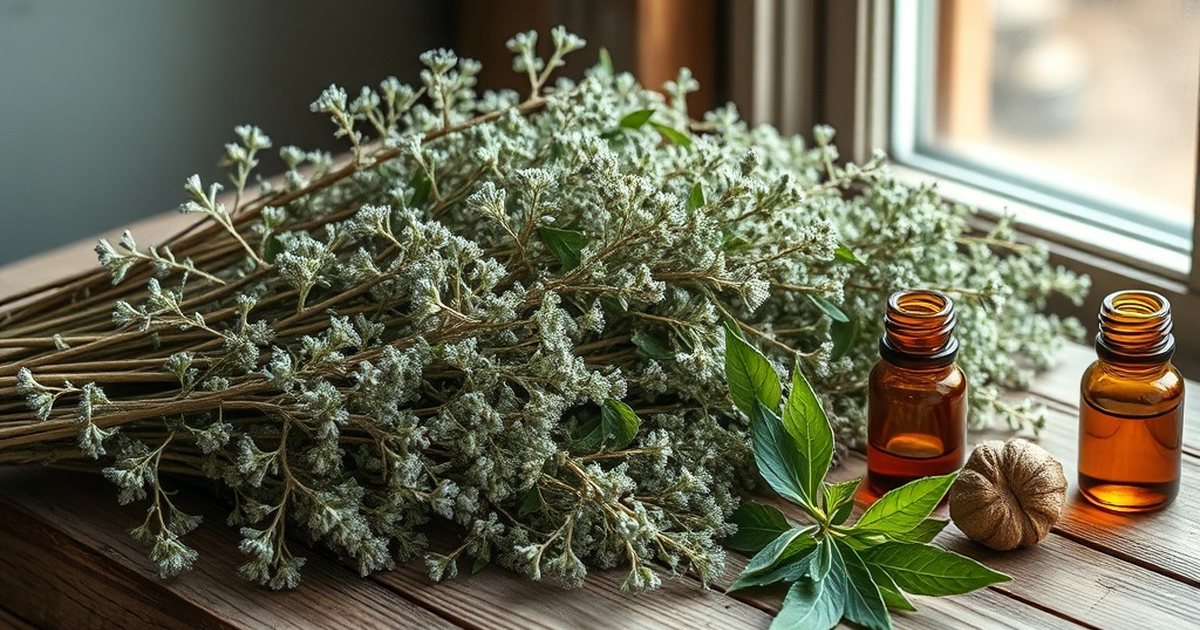
The leaves and flowering tops of wormwood are the parts typically harvested for supplements, usually cut just before or during early flowering, when the concentration of bitter compounds and essential oil is considered highest by traditional and commercial standards. Harvesting is often done by hand or with light mechanical cutting to avoid excessive stem material, which dilutes the potency of the batch.

Timing also affects thujone content, which is not fixed but varies with the plant’s growth stage, the specific chemotype (different wormwood populations can have notably different thujone-to-other-compound ratios), and growing conditions such as soil, climate, and stress. This is one reason two batches of wormwood grown in different regions, or harvested at different points in the season, are not necessarily equivalent in potency[1], and why standardization during processing matters.
Drying and Initial Processing
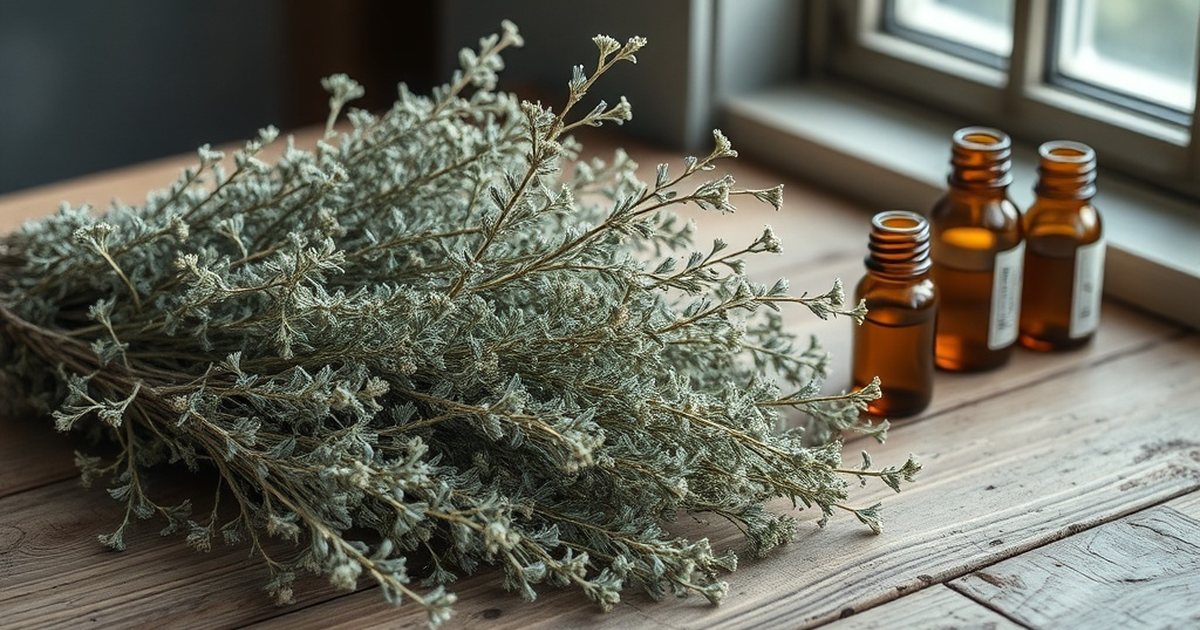
After harvest, wormwood is typically dried quickly, either in shade or with controlled low-heat air drying, to preserve the volatile oil and reduce the risk of mold or degradation. Sun-drying or high-heat drying can drive off some of the volatile compounds unevenly and is generally avoided by quality-focused producers, since it can make potency less predictable rather than more controlled.

Once dried, the plant material is usually milled or cut to a consistent particle size before it moves into extraction. Some products are sold as simple dried-leaf tea-cut material at this stage, while most supplement-grade wormwood continues into a solvent extraction or distillation step to concentrate and further standardize the active compounds.
Extraction Methods: Tinctures, Extracts, and Essential Oil
Wormwood is processed into several different supplement forms. Alcohol-based tinctures are made by macerating dried plant material in an ethanol-water solution, which pulls out both the bitter sesquiterpene lactones and some of the volatile oil components, including thujone. Dry or liquid extracts are produced by further concentrating this extraction and removing the solvent, producing a more potent, standardized material used in capsules or drops.
Steam distillation is used to isolate wormwood essential oil, which is high in thujone and is generally not intended for internal supplement use due to its concentrated neurotoxic potential. Because thujone is the main safety concern with wormwood, reputable manufacturers use processing steps, such as selecting low-thujone chemotypes, controlling extraction solvents and times, or specifically removing thujone, to produce what is marketed as a ‘thujone-controlled’ or ‘thujone-free’ extract for oral supplement use.

Standardization, Testing, and Quality Control
Because thujone content varies so much by growing conditions and plant chemotype, testing finished wormwood extracts for thujone concentration is an important quality control step, not an optional one. Regulatory limits on thujone in food and beverage products (including absinthe-style spirits) exist in many countries specifically because of this compound’s dose-dependent neurotoxicity[2][3], and similar caution applies to oral herbal supplements.
Quality-focused processors also test for the presence of other Artemisia species, pesticide residues, heavy metals, and microbial contamination, all standard concerns for any dried botanical material. Because a large share of the human evidence for wormwood’s traditional anti-parasitic use comes from historical use and in-vitro or animal studies rather than large randomized controlled trials, testing and standardization are really about ensuring a consistent, contaminant-free product with a known thujone level, not about confirming a specific therapeutic dose.
From Processed Extract to Finished Supplement
Once a wormwood extract has been dried, standardized, and tested, it is formulated into finished products: capsules, tablets, liquid tinctures, or blended teas, often combined with other traditional ‘bitters’ or digestive herbs. Manufacturers following good manufacturing practice document the source, extraction method, and thujone content on a certificate of analysis, though the level of transparency and rigor varies considerably between brands.
Because wormwood interacts with drugs metabolized by the liver and with anticonvulsants and antidepressants, and is contraindicated in pregnancy and breastfeeding, how a product is processed does not eliminate the need for medical guidance before use, particularly for extended or high-dose use rather than short traditional-style courses.
🛒 Where to Buy Wormwood (Artemisia absinthium)
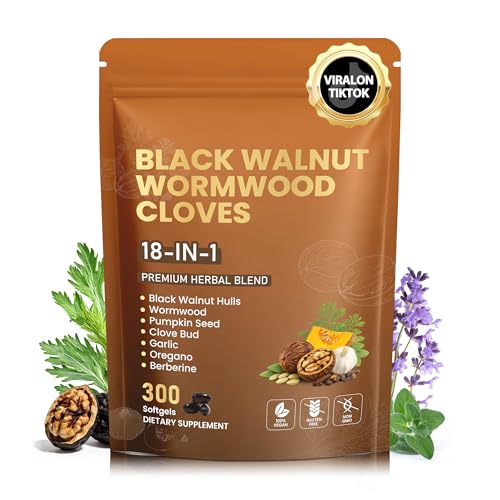
- CleanseParasites Herbal Parasite Cleanse Powder Editor’s Pick
Contains wormwood alongside black walnut hull, cloves, and other traditional parasite-cleanse herbs. - Herb Pharm Intestinal Tract Defense with Wormwood
liquid, 1 fl oz — A Herb Pharm herbal formula containing wormwood extract, not a single-herb wormwood tincture - AlchePharma Organic Wormwood Capsules
capsules, 90 vegan capsules — Single-herb organic Artemisia absinthium, non-GMO and gluten-free - Nature’s Answer Black Walnut and Wormwood Alcohol-Free Extract
liquid, 2 fl oz, 2,000 mg per serving — Alcohol-free dropper extract; a black walnut and wormwood combination, not single-herb wormwood - Frontier Co-op Wormwood Herb, Cut and Sifted
cut and sifted dried herb, 16 oz bulk bag — Bulk dried herb for traditional tea preparation, kosher certified
As an Amazon Associate we earn from qualifying purchases. Quality varies widely — always choose a product with a published third-party test (COA) before buying.
A Note on the Evidence
Much of the evidence behind wormwood’s anti-parasitic reputation comes from traditional use and in-vitro or animal research rather than large controlled human trials, and processing quality varies by manufacturer. Wormwood is contraindicated in pregnancy and breastfeeding, can interact with anticonvulsants, antidepressants, and liver-metabolized drugs, and should not replace medical diagnosis or treatment of a suspected parasitic infection; talk to a doctor before use, especially beyond short courses.
Frequently Asked Questions
Is wormwood grown the same way as sweet wormwood (Artemisia annua)?
No. Both are Artemisia species and can be grown in similar climates, but they are chemically distinct: A. absinthium produces bitter sesquiterpene lactones and a thujone-containing volatile oil, while A. annua produces artemisinin, a validated antimalarial compound. Growers and processors must keep the species separate to avoid mislabeling.
Why does thujone content vary between wormwood products?
Thujone levels depend on the plant’s chemotype, growing conditions, harvest timing, and how the plant material is dried and extracted. This is why standardization and lab testing of finished extracts are used to keep thujone within a controlled range rather than relying on raw dried herb alone.
Is wormwood essential oil the same as a wormwood supplement?
No. Essential oil is produced by steam distillation and is highly concentrated in thujone, making it unsuitable for the internal doses typical of oral supplements. Most oral wormwood products are alcohol- or water-based extracts, ideally described as thujone-controlled.
Does how wormwood is processed affect its traditional anti-parasitic use?
Processing method affects the concentration of the sesquiterpene lactones and volatile oil compounds thought to disrupt parasite membranes and metabolism in vitro, but most evidence for this effect comes from traditional use and laboratory or animal studies, not large human trials, regardless of how the extract is made.
Are there quality checks besides thujone testing?
Yes. Reputable processors also test for correct species identity, pesticide residues, heavy metals, and microbial contamination, standard concerns for any dried botanical ingredient, in addition to confirming thujone levels.
Can I safely take any wormwood supplement long-term?
Extended or high-dose use is not advised regardless of how the product was processed, because of thujone’s neurotoxic potential and wormwood’s interactions with anticonvulsants, antidepressants, and liver-metabolized medications. Short traditional-style courses under medical guidance are the more cautious approach.
References
- Bach B et al. A new chemical tool for absinthe producers, quantification of α/β-thujone and the bitter components in Artemisia absinthium. Food chemistry (2016). PMID 27451252
- Lachenmeier DW et al. Absinthe–a review. Critical reviews in food science and nutrition (2006). PMID 16891209
- Pelkonen O et al. Thujone and thujone-containing herbal medicinal and botanical products: toxicological assessment. Regulatory toxicology and pharmacology (2013). PMID 23201408
These statements have not been evaluated by the Food and Drug Administration. This information is not intended to diagnose, treat, cure, or prevent any disease. Content is for informational purposes only and is not medical advice; consult a qualified healthcare provider before starting any supplement. As an Amazon Associate we earn from qualifying purchases.