Wormwood (Artemisia absinthium) has a long history as a bitter digestive herb and traditional anti-parasitic, and it’s the plant that gives absinthe and vermouth their name and flavor. But unlike a daily vitamin or a mineral supplement, wormwood isn’t something to take indefinitely. Its safety profile is shaped almost entirely by dose and duration, not just by whether you take it at all.
That’s because wormwood contains thujone, a compound that is neurotoxic in high enough amounts and with prolonged exposure. This article walks through why cycle length matters, what ‘short course’ typically means in traditional and clinical use, and who should avoid wormwood altogether. This is educational information, not a personalized treatment plan.
Key Takeaways
- Wormwood is a short-course herb by design, not a long-term daily supplement, because of thujone’s neurotoxic potential with prolonged use.
- Cycling (defined courses with breaks in between) exists to limit cumulative thujone exposure.
- Stop immediately if you notice tremor, agitation, confusion, or other neurological symptoms during a course.
- Avoid entirely if pregnant, breastfeeding, have a seizure disorder, or take anticonvulsants/antidepressants without medical guidance.
- Most anti-parasitic evidence is traditional/in-vitro/animal-based, not large human trials, so it shouldn’t replace medical diagnosis of a suspected infection.
Why Wormwood Isn't a Long-Term Supplement
Most herbs marketed for gut health or general wellness are reasonably safe to take for months at a time. Wormwood is different. Its defining chemistry, thujone along with bitter sesquiterpene lactones like absinthin and artabsin, is exactly what makes it potent, and also what makes it risky with extended use. Thujone can act directly on the brain’s main inhibitory system: it suppresses signalling at the GABA-A receptor, which is why it is associated with agitation, tremor and, at high doses, seizures [1]. It is worth being accurate about the reason this argues for short courses, because the common explanation — that thujone builds up in the body between doses — is not what the pharmacology shows. Thujone is cleared quickly by cytochrome P450 enzymes [1], and in human liver preparations CYP2A6 handles roughly 70 to 80 percent of that clearance [2]. The real finding is more interesting: thujone inhibits CYP2A6 and CYP2B6, the same enzymes responsible for removing it [2], and toxicokinetic work in rats and mice found exposure rising faster than dose, consistent with elimination becoming saturated as intake increases [3]. In other words the body clears thujone well at low exposure and less well as exposure rises — which is an argument for keeping both the dose and the course small, and it is the argument this article is making.
This is why herbalists and regulatory bodies alike frame wormwood as a short-course herb: used deliberately for a defined period, then stopped. It is not designed, and has not been studied, as something to take continuously the way you might take a daily probiotic or a mineral supplement.
What 'Short Course' Actually Means
There isn’t a single universally agreed-upon number of days that applies to every product, since thujone content varies by preparation (tincture, capsule, tea) and by how the extract was processed. Thujone-controlled or thujone-free extracts are formulated specifically to reduce this risk, which is part of why product labeling and sourcing matter as much as the raw plant name.

In practice, traditional and product-label guidance for wormwood tends to describe courses measured in days to a couple of weeks, followed by a break, rather than open-ended daily use. If a product doesn’t specify a maximum duration on its label or in accompanying documentation, that’s a gap worth asking about before starting, not a signal that continuous use is fine.
Why Cycling (On-Off Periods) Is the Standard Approach
Cycling, taking wormwood for a defined stretch and then stopping for a period before considering another course, exists specifically to keep total thujone exposure low. The framing usually given for this — letting the compound wash out between courses — is a little off, since clearance is fast rather than slow [1]; the more defensible reason is that repeated or escalating intake is exactly the condition under which the elimination pathway looks least reliable [2] [3]. A pharmacological review of the plant makes the same point from the clinical end, noting that long-term use of Artemisia absinthium essential oil in humans has been associated with convulsions, sleeplessness and hallucinations [4] — which is a description of what sustained use looks like when it goes wrong, and the clearest available reason not to treat this as a daily supplement. This is the same logic behind cycling protocols used with other potent bitter herbs and essential-oil-bearing plants.
Stacking multiple thujone-containing herbs at once (wormwood alongside sage, tansy, or thuja, for example) increases the same risk and should generally be avoided rather than combined to ‘boost’ an effect.
Signs You Should Stop a Course Early
Because thujone toxicity is dose- and duration-dependent, paying attention to how you feel during a course matters more with wormwood than with most herbs. Restlessness, tremor, unusual anxiety, confusion, or any neurological symptom is a reason to stop immediately and seek medical advice, not to push through to finish a planned course.
Digestive upset, nausea, or worsening of an existing GI condition are also reasons to discontinue and check in with a healthcare provider, since wormwood’s bitterness itself can aggravate certain conditions independent of thujone effects.

Who Shouldn't Take Wormwood at All
Wormwood is contraindicated in pregnancy and breastfeeding. It should also be avoided or discussed with a doctor first by anyone with a seizure disorder, given thujone’s neurotoxic potential, and by anyone taking anticonvulsants, antidepressants, or medications metabolized heavily by the liver, since interactions are possible.
People with known allergies to plants in the Asteraceae/Compositae family (ragweed, daisies, chrysanthemums) may also react to wormwood. If you have liver disease or take multiple medications, a conversation with a pharmacist or physician before starting is the safer path, not an optional extra step.
The State of the Evidence
It’s worth being direct about what the evidence actually supports here: most human data on wormwood’s anti-parasitic effects comes from traditional use and from in-vitro or animal studies, rather than large randomized controlled trials in people. The proposed mechanism, that sesquiterpene lactones and volatile oil compounds disrupt parasite membranes and metabolism, is plausible based on lab research, but that’s a different level of evidence than a confirmed clinical outcome in humans.
This distinction matters practically: wormwood should not be used as a substitute for medical diagnosis or treatment if you suspect an actual parasitic infection. A stool test and a conversation with a healthcare provider are the appropriate first steps; wormwood, if used at all, is a traditional adjunct, not a replacement for diagnosis.
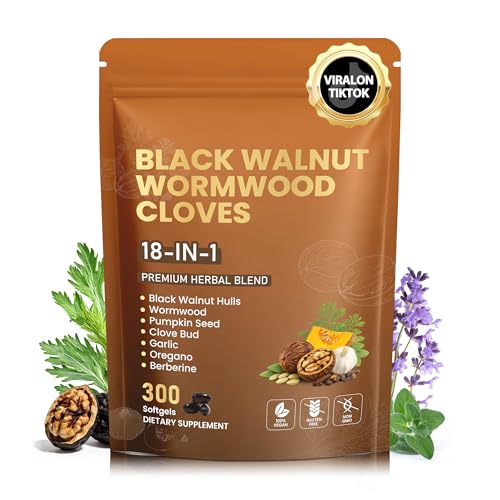
🛒 Where to Buy Wormwood (Artemisia absinthium)
- CleanseParasites Herbal Parasite Cleanse Powder Editor’s Pick
Contains wormwood alongside black walnut hull, cloves, and other traditional parasite-cleanse herbs. - Herb Pharm Intestinal Tract Defense with Wormwood
liquid, 1 fl oz — A Herb Pharm herbal formula containing wormwood extract, not a single-herb wormwood tincture - AlchePharma Organic Wormwood Capsules
capsules, 90 vegan capsules — Single-herb organic Artemisia absinthium, non-GMO and gluten-free - Nature’s Answer Black Walnut and Wormwood Alcohol-Free Extract
liquid, 2 fl oz, 2,000 mg per serving — Alcohol-free dropper extract; a black walnut and wormwood combination, not single-herb wormwood - Frontier Co-op Wormwood Herb, Cut and Sifted
cut and sifted dried herb, 16 oz bulk bag — Bulk dried herb for traditional tea preparation, kosher certified
As an Amazon Associate we earn from qualifying purchases. Quality varies widely — always choose a product with a published third-party test (COA) before buying.
A Note on the Evidence
This article is informational, not medical advice, and no clinical citations were available to support specific findings in this piece. Anyone considering wormwood, especially for a suspected parasitic infection, on medication, pregnant, breastfeeding, or with a seizure history, should consult a healthcare provider first and choose a thujone-controlled product with clear course-length labeling.
Frequently Asked Questions
Is wormwood safe to take every day?
No. Wormwood’s thujone content makes it a short-course herb rather than a daily long-term supplement. Traditional and label guidance typically point to defined courses with breaks in between, not continuous daily use.
How is wormwood different from sweet wormwood (Artemisia annua)?
They’re related but distinct plants. Sweet wormwood contains artemisinin, a validated frontline antimalarial drug, while common wormwood (Artemisia absinthium) contains thujone and has a very different safety and evidence profile focused on traditional digestive and anti-parasitic use.

What is thujone and why does it matter for cycle length?
Thujone is a neurotoxic compound in wormwood that can cause agitation, tremor, or seizures at high doses or with prolonged use. Its presence is the main reason wormwood use is limited to short courses rather than open-ended daily intake.
Can I take wormwood with other herbs or medications?
Combining wormwood with other thujone-containing herbs (sage, tansy, thuja) raises the same neurotoxicity risk and should generally be avoided. It may also interact with anticonvulsants, antidepressants, and liver-metabolized drugs, so check with a doctor or pharmacist first.
Who should avoid wormwood completely?
Pregnant or breastfeeding people, anyone with a seizure disorder, and anyone on anticonvulsants or antidepressants should avoid wormwood or only use it under medical supervision, given thujone’s neurotoxic and interaction potential.
Does wormwood cure parasites?
There isn’t strong human clinical trial evidence to support that claim. Most anti-parasitic evidence for wormwood comes from traditional use and in-vitro/animal studies. If you suspect a parasitic infection, get tested and treated by a healthcare provider rather than relying on wormwood alone.
References
- Hold KM et al. Alpha-thujone (the active component of absinthe): gamma-aminobutyric acid type A receptor modulation and metabolic detoxification. Proc Natl Acad Sci U S A (2000). PMID 10725394
- Abass K et al. Metabolism of alpha-thujone in human hepatic preparations in vitro. Xenobiotica (2011). PMID 21087116
- Waidyanatha S et al. Toxicokinetics of alpha-thujone following intravenous and gavage administration of alpha-thujone or alpha- and beta-thujone mixture in male and female F344/N rats and B6C3F1 mice. Toxicol Appl Pharmacol (2013). PMID 23669748
- Batiha GE et al. Bioactive Compounds, Pharmacological Actions, and Pharmacokinetics of Wormwood (Artemisia absinthium). Antibiotics (Basel) (2020). PMID 32585887
These statements have not been evaluated by the Food and Drug Administration. This information is not intended to diagnose, treat, cure, or prevent any disease. Content is for informational purposes only and is not medical advice; consult a qualified healthcare provider before starting any supplement. As an Amazon Associate we earn from qualifying purchases.