Wormwood (Artemisia absinthium) is a bitter herb with a long history in traditional digestive medicine, but it’s also one of the few herbal remedies that has actually been tested against Crohn’s disease in double-blind, placebo-controlled clinical trials rather than just traditional use or lab studies. That distinction matters, because most herbal claims for inflammatory bowel disease (IBD) never make it past animal or in-vitro research.
This article walks through what those specific wormwood-and-Crohn’s trials measured, what they found, and where the evidence stops. It is not a recommendation to replace prescribed Crohn’s treatment with an herb, and wormwood carries real risks (including neurotoxicity from its thujone content) that make medical supervision non-negotiable if someone wants to explore it.
Key Takeaways
- Two double-blind, placebo-controlled trials specifically tested wormwood in Crohn’s disease patients as an add-on to conventional care, not a replacement for it [1][2]
- One trial found wormwood helped patients taper off corticosteroids while remaining in remission [1]
- Another found wormwood suppressed TNF-alpha and was linked to healing markers, consistent with its proposed anti-inflammatory mechanism [2]
- Wormwood is one of the few herbs with double-blind RCT evidence in IBD, but the overall herbal-IBD evidence base remains small and inconsistent [3][4]
- Thujone toxicity, drug interactions, and pregnancy contraindications make medical supervision essential; this is not a self-directed supplement decision
The two key trials
Two double-blind, placebo-controlled trials form the core of the direct clinical evidence on wormwood and Crohn’s disease. The first, a steroid-sparing study, tested whether adding wormwood to a patient’s regimen would allow them to taper off corticosteroids while maintaining remission [1]. The second, a separate controlled clinical trial, looked at wormwood’s effect on tumour necrosis factor alpha (TNF-alpha), an inflammatory signaling molecule central to Crohn’s disease pathology, alongside clinical healing measures [2].
Both studies were small, which is typical for herbal medicine research in IBD, and both were designed as adjuncts to conventional care rather than replacements for it. Patients in these trials were not taken off standard treatment and given wormwood instead; wormwood was added on top of, or used during tapering of, existing steroid therapy.

The steroid-sparing findings
The steroid-sparing trial found that patients receiving wormwood extract alongside their steroid taper were able to reduce corticosteroid use while their Crohn’s remained in remission, compared to those on placebo [1]. This is a clinically meaningful endpoint in Crohn’s disease specifically because long-term steroid use carries its own significant burden: bone density loss, adrenal suppression, weight gain, mood effects, and other complications that make steroid-sparing a genuine treatment goal, not just a secondary outcome.
It’s worth being precise about what ‘steroid-sparing’ means here: it does not mean wormwood replaced steroids outright, or that patients on wormwood alone stayed in remission. It means wormwood appeared to help patients get off steroids faster or more successfully than placebo did, in a supervised clinical setting.
The TNF-alpha and healing findings
The second controlled trial reported that wormwood suppressed TNF-alpha levels and was associated with accelerated healing markers in Crohn’s disease patients compared to controls [2]. TNF-alpha is the same inflammatory target that major biologic Crohn’s drugs (the anti-TNF class) are designed to block, so a finding that an herbal extract measurably affects this pathway is notable, though it’s a very different thing from being equivalent to those drugs in potency, consistency, or evidence base.

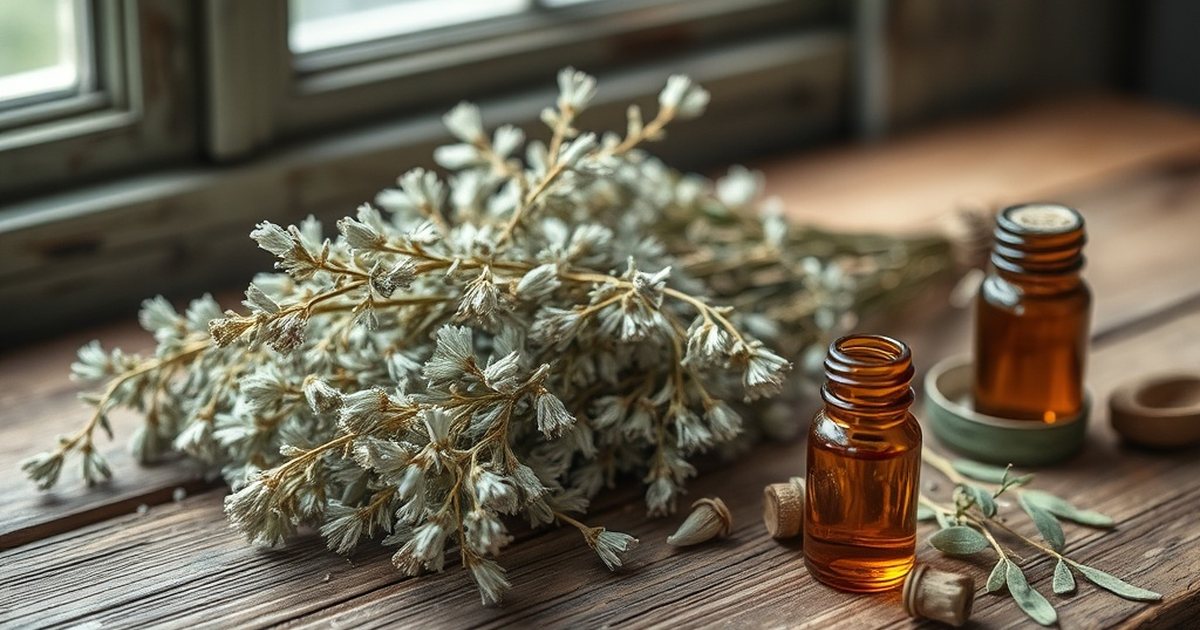
This is where the proposed mechanism comes in: wormwood’s sesquiterpene lactones (compounds like absinthin and artabsin) and volatile oil constituents are thought to have anti-inflammatory and antimicrobial actions, distinct from the antimalarial artemisinin found in its relative, sweet wormwood (Artemisia annua). The TNF-alpha suppression reported in this trial is consistent with that proposed mechanism, but a single small trial measuring a biomarker change is not the same as proof of a durable disease-modifying effect.
How this fits into the broader herbal-IBD evidence base
A 2020 review focused specifically on herbal medicinal products for IBD that have been tested in double-blind randomised controlled trials identifies wormwood as one of a relatively short list of herbs with this level of evidence behind it, alongside other botanicals studied for ulcerative colitis and Crohn’s [3]. Being included in that review is itself a signal: most herbal IBD remedies never reach double-blind RCT testing at all.
A broader systematic review of herbal therapy efficacy across inflammatory bowel disease reinforces that the overall evidence base for herbal IBD treatments remains thin, and treatment effects, dosing, and quality of extracts vary considerably between studies and products [4]. Wormwood is a comparatively well-studied case within a field where most other herbal candidates have far less rigorous data behind them, but ‘comparatively well-studied’ in this space still means a handful of small trials, not the large multi-site RCTs used to approve conventional Crohn’s medications.
Safety: thujone, contraindications, and why this isn't a DIY supplement
Wormwood contains thujone, a compound that is neurotoxic and has been linked to seizures at high doses or with prolonged, uncontrolled use. This is precisely why the clinical trials behind these findings used thujone-controlled extracts, not raw wormwood tea, tincture, or unregulated supplement products bought off a shelf. The dose, extraction method, and thujone content used in a controlled trial are not the same as what’s in an arbitrary commercial product.
Wormwood is contraindicated in pregnancy and breastfeeding, and it can interact with anticonvulsants, antidepressants, and other drugs processed by the liver, which is a particular concern for Crohn’s patients who are often on multiple medications already. Given that Crohn’s is a serious, potentially complication-prone disease, self-directing wormwood use without medical supervision, especially alongside existing prescriptions, is not something these trials support or that this article recommends.
🛒 Where to Buy Wormwood (Artemisia absinthium)
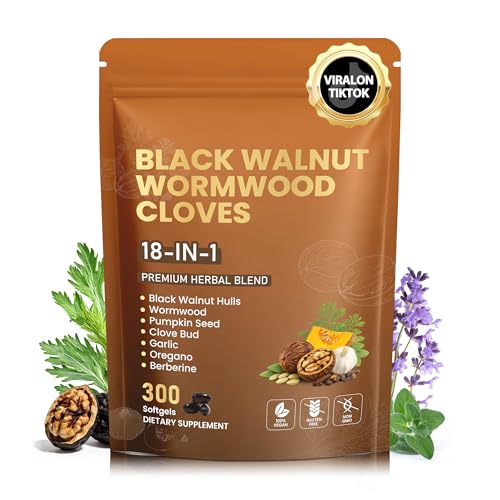
- CleanseParasites Herbal Parasite Cleanse Powder Editor’s Pick
Contains wormwood alongside black walnut hull, cloves, and other traditional parasite-cleanse herbs. - Herb Pharm Intestinal Tract Defense with Wormwood
liquid, 1 fl oz — A Herb Pharm herbal formula containing wormwood extract, not a single-herb wormwood tincture - AlchePharma Organic Wormwood Capsules
capsules, 90 vegan capsules — Single-herb organic Artemisia absinthium, non-GMO and gluten-free - Nature’s Answer Black Walnut and Wormwood Alcohol-Free Extract
liquid, 2 fl oz, 2,000 mg per serving — Alcohol-free dropper extract; a black walnut and wormwood combination, not single-herb wormwood - Frontier Co-op Wormwood Herb, Cut and Sifted
cut and sifted dried herb, 16 oz bulk bag — Bulk dried herb for traditional tea preparation, kosher certified
As an Amazon Associate we earn from qualifying purchases. Quality varies widely — always choose a product with a published third-party test (COA) before buying.
A Note on the Evidence
This evidence comes from a small number of controlled trials using thujone-controlled extracts under medical supervision, not from large-scale research or over-the-counter products, and wormwood carries real risks including seizure potential, pregnancy contraindications, and drug interactions. This is informational content, not medical advice; anyone with Crohn’s disease considering wormwood should discuss it with their treating physician first.

Frequently Asked Questions
Is wormwood a proven treatment for Crohn's disease?
No. It has support from two small double-blind, placebo-controlled trials as an add-on to conventional treatment, showing steroid-sparing effects and reduced TNF-alpha with healing markers [1][2], but this is a much smaller evidence base than what exists for approved Crohn’s medications.
Can wormwood replace my Crohn's medication?
The clinical trials on wormwood tested it alongside standard treatment, particularly during steroid tapering, not as a replacement for prescribed Crohn’s therapy [1]. Stopping prescribed treatment without medical guidance is not supported by this evidence.
What does 'steroid-sparing' mean in the wormwood trial?
It means patients taking wormwood were able to reduce their corticosteroid dose while staying in remission, compared to those on placebo, in a supervised clinical trial setting [1]. It does not mean steroids were eliminated or unnecessary.

Is wormwood the same as sweet wormwood (Artemisia annua)?
No. Artemisia absinthium (wormwood) and Artemisia annua (sweet wormwood) are related but distinct plants. Sweet wormwood’s compound artemisinin is a validated antimalarial drug; wormwood’s proposed anti-inflammatory action in Crohn’s trials comes from different compounds, including sesquiterpene lactones like absinthin and artabsin.
Is wormwood safe to take on my own for Crohn's symptoms?
Not without medical supervision. Wormwood contains thujone, which is neurotoxic and can cause seizures at high doses or with prolonged use, and it’s contraindicated in pregnancy and breastfeeding and can interact with anticonvulsants, antidepressants, and liver-metabolized drugs. The trials used thujone-controlled extracts, not arbitrary commercial products.
How strong is the overall evidence for herbal medicine in IBD?
Generally limited. A systematic review of herbal therapy across inflammatory bowel disease found the evidence base thin and inconsistent overall [4], though wormwood is among the herbs specifically identified as having double-blind RCT support in a separate review of herbal IBD treatments [3].
References
- Omer B et al. Steroid-sparing effect of wormwood (Artemisia absinthium) in Crohn's disease: a double-blind placebo-controlled study. Phytomedicine : international journal of phytotherapy and phytopharmacology (2007). PMID 17240130
- Krebs S et al. Wormwood (Artemisia absinthium) suppresses tumour necrosis factor alpha and accelerates healing in patients with Crohn's disease – A controlled clinical trial. Phytomedicine : international journal of phytotherapy and phytopharmacology (2010). PMID 19962291
- Holleran G et al. Herbal medicinal products for inflammatory bowel disease: A focus on those assessed in double-blind randomised controlled trials. Phytotherapy research : PTR (2020). PMID 31701598
- Ng SC et al. Systematic review: the efficacy of herbal therapy in inflammatory bowel disease. Alimentary pharmacology & therapeutics (2013). PMID 23981095
These statements have not been evaluated by the Food and Drug Administration. This information is not intended to diagnose, treat, cure, or prevent any disease. Content is for informational purposes only and is not medical advice; consult a qualified healthcare provider before starting any supplement. As an Amazon Associate we earn from qualifying purchases.