Wormwood (Artemisia absinthium) is best known as the bitter herb behind absinthe and vermouth, and as a traditional remedy for digestive complaints and intestinal parasites. In recent years, researchers have also looked at whether its plant compounds, particularly sesquiterpene lactones and polyphenols, have measurable anti-inflammatory activity in lab and animal models.
This article summarizes what that research actually found, not what marketing copy claims. The short version: several studies report anti-inflammatory and antioxidant activity in extracts and cell/animal models, but this is early-stage science, not proof that wormwood treats any inflammatory condition in people.
Key Takeaways
- Lab and phytochemical studies have identified anti-inflammatory and antioxidant activity in Artemisia absinthium extracts, largely tied to phenolic compounds, including chlorogenic acids [1][2].
- In-vitro work has evaluated anti-inflammatory potential of processed extracts [3] and compared wormwood to its relative Artemisia annua [4].
- One 2025 study proposed a specific mechanism, JAK2/STAT3 pathway modulation, in an atherosclerosis model [5], but this is a single preclinical finding, not clinical proof.
- Traditional use for GI inflammation [6] supports why the plant was studied, not that it works as a treatment.
- Human trials of wormwood do exist, but none of them tests it as a general anti-inflammatory: a double-blind placebo-controlled trial in Crohn’s disease used a herbal blend containing wormwood, so it cannot isolate the herb [7]; a small controlled trial reported serum TNF-alpha falling from 24.5 to 8.0 pg/ml in Crohn’s patients given powdered wormwood [8]; and a randomized double-blind trial found a topical 3% wormwood ointment comparable to piroxicam gel for pain and function in knee osteoarthritis, though not for stiffness [9]. All three are small, two are in one disease, and one is applied to the skin rather than swallowed. Thujone content means any use should be short-term and thujone-controlled.
What compounds are researchers looking at?
Wormwood’s chemistry has been characterized in several phytochemical studies that link specific compound classes to biological activity. One 2024 spectrum-effect analysis worked to identify which constituents in Artemisia absinthium correlate most strongly with anti-inflammatory and antioxidant effects, an approach meant to pinpoint quality markers rather than just list every compound present [1].
A separate screening of Romanian wormwood characterized its physicochemical profile and nutraceutical potential, cataloguing the plant’s phenolic and mineral content as a basis for further pharmacological study [2]. These are foundational chemistry papers, they tell researchers what’s in the plant and which fractions are worth testing further, not what a standardized human dose would do.

Cell and extract studies on inflammation
Direct anti-inflammatory testing has mostly happened in vitro. A 2023 study assessed Artemisia absinthium extracts (alongside Artemisia vulgaris and fenugreek) processed through membrane technology, evaluating both antidiabetic and anti-inflammatory potential in laboratory assays [3]. Membrane-based processing was used specifically to concentrate bioactive fractions, which is a common technique for isolating a plant’s more potent constituents before testing.
A 2025 comparative study went further, evaluating flowers and leaves of both Artemisia absinthium and its relative Artemisia annua for anti-inflammatory, antioxidant, and anti-proliferative activity side by side [4]. Comparing the two species this way helps clarify whether wormwood’s effects are distinct from, or overlap with, those of its better-studied cousin (Artemisia annua is the source of the antimalarial drug artemisinin, an entirely different clinical use case).

A specific pathway: JAK2/STAT3 and vascular inflammation
The most mechanistically detailed study cited here is a 2025 paper examining whether Artemisia absinthium extract could influence atherosclerosis, a chronic inflammatory disease of the arteries, by targeting the JAK2/STAT3 signaling pathway [5]. JAK2/STAT3 is a cell-signaling route implicated in chronic inflammation and immune cell activation, and this study reported that the extract appeared to modulate it in the disease model tested.
This is the kind of finding that generates interest because it points to a plausible biological mechanism rather than just an observed effect. But a single mechanistic study, even a well-designed one, describes what happened in that specific model. It doesn’t establish that oral wormwood extract meaningfully changes arterial inflammation in humans, and no clinical trial data exists yet to make that connection.
Traditional use as context, not proof
Wormwood’s reputation for calming digestive inflammation and irritation has roots in traditional medicine practice. A review of traditional Persian topical medications for gastrointestinal disease catalogued wormwood among plants historically applied for GI complaints, reflecting centuries of empirical use rather than controlled trial data [6].

Traditional use is a reasonable starting point for researchers deciding what to study, it’s part of why wormwood attracted lab attention in the first place, but it isn’t independent evidence that the anti-inflammatory mechanisms seen in extracts translate to a therapeutic effect when someone takes a supplement.
Where the evidence gap actually sits
Every study in this body of evidence is in vitro, based on extract chemistry, or conducted in animal/disease models. None of the cited research is a randomized controlled trial in humans measuring inflammatory markers, symptoms, or outcomes after wormwood supplementation. That gap matters: cell and animal studies routinely fail to replicate in humans, dosing in a petri dish or a mouse model doesn’t map cleanly onto a capsule or tincture, and none of this research addresses long-term safety at doses people might actually take.
There’s also the thujone issue. Wormwood contains thujone, a compound that is neurotoxic in excess and has been linked to seizures with prolonged or high-dose use. This is separate from the anti-inflammatory research question but directly relevant to anyone considering trying wormwood: any extract used should be thujone-controlled, and short-course use only, regardless of what the anti-inflammatory findings suggest.
🛒 Where to Buy Wormwood (Artemisia absinthium)
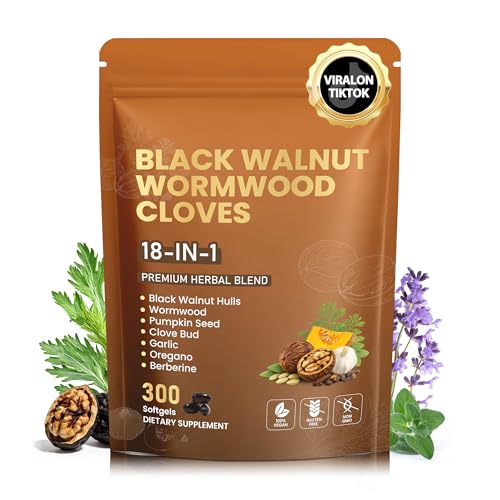
- CleanseParasites Herbal Parasite Cleanse Powder Editor’s Pick
Contains wormwood alongside black walnut hull, cloves, and other traditional parasite-cleanse herbs. - Herb Pharm Intestinal Tract Defense with Wormwood
liquid, 1 fl oz — A Herb Pharm herbal formula containing wormwood extract, not a single-herb wormwood tincture - AlchePharma Organic Wormwood Capsules
capsules, 90 vegan capsules — Single-herb organic Artemisia absinthium, non-GMO and gluten-free - Nature’s Answer Black Walnut and Wormwood Alcohol-Free Extract
liquid, 2 fl oz, 2,000 mg per serving — Alcohol-free dropper extract; a black walnut and wormwood combination, not single-herb wormwood - Frontier Co-op Wormwood Herb, Cut and Sifted
cut and sifted dried herb, 16 oz bulk bag — Bulk dried herb for traditional tea preparation, kosher certified
As an Amazon Associate we earn from qualifying purchases. Quality varies widely — always choose a product with a published third-party test (COA) before buying.
A Note on the Evidence
This research is limited to in-vitro, extract, and animal studies, none of it confirms an anti-inflammatory effect in humans, and wormwood’s thujone content carries real neurological risk with prolonged or high-dose use. This article is informational only, not medical advice; talk to a doctor before using wormwood, especially if pregnant, breastfeeding, or taking anticonvulsant, antidepressant, or liver-metabolized medications.
Frequently Asked Questions
Does wormwood reduce inflammation in humans?
Human trial evidence exists, but it is narrow. A controlled trial in Crohn’s disease reported serum TNF-alpha, an inflammatory marker, falling from 24.5 to 8.0 pg/ml on powdered wormwood [8], and a randomized double-blind trial found a topical 3% wormwood ointment eased knee osteoarthritis pain about as well as piroxicam gel [9]. Neither tests an oral wormwood supplement for inflammation in general, and the mechanistic work behind that broader claim is still cell studies, extract assays and animal models [3][5], which suggest biological plausibility but don’t confirm a real-world effect at typical supplement doses.
What compounds in wormwood are thought to be anti-inflammatory?
Research points to phenolic/polyphenolic constituents, chiefly chlorogenic acids, as the likely active fractions, identified through phytochemical and spectrum-effect analysis [1][2].
Is wormwood the same as the herb used to make artemisinin?
No. Artemisinin comes from Artemisia annua (sweet wormwood), a related but distinct species. A 2025 study directly compared Artemisia absinthium and Artemisia annua for anti-inflammatory and antioxidant activity, treating them as related but separate subjects of study [4].
What is the JAK2/STAT3 study about?
It’s a 2025 study testing whether Artemisia absinthium extract could influence atherosclerosis, a chronic inflammatory vascular disease, by affecting the JAK2/STAT3 signaling pathway in a disease model [5]. It’s an early mechanistic finding, not evidence of a treatment effect in humans.
Is wormwood safe to take for inflammation?
Wormwood contains thujone, which is neurotoxic at high doses or with prolonged use and has been associated with seizures. It’s contraindicated in pregnancy and breastfeeding, can interact with anticonvulsants, antidepressants, and liver-metabolized drugs, and should only be used short-term in thujone-controlled form, if at all, and under medical guidance.
Should I use wormwood instead of medical treatment for an inflammatory condition?
No. The available evidence is preclinical and does not support replacing medical diagnosis or treatment with wormwood. Anyone with a suspected inflammatory or autoimmune condition should be evaluated and treated by a healthcare provider.
References
- Wubuli A et al. Exploring anti-inflammatory and antioxidant-related quality markers of Artemisia absinthium L. based on spectrum-effect relationship. Phytochemical analysis : PCA (2024). PMID 38591190
- Moacă EA et al. Romanian Wormwood (Artemisia absinthium L.): Physicochemical and Nutraceutical Screening. Molecules (Basel, Switzerland) (2019). PMID 31450704
- Neagu E et al. In Vitro Assessment of the Antidiabetic and Anti-Inflammatory Potential of Artemisia absinthium, Artemisia vulgaris and Trigonella foenum-graecum Extracts Processed Using Membrane Technologies. Molecules (Basel, Switzerland) (2023). PMID 37894635
- Țicolea M et al. Flowers and Leaves of Artemisia absinthium and Artemisia annua Phytochemical Characterization, Anti-Inflammatory, Antioxidant, and Anti-Proliferative Activities Evaluation. Plants (Basel, Switzerland) (2025). PMID 40219097
- Yang J et al. Artemisia absinthium L. Extract Targeting the JAK2/STAT3 Pathway to Ameliorate Atherosclerosis. Foods (Basel, Switzerland) (2025). PMID 40647133
- Tafti LD et al. Traditional Persian topical medications for gastrointestinal diseases. Iranian journal of basic medical sciences (2017). PMID 28392893
- Omer B et al. Steroid-sparing effect of wormwood (Artemisia absinthium) in Crohn’s disease: a double-blind placebo-controlled study. Phytomedicine (2007). PMID 17240130
- Krebs S et al. Wormwood (Artemisia absinthium) suppresses tumour necrosis factor alpha and accelerates healing in patients with Crohn’s disease – A controlled clinical trial. Phytomedicine (2010). PMID 19962291
- Basiri Z et al. Topical Effects of Artemisia Absinthium Ointment and Liniment in Comparison with Piroxicam Gel in Patients with Knee Joint Osteoarthritis: A Randomized Double-Blind Controlled Trial. Iranian journal of medical sciences (2017). PMID 29184260
These statements have not been evaluated by the Food and Drug Administration. This information is not intended to diagnose, treat, cure, or prevent any disease. Content is for informational purposes only and is not medical advice; consult a qualified healthcare provider before starting any supplement. As an Amazon Associate we earn from qualifying purchases.