Wormwood (Artemisia absinthium) is a bitter herb with a long history in traditional medicine for digestion, fevers, and intestinal parasites, and it’s the plant that gives absinthe its name and flavor. Interest in wormwood capsules has grown alongside broader interest in parasite cleanses, but wormwood is not an herb to buy casually off a shelf without understanding what’s in the bottle.
The reason for caution is thujone, a naturally occurring compound in wormwood that is neurotoxic at high doses and has been linked to seizures with excessive or prolonged use[1]. This article explains what a thujone-controlled product actually means, what to look for on a label, and where the evidence for wormwood’s anti-parasitic effects currently stands so you can make an informed decision, not a marketing-driven one.
Key Takeaways
- Look for wormwood capsules that explicitly disclose thujone content or are lab-verified as thujone-controlled/thujone-free; skip products that say nothing about it.
- Wormwood (Artemisia absinthium) is not the same plant as sweet wormwood (Artemisia annua), the source of the antimalarial artemisinin.
- Treat wormwood as a short-course herb only, not a long-term daily supplement, given thujone’s dose- and duration-dependent neurotoxicity.
- Avoid wormwood entirely if pregnant, breastfeeding, or on anticonvulsants, antidepressants, or liver-metabolized medications, without medical guidance.
- Current evidence for wormwood’s anti-parasitic effect in humans is preliminary (traditional use plus in-vitro/animal studies), not backed by large randomized controlled trials.
What 'Thujone-Controlled' Actually Means
Thujone is a ketone compound found in the essential oil of wormwood, along with related compounds like isothujone. It’s the same class of molecule regulators worried about when absinthe was banned in several countries in the early 1900s (absinthe today is legal again in most places but is regulated to keep thujone below strict limits[2][3]).
A ‘thujone-controlled’ or ‘thujone-free’ capsule is one where the manufacturer has either used a extraction process that removes most of the volatile oil, or has tested and labeled the finished product’s thujone content so you know roughly what you’re consuming per dose. The absence of thujone testing on a label is a meaningful gap, not a minor omission, since thujone content can vary significantly between wormwood plants, harvest conditions, and extraction methods.
In practice, this means you should be looking for products that state either a specific thujone content (in mg or as a percentage) or explicitly describe the extract as ‘thujone-free’ or ‘low-thujone,’ ideally backed by a certificate of analysis (COA) from third-party lab testing.

What to Look for on the Label
Beyond thujone disclosure, a few other label details separate a more careful product from a generic one. First, look for the plant part used (aerial parts/leaf is standard) and whether it’s a standardized extract versus raw powdered herb, since standardization gives you more consistency dose to dose.
Second, check for third-party testing, ideally a COA available on request or posted on the brand’s site, covering not just thujone but also heavy metals and microbial contamination, which are general concerns for any bulk dried herb product.
Third, look at the capsule count and dose per serving, and compare it to the ‘short course only’ guidance below. A bottle designed for months of continuous daily use is a mismatch for an herb that isn’t meant to be taken long-term.
Wormwood vs. Sweet Wormwood: Don't Confuse the Two
Artemisia absinthium (wormwood) is a different plant from Artemisia annua (sweet wormwood, sometimes called qing hao). Sweet wormwood is the source of artemisinin, a compound that is a validated, frontline pharmaceutical antimalarial drug used worldwide under medical supervision.
Wormwood capsules sold for digestive or parasite-cleanse purposes are almost always Artemisia absinthium, not the artemisinin-containing species, and the proposed anti-parasitic activity in wormwood is attributed to a different set of compounds: sesquiterpene lactones such as absinthin and artabsin, along with the volatile oil itself. These are thought, based largely on in-vitro and animal work, to disrupt parasite membranes and metabolic processes, but this is mechanistic and preliminary science, not the same evidentiary standing as artemisinin’s role in malaria treatment.

If a product’s marketing blurs this distinction, or implies wormwood capsules have the same validated evidence base as artemisinin, that’s a red flag for how carefully the brand is representing the science.
Dosing Norms and Why 'Short Course Only' Matters
Traditional and modern herbal-practitioner guidance on wormwood consistently frames it as a short-course herb, typically measured in days to a couple of weeks, rather than an ongoing daily supplement. This isn’t arbitrary caution: thujone’s neurotoxic risk is dose- and duration-dependent, meaning the danger increases with both how much you take and how long you keep taking it.
Because of this, a wormwood capsule product intended for responsible use should come with clear, conservative dosing instructions and explicit guidance to cycle off after a defined period rather than an implicit invitation to use it indefinitely.
If you’re using wormwood as part of a broader parasite-support routine, treat the wormwood component specifically as time-limited, and don’t extend the course on your own judgment without discussing it with a healthcare provider, particularly if you’re combining it with other herbs or medications.
Who Should Not Take Wormwood
Wormwood is contraindicated in pregnancy and breastfeeding. It can also interact with anticonvulsant medications (working against their purpose given thujone’s seizure-risk profile), antidepressants, and other drugs that are metabolized by the liver, since wormwood compounds may affect liver enzyme activity.
Anyone with a seizure disorder or history of seizures should avoid wormwood entirely given the specific neurotoxic mechanism of thujone. People on other medications, especially anything processed by the liver, should talk to a doctor or pharmacist before adding wormwood to their routine.
If you suspect an actual parasitic infection, whether from travel, symptoms, or exposure, that needs medical diagnosis and treatment, not a self-directed herbal capsule. Wormwood should not be used as a substitute for that evaluation.
The Honest State of the Evidence
It’s worth being direct about where the evidence stands. Much of what’s known about wormwood’s anti-parasitic activity comes from traditional use records and from in-vitro and animal studies looking at how its sesquiterpene lactones and volatile oil compounds behave against parasite cells in a lab setting or in animal models.
Large, well-controlled human randomized trials establishing wormwood capsules as an effective anti-parasitic treatment in people are not part of the current evidence base. That doesn’t mean the traditional use or preclinical signal is meaningless, but it does mean the evidence gap between ‘this compound disrupts parasite membranes in a dish’ and ‘this capsule reliably treats a parasitic infection in a person’ is real and unclosed.
A responsible way to think about wormwood capsules is as a traditionally-used, mechanistically-plausible supportive herb, not a proven medical treatment, and to choose products accordingly: thujone-disclosed, short-course, and paired with realistic expectations.

🛒 Where to Buy Wormwood (Artemisia absinthium)
- CleanseParasites Herbal Parasite Cleanse Powder Editor’s Pick
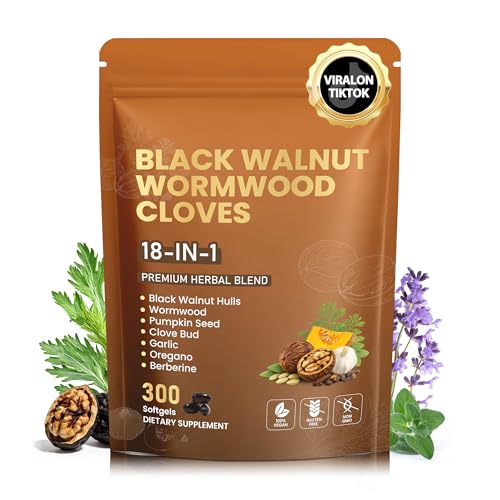
Contains wormwood alongside black walnut hull, cloves, and other traditional parasite-cleanse herbs. - Herb Pharm Intestinal Tract Defense with Wormwood
liquid, 1 fl oz — A Herb Pharm herbal formula containing wormwood extract, not a single-herb wormwood tincture - AlchePharma Organic Wormwood Capsules
capsules, 90 vegan capsules — Single-herb organic Artemisia absinthium, non-GMO and gluten-free - Nature’s Answer Black Walnut and Wormwood Alcohol-Free Extract
liquid, 2 fl oz, 2,000 mg per serving — Alcohol-free dropper extract; a black walnut and wormwood combination, not single-herb wormwood - Frontier Co-op Wormwood Herb, Cut and Sifted
cut and sifted dried herb, 16 oz bulk bag — Bulk dried herb for traditional tea preparation, kosher certified
As an Amazon Associate we earn from qualifying purchases. Quality varies widely — always choose a product with a published third-party test (COA) before buying.
A Note on the Evidence
This article is informational, not medical advice; wormwood’s human evidence base is limited to traditional use and preclinical studies, and anyone pregnant, breastfeeding, on anticonvulsants or liver-metabolized medications, or with a seizure history should consult a doctor before considering it.
Frequently Asked Questions
Is thujone-free wormwood actually thujone-free?
Usually ‘thujone-free’ means the extraction process has reduced thujone to a very low or undetectable level, verified by lab testing, rather than a guarantee of absolute zero. Look for a brand that publishes an actual thujone measurement or COA rather than relying on the label claim alone.
How long is a safe course of wormwood capsules?
Traditional and herbalist guidance typically limits wormwood use to a short, defined period, often days to a couple of weeks, followed by a break, rather than continuous daily use. There isn’t a standardized human clinical dosing schedule, so following the product’s conservative labeled instructions and not extending the course is the safer approach.

Can wormwood actually kill parasites in the human body?
The anti-parasitic activity attributed to wormwood’s sesquiterpene lactones and volatile oil compounds comes mainly from in-vitro and animal research showing disruption of parasite membranes and metabolism, not from large human clinical trials. It should not be relied on as a substitute for medical diagnosis and treatment of a suspected parasitic infection.
Is wormwood the same as the herb used to make artemisinin?
No. Artemisinin, a validated frontline antimalarial drug, comes from Artemisia annua (sweet wormwood), a different species from Artemisia absinthium (common wormwood) used in most parasite-cleanse capsules. Products or marketing that conflate the two are misrepresenting the science.
Who should avoid wormwood capsules completely?
Pregnant or breastfeeding people, anyone with a seizure disorder or history of seizures, and anyone taking anticonvulsants, antidepressants, or medications metabolized by the liver should avoid wormwood or only use it under medical supervision, due to thujone’s neurotoxic and drug-interaction potential.
What should I check before buying a wormwood capsule product?
Check for disclosed thujone content or a thujone-free claim backed by third-party lab testing, a standardized extract with clear plant-part sourcing, dosing instructions that frame it as a short course rather than ongoing use, and testing for heavy metals and microbial contamination.
References
- Pelkonen O et al. Thujone and thujone-containing herbal medicinal and botanical products: toxicological assessment. Regulatory toxicology and pharmacology (2013). PMID 23201408
- Lachenmeier DW et al. Absinthe–a review. Critical reviews in food science and nutrition (2006). PMID 16891209
- Lachenmeier DW. Wormwood (Artemisia absinthium L.)–a curious plant with both neurotoxic and neuroprotective properties? Journal of ethnopharmacology (2010). PMID 20542104
These statements have not been evaluated by the Food and Drug Administration. This information is not intended to diagnose, treat, cure, or prevent any disease. Content is for informational purposes only and is not medical advice; consult a qualified healthcare provider before starting any supplement. As an Amazon Associate we earn from qualifying purchases.