Wormwood (Artemisia absinthium) and black walnut (Juglans regia and related species) are two of the most common herbs sold together in “parasite cleanse” formulas. They come from unrelated plant families, work through different proposed mechanisms, and have very different safety profiles, but they are almost always marketed as a matched pair alongside cloves.
This article lays out what each herb actually is, what evidence exists for antiparasitic activity, and where the real differences in risk and evidence quality lie. None of this is a substitute for a stool test or a doctor’s evaluation if you suspect an actual parasitic infection.
Key Takeaways
- Wormwood and black walnut work through different proposed mechanisms, sesquiterpene lactones and volatile oils for wormwood, hydrojuglone glucoside and related phenolics for black walnut.
- Black walnut leaf extract has shown anthelmintic activity against a poultry roundworm model in vitro and in vivo [1], plus activity relevant to trypanosomes [2] and malaria-parasite targets [3].
- Wormwood’s evidence is concentrated in traditional-use reviews and animal/in-vitro screening [4] rather than large human trials.
- Wormwood carries a specific, well-documented risk from thujone (seizure risk at high doses), while black walnut’s human toxicity profile is less characterized in the available evidence.
- Neither herb should replace medical diagnosis or treatment of a suspected parasitic infection.
What each herb actually is
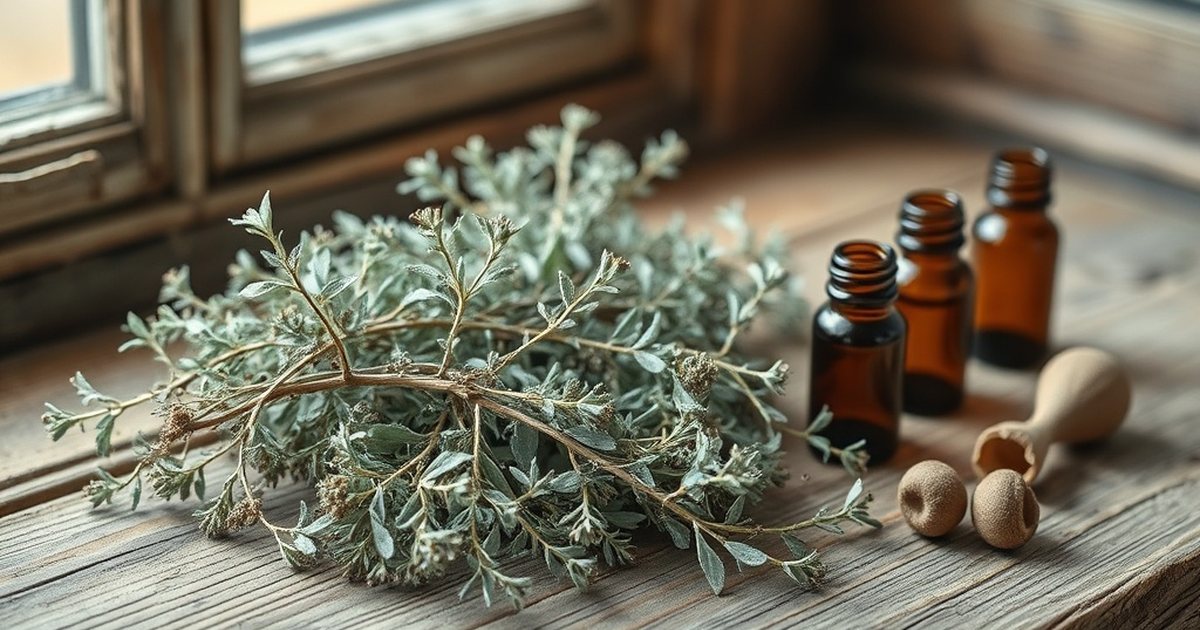
Wormwood is a silvery, bitter perennial in the Artemisia genus, historically used in European and Mediterranean herbal medicine for digestive complaints, fevers, and intestinal worms, and best known today as the flavoring agent in absinthe and vermouth. Its proposed anti-parasitic activity is attributed to sesquiterpene lactones such as absinthin and artabsin, along with volatile oil compounds thought to disrupt parasite membranes and metabolism in laboratory settings. Wormwood is a different species from its relative Artemisia annua (sweet wormwood), whose compound artemisinin is a validated frontline antimalarial drug; the two plants are often confused in casual writing, but their evidence bases are not interchangeable.
Black walnut, most often referring to the leaf or green hull of Juglans regia (English/Persian walnut) in the research literature, contains compounds including hydrojuglone glucoside (a precursor to juglone), phenolic constituents, and naphthoquinone-related compounds like plumbagin. These are the compounds most frequently studied for antiparasitic and antimicrobial activity in walnut extracts.

The evidence for black walnut
The strongest recent evidence for black walnut’s antiparasitic potential comes from an in vitro and in vivo study of ethanolic Juglans regia leaf extract tested against Ascaridia galli, a roundworm parasite of poultry, which found measurable anthelmintic efficacy in both settings [1]. This is a helminth (worm) model, not a human clinical trial, but it is one of the more direct pieces of evidence linking walnut leaf extract to worm-killing activity.
Separately, walnut-derived compounds have shown activity against trypanosomes, the parasites responsible for diseases like African sleeping sickness and Chagas disease. A phytochemical analysis identified hydrojuglone glucoside as the specific antitrypanosomal constituent in Juglans extracts using PLS-based prediction and confirmation methods [2]. A related study found Juglans regia leaf extract showed biological activity relevant to Plasmodium berghei (a rodent malaria parasite) target proteins in an in-silico phytochemical evaluation [3], and walnut husk extracts have also demonstrated activity against phenoloxidase, a bioactivity target used to screen botanical insecticides [5]. Together, these point to a plausible multi-compound mechanism, but none of this constitutes evidence that black walnut clears a human parasitic infection.

Plumbagin, a naphthoquinone compound structurally related to some walnut constituents, has been studied mainly for its effects on prostate cancer development in an animal model via PKC-epsilon, Stat3, and neuroendocrine marker pathways [6]. This is unrelated to parasite activity and is included here only because plumbagin sometimes appears in discussions of walnut’s naphthoquinone chemistry; it should not be cited as antiparasitic evidence.
The evidence for wormwood
A 2025 review of traditional European medicinal plants evaluated anthelmintic activity across a range of species used historically against worms, and wormwood (Artemisia absinthium) is among the plants discussed in that traditional-use and evidence review [4]. This kind of review is useful for mapping what has been studied and what gaps remain, but it is not itself a large randomized controlled trial in humans.

Much of what is known about wormwood’s anti-parasitic effects specifically comes from in vitro and animal studies plus a long history of traditional use, rather than rigorous human clinical trials. The proposed mechanism, disruption of parasite membranes and metabolism by sesquiterpene lactones and volatile oils, is chemically plausible and consistent with how other plant-derived antiparasitic compounds behave, but plausibility is not the same as proven clinical efficacy.
Side-by-side comparison
In terms of proposed mechanism, black walnut’s studied compounds (hydrojuglone glucoside, phenolics) act primarily through oxidative and possibly membrane-disrupting effects tied to naphthoquinone chemistry, with evidence spanning helminths [1], trypanosomes [2], and malaria-parasite-related targets [3]. Wormwood’s sesquiterpene lactones are proposed to act more directly on parasite membrane integrity and metabolic processes, with evidence concentrated in traditional-use reviews and broader anthelmintic screening [4].
In terms of safety, the two herbs are not comparable. Black walnut’s studied constituents are mostly evaluated for bioactivity rather than for a well-characterized human toxicity profile, while wormwood carries a specific, well-documented risk: thujone, a compound that is neurotoxic and can trigger seizures at high doses or with prolonged use. This asymmetry matters more than most “which herb is stronger” comparisons, because it changes how each herb should be dosed and monitored, not just whether it “works.”
Safety considerations that should shape your decision
Wormwood extracts should be thujone-controlled and used only in short courses; the compound’s seizure risk is not theoretical, it is the reason wormwood-containing products (like absinthe) are regulated in many countries. Wormwood is contraindicated in pregnancy and breastfeeding, and it can interact with anticonvulsants, antidepressants, and other drugs metabolized by the liver, which makes it a poor choice for anyone on those medications without medical supervision.
Black walnut’s safety profile is less characterized by direct human toxicity data, which cuts both ways: it does not carry a documented acute neurotoxic risk like wormwood’s thujone, but the absence of extensive human safety data also means dosing and long-term use guidance is less established. Neither herb should be assumed safe simply because it is “natural,” and neither has enough human trial data to be used as a substitute for diagnosing or treating a suspected parasitic infection.
🛒 Where to Buy Wormwood (Artemisia absinthium)
- CleanseParasites Herbal Parasite Cleanse Powder Editor’s Pick
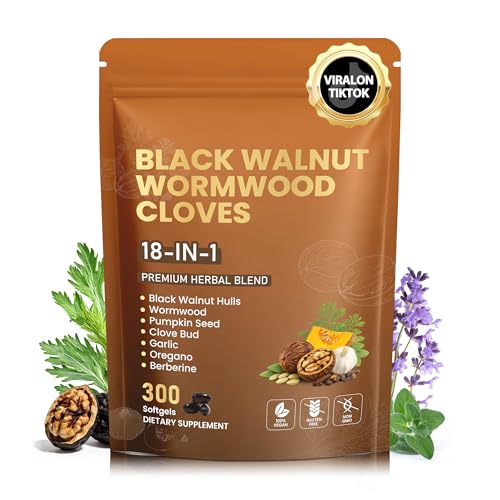
Contains wormwood alongside black walnut hull, cloves, and other traditional parasite-cleanse herbs. - Herb Pharm Intestinal Tract Defense with Wormwood
liquid, 1 fl oz — A Herb Pharm herbal formula containing wormwood extract, not a single-herb wormwood tincture - AlchePharma Organic Wormwood Capsules
capsules, 90 vegan capsules — Single-herb organic Artemisia absinthium, non-GMO and gluten-free - Nature’s Answer Black Walnut and Wormwood Alcohol-Free Extract
liquid, 2 fl oz, 2,000 mg per serving — Alcohol-free dropper extract; a black walnut and wormwood combination, not single-herb wormwood - Frontier Co-op Wormwood Herb, Cut and Sifted
cut and sifted dried herb, 16 oz bulk bag — Bulk dried herb for traditional tea preparation, kosher certified
As an Amazon Associate we earn from qualifying purchases. Quality varies widely — always choose a product with a published third-party test (COA) before buying.

A Note on the Evidence
Most of the evidence here comes from in vitro, animal, or traditional-use sources rather than large randomized controlled trials in humans, and wormwood specifically carries a seizure risk from thujone at high doses or with prolonged use. This article is informational, not medical advice; talk to a doctor before using either herb, especially if pregnant, breastfeeding, or taking other medications.
Frequently Asked Questions
Is wormwood or black walnut more effective against parasites?
There is no head-to-head human trial comparing the two, so “more effective” cannot be answered directly. Black walnut leaf extract has documented anthelmintic activity in a poultry worm model [1], while wormwood’s evidence is mostly traditional-use and broader plant-screening reviews [4].
Can I take wormwood and black walnut together?
They are commonly combined in commercial parasite-cleanse products, but combining herbs also combines their risk profiles, particularly wormwood’s thujone-related seizure risk. Anyone considering combining them, especially with existing medications, should talk to a doctor first.
Is wormwood the same as the herb used to make artemisinin?
No. Artemisinin, a validated antimalarial drug, comes from Artemisia annua (sweet wormwood), a different species from Artemisia absinthium (common wormwood), which is the plant discussed in this article and in absinthe production.
Are black walnut supplements regulated for safety the way wormwood is?
Not specifically in the way thujone content is monitored in wormwood products. The published literature does not include a well-characterized human toxicity dataset for black walnut extracts, which means quality and dosing can vary more between products.
Who should avoid wormwood specifically?
Pregnant or breastfeeding people, anyone taking anticonvulsants or antidepressants, anyone on medications metabolized by the liver, and anyone prone to seizures should avoid wormwood or only use thujone-controlled extracts under medical guidance.
Do these herbs replace a stool test if I suspect a parasite?
No. Suspected parasitic infection should be diagnosed and treated by a medical provider using appropriate testing; these herbs are not validated substitutes for that process.
References
- Mir FH et al. Evaluation of anthelmintic efficacy of ethanolic leaf extract of Juglans regia L. on Ascaridia galli: a comprehensive in vitro and in vivo study. Veterinary research communications (2024). PMID 38771447
- Ellendorff T et al. PLS-Prediction and Confirmation of Hydrojuglone Glucoside as the Antitrypanosomal Constituent of Juglans Spp. Molecules (Basel, Switzerland) (2015). PMID 26035104
- Alharbi HM et al. Biological activity of Juglans regia leaf extract and in silico evaluation of its phytochemicals against Plasmodium berghei target proteins. Helminthologia (2026). PMID 42305886
- Boyko O et al. Anthelmintic Activity of Traditional Medicinal Plants Used in Europe. Biology (2025). PMID 41463411
- Hu W et al. Phenoloxidase, an effective bioactivity target for botanical insecticide screening from green walnut husks. Natural product research (2018). PMID 28931324
- Hafeez BB et al. Plumbagin inhibits prostate cancer development in TRAMP mice via targeting PKCε, Stat3 and neuroendocrine markers. Carcinogenesis (2012). PMID 22976928
These statements have not been evaluated by the Food and Drug Administration. This information is not intended to diagnose, treat, cure, or prevent any disease. Content is for informational purposes only and is not medical advice; consult a qualified healthcare provider before starting any supplement. As an Amazon Associate we earn from qualifying purchases.