Wormwood (Artemisia absinthium) is a bitter herb with a long history in traditional medicine, and it’s also the plant that gave absinthe its notoriety. Most of what people know about wormwood’s safety comes tangled up with absinthe folklore, hallucinations, madness, blindness, none of which holds up well under modern scrutiny. But that doesn’t mean wormwood is risk-free.
The real safety story is more specific and more useful: a neurotoxic compound called thujone, some early signals about liver and reproductive tissue effects from lab research, and a set of people who should not use it at all. This article separates the historical myth from what the evidence actually supports, and lays out concrete side effects to watch for.
Key Takeaways
- Thujone, wormwood’s active neurotoxic compound, is the main driver of serious side effect risk, especially at high doses or with prolonged use.
- Absinthe’s historical reputation for madness and hallucination was likely driven more by high alcohol content and era-specific adulterants than by wormwood itself [1] [2].
- Lab research shows a mixed picture: possible liver cell toxicity signals from essential oil [3], alongside protective effects on prostate [4] and nerve cells [5] in other models.
- Avoid wormwood entirely if pregnant or breastfeeding, or if taking anticonvulsants, antidepressants, or liver-metabolized medications.
- Choose thujone-controlled products, use only short courses, and avoid internal use of the essential oil.
Thujone: The Compound Behind Wormwood's Reputation
Wormwood contains thujone, a bicyclic monoterpene that acts on the central nervous system. At high doses or with prolonged use, thujone is neurotoxic and has been linked to seizures. This is the mechanistic basis for most modern safety guidance around wormwood extracts and essential oil, and it’s why regulatory bodies cap thujone content in food and beverage products like absinthe and vermouth rather than banning the plant outright.
Because thujone content varies significantly by preparation, plant part, extraction method, and growing conditions, an untested wormwood product carries real uncertainty about how much of the compound you’re actually consuming. Thujone-controlled or standardized extracts exist specifically to manage this variability; unregulated teas, tinctures, or essential oils do not offer that same reassurance.

The Absinthe Myth vs. What History and Chemistry Show
Absinthe’s 19th- and early 20th-century reputation, hallucinations, violent madness, so-called “absinthism”, drove outright bans across Europe and the U.S. A historical review of absinthe found that many of these dramatic effects were more plausibly explained by the high alcohol content of the spirit itself, along with contamination from cheap adulterants of the era, rather than by thujone or wormwood specifically [1].
A more recent review revisiting absinthe’s rehabilitation reaches a similar conclusion: modern, properly regulated absinthe produced under current thujone limits does not appear to justify the extreme toxicity claims of the past [2]. This matters for wormwood side effects generally, it’s a reason to take thujone seriously as a real neurotoxic risk at high doses, without assuming every historical horror story about the plant is literally accurate.
Emerging Signals: Liver, Reproductive, and Nerve Cell Research
Beyond thujone’s neurotoxicity, newer laboratory research has started probing other tissue-level effects of Artemisia absinthium. One 2024 in vitro study examined the toxicological effects of Artemisia absinthium essential oil on hepatic stellate cells, cells involved in liver injury and fibrosis, and found predictive toxicological signals worth further investigation [3]. This is not evidence of liver damage in people using wormwood as directed, but it is a reason for caution, particularly with essential oil forms, which are far more concentrated than teas or standard extracts.
Interestingly, not all findings point toward harm. A study in rats found that an Artemisia absinthium supplement had a potential ameliorative effect against sodium fluoride-induced prostatic toxicity, suggesting a protective rather than damaging effect on prostate tissue in that specific injury model [4]. Separately, an extract of the plant was shown to attenuate quinolinic acid-induced cell injury in OLN-93 nerve cells in a lab setting [5]. Taken together, these studies illustrate a genuinely mixed picture: wormwood compounds can be protective in some cell and animal models while raising toxicity flags in others, depending on the tissue, the preparation, and the dose. None of this is high-quality human trial evidence, and none of it should be read as either a green light or a general warning.
Who Should Avoid Wormwood Entirely
Certain groups face risks that go beyond the general “use with caution” advice. Wormwood is contraindicated in pregnancy and breastfeeding. It can also interact with anticonvulsants, antidepressants, and other drugs metabolized by the liver, given thujone’s CNS activity and the plant’s compound profile. Anyone taking seizure medication, psychiatric medication, or drugs with a narrow liver-metabolism margin should not add wormwood without first talking to a physician or pharmacist.

People with a history of seizures, liver disease, or kidney disease should also be cautious given the neurotoxic and hepatic signals discussed above, even though most of that evidence comes from cell and animal studies rather than clinical trials in these populations.
Other Reported Effects and Practical Use Considerations
Artemisia absinthium essential oil has documented antimicrobial, antioxidative, and insect-repellent properties in laboratory testing [6]. That research context is a reminder that wormwood’s biological activity is real and multidirectional, it isn’t an inert bitter herb, which is exactly why dose and preparation matter so much for safety.
In practice, this means short courses rather than ongoing daily use, products that specify thujone content rather than unlabeled extracts, and avoiding the essential oil internally given its concentration. Most of the evidence for wormwood’s traditional uses, including its anti-parasitic reputation, comes from traditional use and in vitro or animal studies rather than large randomized controlled trials in humans, so side-effect data in real-world human use is thinner than the plant’s long history might suggest.
🛒 Where to Buy Wormwood (Artemisia absinthium)
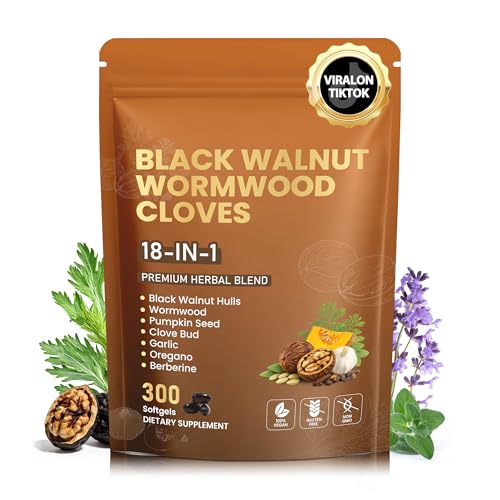
- CleanseParasites Herbal Parasite Cleanse Powder Editor’s Pick
Contains wormwood alongside black walnut hull, cloves, and other traditional parasite-cleanse herbs. - Herb Pharm Intestinal Tract Defense with Wormwood
liquid, 1 fl oz — A Herb Pharm herbal formula containing wormwood extract, not a single-herb wormwood tincture - AlchePharma Organic Wormwood Capsules
capsules, 90 vegan capsules — Single-herb organic Artemisia absinthium, non-GMO and gluten-free - Nature’s Answer Black Walnut and Wormwood Alcohol-Free Extract
liquid, 2 fl oz, 2,000 mg per serving — Alcohol-free dropper extract; a black walnut and wormwood combination, not single-herb wormwood - Frontier Co-op Wormwood Herb, Cut and Sifted
cut and sifted dried herb, 16 oz bulk bag — Bulk dried herb for traditional tea preparation, kosher certified
As an Amazon Associate we earn from qualifying purchases. Quality varies widely — always choose a product with a published third-party test (COA) before buying.
A Note on the Evidence
Most evidence on wormwood’s effects, both protective and harmful, comes from in vitro, animal, or historical sources rather than large human clinical trials, so real-world side effect rates in people are not well established. This article is informational, not medical advice; talk to a doctor before using wormwood, especially if pregnant, breastfeeding, on medication, or managing a seizure or liver condition.
Frequently Asked Questions
Can wormwood cause seizures?
Thujone, the neurotoxic compound in wormwood, can trigger seizures at high doses or with prolonged use. This is why thujone-controlled extracts and short courses are recommended rather than open-ended daily use.
Does wormwood cause hallucinations like old stories about absinthe suggest?
Historical claims that wormwood or thujone caused hallucinations and madness are largely attributed to the high alcohol content of absinthe and era-specific adulterants rather than the herb itself [1] [2].
Is wormwood bad for the liver?
A 2024 in vitro study found predictive toxicological signals on hepatic stellate cells from Artemisia absinthium essential oil [3]. This doesn’t confirm liver damage in typical human use, but it’s a reason to avoid concentrated essential oil forms and to use standardized products with medical guidance if you have liver disease.

Can pregnant or breastfeeding people use wormwood?
No. Wormwood is contraindicated in pregnancy and breastfeeding due to its neurotoxic and uterine-stimulating potential.
Does wormwood interact with medications?
Yes. It can interact with anticonvulsants, antidepressants, and other drugs metabolized by the liver. Anyone on these medications should consult a doctor or pharmacist before use.
Is wormwood essential oil safe to take internally?
Essential oil is far more concentrated than teas or standard extracts, and it’s linked to the liver cell toxicity signals noted in lab research [3] as well as broader thujone exposure risk. It’s generally not recommended for internal use without professional guidance.
References
- Lachenmeier DW et al. Absinthe–a review. Critical reviews in food science and nutrition (2006). PMID 16891209
- Chapuis Y et al. [Absinthe rehabilitated]. Bulletin de l'Academie nationale de medecine (2013). PMID 24919378
- Barreto II et al. Predictive toxicological effects of Artemisia absinthium essential oil on hepatic stellate cells. Toxicology in vitro : an international journal published in association with BIBRA (2024). PMID 38000518
- Shakir Saleh H et al. Potential Ameliorative Effect of Artemisia Absinthium Supplement against Sodium Fluoride-Induced Prostatic Toxicity in Rats. Archives of Razi Institute (2022). PMID 36284952
- Rashidi R et al. Artemisia Absinthium Extract Attenuates the Quinolinic Acid-Induced Cell Injury in OLN-93 Cells. Current drug discovery technologies (2023). PMID 36998142
- Mihajilov-Krstev T et al. Antimicrobial, antioxidative, and insect repellent effects of Artemisia absinthium essential oil. Planta medica (2014). PMID 25317772
These statements have not been evaluated by the Food and Drug Administration. This information is not intended to diagnose, treat, cure, or prevent any disease. Content is for informational purposes only and is not medical advice; consult a qualified healthcare provider before starting any supplement. As an Amazon Associate we earn from qualifying purchases.