If you’ve read about herbal approaches to intestinal parasites, you’ve probably run into two names that sound almost interchangeable: wormwood and wormseed. They aren’t the same plant, they don’t share a chemistry, and they don’t carry the same safety profile, but the overlapping common names (both literally mean “kills worms”) and their shared folk-medicine history make it easy to mix them up.
This article is not a recommendation to self-treat a parasitic infection with either plant. It’s a plain explanation of what each one actually is, what’s been studied, and why confusing them matters for safety.
Key Takeaways
- Wormwood (Artemisia absinthium) and wormseed (Chenopodium/Dysphania ambrosioides) are unrelated plants that share a folk-medicine “kills worms” reputation but not a chemistry.
- Wormwood’s key risk compound is thujone (neurotoxic, seizure risk at high doses); wormseed’s is ascaridole (mitochondrial toxicity, genotoxicity signals in vitro).
- Don’t confuse either with Artemisia annua (sweet wormwood), the source of the antimalarial drug artemisinin.
- Most human evidence for both plants’ anti-parasitic effects is traditional, in vitro, or veterinary, not large randomized controlled trials.
- Always check the Latin binomial on a label, and treat a suspected parasitic infection as a reason to see a doctor, not a reason to self-dose an unregulated herbal extract.
Two Different Plants, One Confusing Name Pattern
Wormwood is Artemisia absinthium, a silvery, bitter-leaved member of the daisy family best known as the flavoring agent in absinthe and vermouth. Its folk use for digestive complaints, fevers, and intestinal worms goes back centuries in European herbal tradition. Its proposed anti-parasitic activity is attributed to sesquiterpene lactones (absinthin, artabsin) and volatile oil compounds thought to disrupt parasite membranes and metabolism in vitro.
Wormseed is a different plant entirely: Chenopodium ambrosioides, also reclassified in the botanical literature as Dysphania ambrosioides. It’s in the goosefoot family, not the daisy family, and its historical anti-parasitic use (particularly against roundworms and hookworms in folk and veterinary medicine) centers on a completely different chemical: ascaridole, a compound found in its essential oil [1]. Neither plant should be confused with a third “wormwood,” Artemisia annua (sweet wormwood), whose sesquiterpene lactone artemisinin is a validated frontline antimalarial drug and an unrelated chemistry story.

The Chemistry That Actually Matters: Thujone vs. Ascaridole
The safety conversation around wormwood centers on thujone, a compound in its volatile oil that is neurotoxic and can trigger seizures at high doses or with prolonged use. This is why wormwood extracts sold as supplements are generally thujone-controlled and intended for short courses only, not sustained daily use.
The safety conversation around wormseed centers on ascaridole, its principal active volatile oil constituent. Laboratory work shows ascaridole itself, along with related compounds carvacrol and caryophyllene oxide from Chenopodium/Dysphania ambrosioides essential oil, has demonstrable toxic effects on mitochondria [2]. Ascaridole is also the compound responsible for the plant’s nematocidal activity, but research has found that ascaridole-less infusions of the plant still contain a nematocide that is not toxic to mammalian smooth muscle in the same way [3], suggesting the plant’s toxicity and its worm-killing activity aren’t perfectly the same thing, but they aren’t cleanly separable either. In short: two different plants, two different toxic principals, and neither is a “just take more, it’s natural” situation.
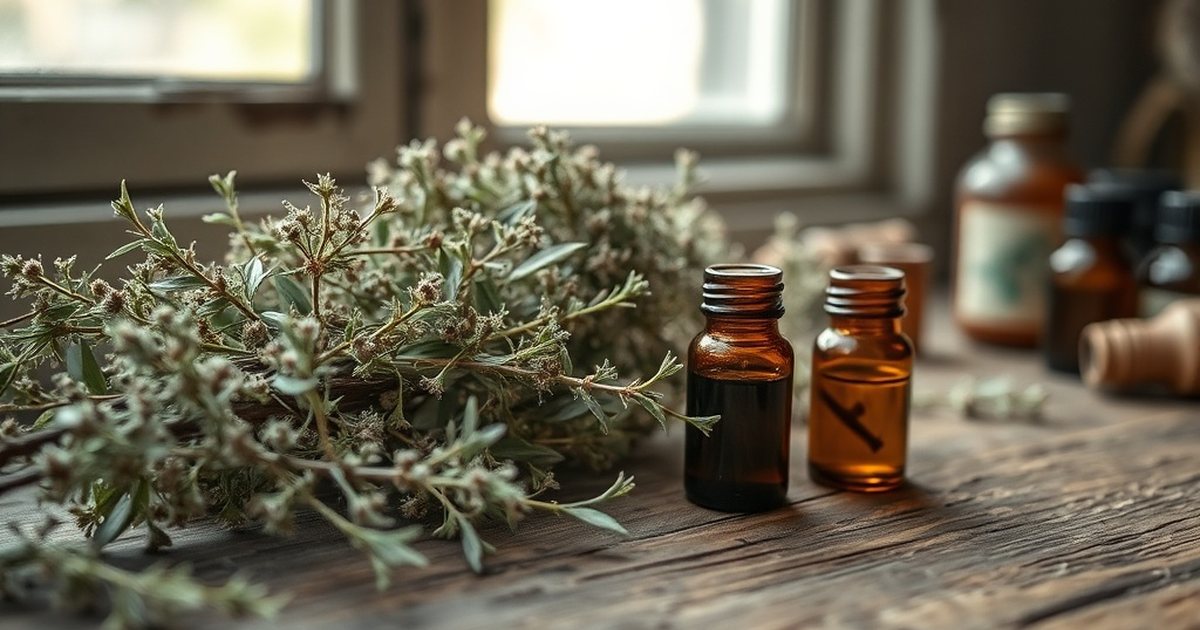
What the Evidence Actually Shows for Wormseed
Much of the modern research on Chenopodium/Dysphania ambrosioides has focused on characterizing what’s in the essential oil and what it does in isolated systems, not on establishing it as a safe or effective human anti-parasitic treatment. In vitro genotoxicity testing on the plant has raised concerns about its effects on genetic material [4], which is a meaningfully different (and more serious) safety signal than the neurotoxicity concerns tied to thujone in wormwood.
Separately, essential oil from Dysphania ambrosioides has been studied for antibacterial, schistosomicidal (anti-schistosome parasite), and cytotoxic activity [5]. Cytotoxic here means the oil is toxic to cells generally, which is consistent with why traditional use of wormseed oil in humans has historically been approached with real caution, and why its use has declined as safer antiparasitic drugs became available.

Most of what’s documented about wormseed’s practical anti-parasitic use comes from traditional and ethnoveterinary contexts. Non-experimental validation of ethnoveterinary practices in Trinidad and Tobago, for example, has documented wormseed-related plants used for deworming backyard pigs and chickens [1], which reflects longstanding folk practice rather than controlled human trial evidence.
Why the Confusion Is Genuinely Risky
Because both plants are marketed under overlapping “worm-killing herb” branding, and because “wormwood” and “wormseed” get used loosely in casual conversation and even in some product labeling, someone looking for one can end up with the other, or with a blend containing both. That matters because the dosing guardrails, contraindications, and toxicity thresholds are not interchangeable between them. Treating wormseed like low-dose thujone-controlled wormwood, or vice versa, ignores the actual chemistry driving each plant’s risk profile.
It also matters because neither plant’s anti-parasitic evidence base clears the bar of large randomized controlled trials in humans. What exists is largely traditional use, in vitro work, and animal or veterinary data. That’s useful for understanding mechanism and historical context, but it is not the same as clinical proof of safe, effective dosing for a human parasitic infection.
How to Tell Them Apart Before You Buy Anything
Check the Latin binomial on the label, not just the common name. Artemisia absinthium is wormwood. Chenopodium ambrosioides or Dysphania ambrosioides is wormseed (sometimes sold as “epazote” in culinary contexts, which is the same plant used as a food herb in much smaller quantities than medicinal extracts). If a product only lists a common name like “wormwood herb” with no botanical name, that’s a red flag rather than a shortcut.
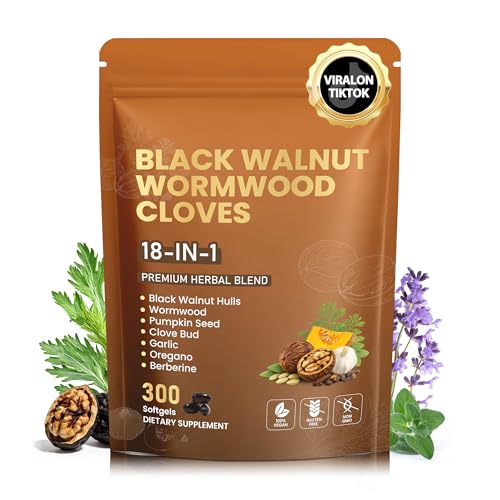
Also check whether the product specifies thujone content (relevant to wormwood) or ascaridole content (relevant to wormseed). A product that can’t tell you what’s actually in its extract isn’t one to use for something as specific as a suspected parasitic infection.
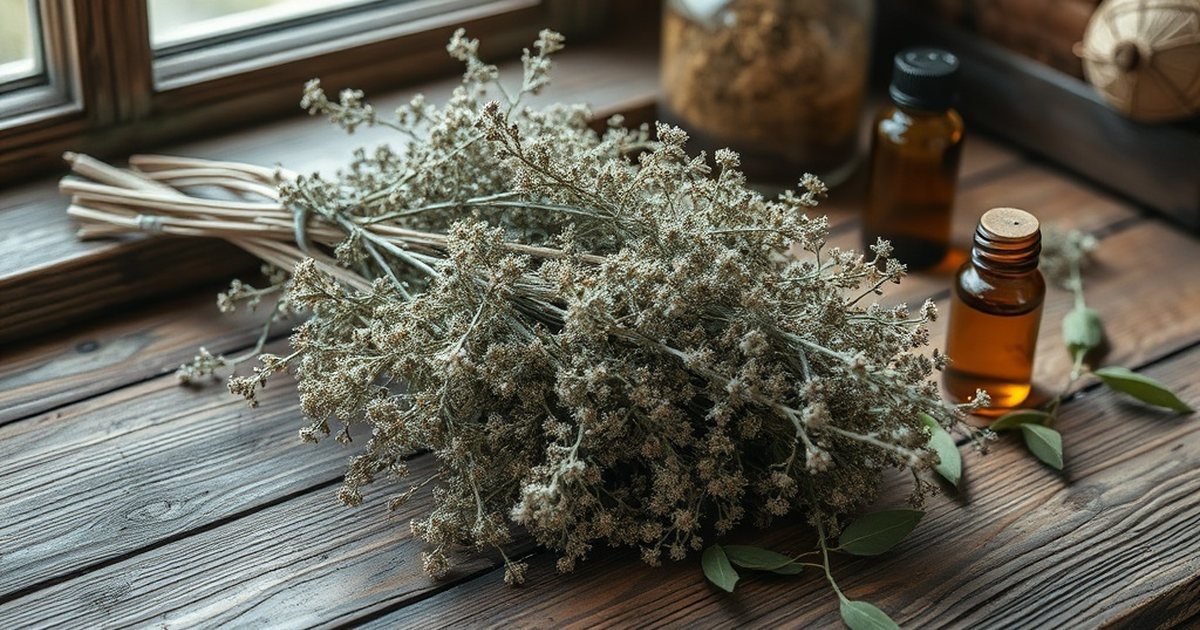
🛒 Where to Buy Wormwood (Artemisia absinthium)
- CleanseParasites Herbal Parasite Cleanse Powder Editor’s Pick
Contains wormwood alongside black walnut hull, cloves, and other traditional parasite-cleanse herbs. - Herb Pharm Intestinal Tract Defense with Wormwood
liquid, 1 fl oz — A Herb Pharm herbal formula containing wormwood extract, not a single-herb wormwood tincture - AlchePharma Organic Wormwood Capsules
capsules, 90 vegan capsules — Single-herb organic Artemisia absinthium, non-GMO and gluten-free - Nature’s Answer Black Walnut and Wormwood Alcohol-Free Extract
liquid, 2 fl oz, 2,000 mg per serving — Alcohol-free dropper extract; a black walnut and wormwood combination, not single-herb wormwood - Frontier Co-op Wormwood Herb, Cut and Sifted
cut and sifted dried herb, 16 oz bulk bag — Bulk dried herb for traditional tea preparation, kosher certified
As an Amazon Associate we earn from qualifying purchases. Quality varies widely — always choose a product with a published third-party test (COA) before buying.

A Note on the Evidence
This article is informational, not medical advice. Neither plant should replace medical diagnosis or treatment of a suspected parasitic infection; both carry real toxicity risks (thujone in wormwood, ascaridole and genotoxic signals in wormseed), most human evidence for either is traditional or preclinical rather than large randomized trials, and pregnant or breastfeeding people, those on anticonvulsants or antidepressants, or anyone with liver concerns should talk to a doctor before using either herb.
Frequently Asked Questions
Are wormwood and wormseed the same plant?
No. Wormwood is Artemisia absinthium, a daisy-family plant known for absinthe flavoring. Wormseed is Chenopodium ambrosioides (also called Dysphania ambrosioides), a goosefoot-family plant with a different chemical profile and a different traditional use history [1].
What compound makes wormwood risky?
Thujone, a volatile oil compound with neurotoxic potential that can trigger seizures at high doses or with prolonged use. This is why commercial wormwood extracts are typically thujone-controlled and meant for short courses only.
What compound makes wormseed risky?
Ascaridole, the essential oil’s main active constituent, which has shown toxic effects on mitochondria in laboratory studies, alongside related compounds carvacrol and caryophyllene oxide [2]. The plant has also shown genotoxic signals in vitro [4].

Is wormwood the same as sweet wormwood (Artemisia annua)?
No, and this is a separate common mix-up. Artemisia annua is a different species whose compound artemisinin is a validated antimalarial drug. Regular wormwood (Artemisia absinthium) does not have that same validated clinical use.
Does the research support wormseed as an effective dewormer?
The evidence is mostly traditional and ethnoveterinary rather than clinical. Documentation exists for its backyard use in deworming pigs and chickens [1], and its essential oil has shown schistosomicidal activity in lab studies [5], but there’s also evidence that its ascaridole-less fraction still carries nematocidal activity without the same smooth-muscle toxicity [3], showing the plant’s chemistry is complicated rather than a simple “more oil, more effect” story.
How can I avoid mixing the two up when buying a product?
Check the Latin binomial on the label (Artemisia absinthium vs. Chenopodium/Dysphania ambrosioides), and look for whether the product discloses thujone or ascaridole content. A product with only a vague common name on the label isn’t traceable enough to use safely.
References
- Lans C et al. Non-experimental validation of ethnoveterinary plants and indigenous knowledge used for backyard pigs and chickens in Trinidad and Tobago. Tropical animal health and production (2007). PMID 17944308
- Monzote L et al. Toxic effects of carvacrol, caryophyllene oxide, and ascaridole from essential oil of Chenopodium ambrosioides on mitochondria. Toxicology and applied pharmacology (2009). PMID 19666043
- MacDonald D et al. Ascaridole-less infusions of Chenopodium ambrosioides contain a nematocide(s) that is(are) not toxic to mammalian smooth muscle. Journal of ethnopharmacology (2004). PMID 15138003
- Gadano A et al. In vitro genotoxic evaluation of the medicinal plant Chenopodium ambrosioides L. Journal of ethnopharmacology (2002). PMID 12020922
- Soares MH et al. Chemical Composition, Antibacterial, Schistosomicidal, and Cytotoxic Activities of the Essential Oil of Dysphania ambrosioides (L.) Mosyakin & Clemants (Chenopodiaceae). Chemistry & biodiversity (2017). PMID 28504841
These statements have not been evaluated by the Food and Drug Administration. This information is not intended to diagnose, treat, cure, or prevent any disease. Content is for informational purposes only and is not medical advice; consult a qualified healthcare provider before starting any supplement. As an Amazon Associate we earn from qualifying purchases.