Wormwood (Artemisia absinthium) shows up in a lot of antioxidant research, usually as one plant among many in a survey of wild or medicinal herbs. These studies typically extract compounds from the leaves or flowers and run them through standard chemistry assays that measure how well a substance neutralizes free radicals or reduces metal ions in a test tube.
That’s worth being precise about upfront: ‘antioxidant activity’ in this research context almost always means a laboratory measurement, not a documented health outcome in a person. This article walks through what those measurements actually are, what wormwood’s results look like compared to other plants, and where the evidence stops short of supporting any health claim.
Key Takeaways
- Wormwood’s ‘antioxidant activity’ in research refers to lab assays (DPPH, ABTS, FRAP, total phenolic content), not measured health effects in people [1][2][3]
- A 2025 study directly compared wormwood and sweet wormwood’s antioxidant and anti-inflammatory chemistry side by side [4]
- Wormwood’s antioxidant readings sit alongside those of other medicinal herbs and herb-infused red wines, this isn’t a unique property [5][6]
- No cited study measured antioxidant effects from ingesting wormwood in humans
- Thujone content is a separate safety issue that antioxidant research doesn’t address
What 'antioxidant activity' means in these studies
Most of the wormwood research cited here uses in vitro chemical assays, tests run on plant extracts in a lab, not in animals or people. Common assay types include DPPH and ABTS radical scavenging (how much a compound neutralizes a synthetic free radical), FRAP (ferric reducing antioxidant power, a measure of electron-donating capacity), and total phenolic content (a rough proxy for the amount of polyphenol compounds present, since phenolics are generally the molecules driving antioxidant behavior).
One study went a step further and used cyclic voltammetry alongside UV-VIS spectroscopy to characterize antioxidant capacity electrochemically in Herzegovinian wildflowers, including Artemisia species [3]. These are chemistry-bench methods for characterizing a plant extract’s reactive potential; they are a starting point for research, not a measurement of what happens once a compound is ingested and metabolized.

What the wormwood-specific studies found
A 2022 study in Pharmaceutics tested aqueous and ethyl acetate extracts of Artemisia absinthium for antioxidant effect alongside their potential to inhibit pancreatic alpha-amylase and intestinal alpha-glucosidase, enzymes involved in carbohydrate digestion, in both in vitro and in vivo models [1]. This pairs an antioxidant assay with an enzyme-inhibition angle, which is a common approach when researchers are screening a plant for metabolic-health relevance, but it’s still early-stage screening work, not a clinical outcome study.
A 2025 paper in Plants characterized the flowers and leaves of both Artemisia absinthium and its relative Artemisia annua (sweet wormwood), evaluating anti-inflammatory, antioxidant, and anti-proliferative activities alongside phytochemical profiling [4]. Comparing the two species side by side is useful because it clarifies that they share some overlapping phenolic chemistry even though their headline compounds differ, wormwood’s sesquiterpene lactones versus sweet wormwood’s artemisinin.
A 2023 survey of wild-growing plants containing phenolic compounds in Latvia included wormwood among the species assessed for antioxidant activity [2]. This kind of regional botanical survey is designed to rank and compare many plants at once, so wormwood’s result there should be read as one data point in a larger comparative table rather than a standalone finding.

How wormwood compares to other plants and phenolic sources
Antioxidant capacity isn’t unique to wormwood or even to medicinal herbs. A 2020 analysis of ‘Prokupac’ red wine looked at its chemical composition and bioactivity, finding phenolic-driven antioxidant capacity typical of many polyphenol-rich foods and beverages [5]. This is a useful reference point: high antioxidant readings on these assays show up across a very wide range of plant-derived foods and drinks, not just in herbs marketed for health purposes.
A 2025 paper in the International Journal of Molecular Sciences used chemometrics and HPLC profiling to optimize polyphenol recovery and antioxidant capacity from medicinal herbs for functional food applications [6]. Work like this is aimed at extraction and formulation, figuring out how to pull the most active compounds out of a plant efficiently, which is a manufacturing and food-science question, separate from whether consuming the resulting extract changes a health outcome in a person.
The gap between lab assays and health effects
None of the studies above measured outcomes in people taking wormwood. They measured chemical reactivity of extracts against synthetic radicals or metal ions, or in some cases enzyme inhibition in vitro or in animal models. That’s a meaningful distinction: a strong DPPH or FRAP result tells you a compound is chemically capable of donating electrons or neutralizing a radical under lab conditions. It does not tell you how much of that compound survives digestion, gets absorbed, reaches relevant tissue, or produces a measurable change in oxidative stress markers in a living person.
This gap is standard across plant-antioxidant research generally, not a shortcoming unique to wormwood. It’s one reason antioxidant claims on supplement labels tend to outrun what the underlying studies actually show.
Why thujone content matters here specifically
Wormwood’s antioxidant profile is separate from, and doesn’t offset, its thujone content. Thujone is neurotoxic and has been linked to seizures at high doses or with prolonged use, which is why wormwood extracts intended for any use should be thujone-controlled and limited to short courses. This matters when reading antioxidant studies, because the extracts tested in a lab assay are not the same as a consumer product, and a favorable antioxidant reading says nothing about the safety of the thujone content in a given extract.
🛒 Where to Buy Wormwood (Artemisia absinthium)
- CleanseParasites Herbal Parasite Cleanse Powder Editor’s Pick
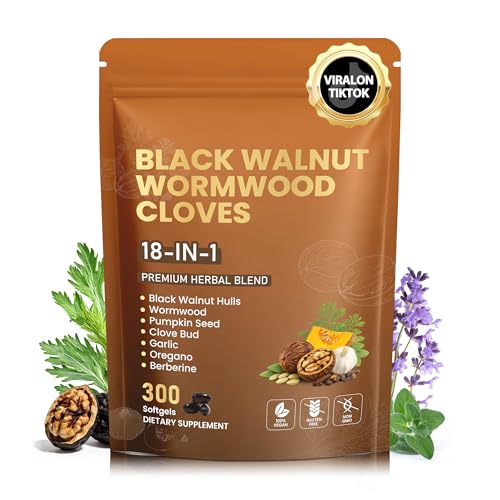
Contains wormwood alongside black walnut hull, cloves, and other traditional parasite-cleanse herbs. - Herb Pharm Intestinal Tract Defense with Wormwood
liquid, 1 fl oz — A Herb Pharm herbal formula containing wormwood extract, not a single-herb wormwood tincture - AlchePharma Organic Wormwood Capsules
capsules, 90 vegan capsules — Single-herb organic Artemisia absinthium, non-GMO and gluten-free - Nature’s Answer Black Walnut and Wormwood Alcohol-Free Extract
liquid, 2 fl oz, 2,000 mg per serving — Alcohol-free dropper extract; a black walnut and wormwood combination, not single-herb wormwood - Frontier Co-op Wormwood Herb, Cut and Sifted
cut and sifted dried herb, 16 oz bulk bag — Bulk dried herb for traditional tea preparation, kosher certified
As an Amazon Associate we earn from qualifying purchases. Quality varies widely — always choose a product with a published third-party test (COA) before buying.
A Note on the Evidence
This article summarizes lab-based chemistry assays, not clinical evidence in humans, and none of it should be read as support for using wormwood to treat any condition. Wormwood contains thujone, is contraindicated in pregnancy and breastfeeding, can interact with anticonvulsants, antidepressants, and liver-metabolized drugs, and should not replace medical diagnosis or treatment of a suspected parasitic or other infection; talk to a doctor before use.

Frequently Asked Questions
Does wormwood's antioxidant activity mean it fights disease?
No. The cited research measures chemical reactivity in lab assays like DPPH and FRAP, not disease outcomes in people [1]. A compound scavenging free radicals in a test tube doesn’t establish a clinical benefit.
Is wormwood more antioxidant-rich than other herbs?
It’s been included in comparative surveys of wild plants and shows measurable phenolic-driven antioxidant capacity, but so do many other plants, wildflowers, and even red wine [2][5]. It isn’t shown to be exceptional among them.
What's the difference between wormwood and sweet wormwood in this research?
A 2025 study evaluated both species together for antioxidant, anti-inflammatory, and anti-proliferative activity [4]. They share overlapping phenolic chemistry, but only sweet wormwood contains artemisinin, the validated antimalarial compound; wormwood’s distinct compounds are thujone and sesquiterpene lactones like absinthin.

Can I take wormwood extract for its antioxidants?
This isn’t medical advice, but the antioxidant studies don’t establish a safe dose or health benefit for humans. Wormwood also contains thujone, which is neurotoxic at high doses or with prolonged use, so any use should be thujone-controlled and short-term, and discussed with a doctor first.
What lab methods are used to measure this?
Common ones include DPPH and ABTS radical scavenging assays, FRAP, total phenolic content, and in one case electrochemical methods like cyclic voltammetry paired with UV-VIS spectroscopy [3]. These are standardized chemistry tools for characterizing an extract, not clinical tests.
Is wormwood being researched for anything beyond antioxidants?
Yes, one 2022 study also examined its potential to inhibit digestive enzymes (pancreatic alpha-amylase and intestinal alpha-glucosidase) relevant to carbohydrate metabolism, alongside its antioxidant effect [1]. This is early in vitro and in vivo screening, not a clinical finding.
References
- Hbika A et al. Artemisia absinthium L. Aqueous and Ethyl Acetate Extracts: Antioxidant Effect and Potential Activity In Vitro and In Vivo against Pancreatic α-Amylase and Intestinal α-Glucosidase. Pharmaceutics (2022). PMID 35335858
- Teterovska R et al. The Antioxidant Activity of Wild-Growing Plants Containing Phenolic Compounds in Latvia. Plants (Basel, Switzerland) (2023). PMID 38140435
- Zlatić G et al. Antioxidant Capacity of Herzegovinian Wildflowers Evaluated by UV-VIS and Cyclic Voltammetry Analysis. Molecules (Basel, Switzerland) (2022). PMID 36080233
- Țicolea M et al. Flowers and Leaves of Artemisia absinthium and Artemisia annua Phytochemical Characterization, Anti-Inflammatory, Antioxidant, and Anti-Proliferative Activities Evaluation. Plants (Basel, Switzerland) (2025). PMID 40219097
- Lakićević SH et al. An insight into chemical composition and bioactivity of 'Prokupac' red wine. Natural product research (2020). PMID 30445879
- Athanasiadis V et al. Data-Driven Optimization of Polyphenol Recovery and Antioxidant Capacity from Medicinal Herbs Using Chemometrics and HPLC Profiling for Functional Food Applications. International journal of molecular sciences (2025). PMID 41516188
These statements have not been evaluated by the Food and Drug Administration. This information is not intended to diagnose, treat, cure, or prevent any disease. Content is for informational purposes only and is not medical advice; consult a qualified healthcare provider before starting any supplement. As an Amazon Associate we earn from qualifying purchases.