Wormwood usually refers to Artemisia absinthium, a silvery, aromatic perennial in the daisy family that has been used for centuries as a bitter digestive tonic, a fever remedy, and a traditional treatment for intestinal worms. It’s also the herb that gives absinthe and vermouth their name and their bitter backbone.
This article explains what wormwood actually is, what’s behind its reputation as an anti-parasitic herb, and why it needs to be handled with more caution than most kitchen herbs. It is informational only, not medical advice, and it should not be used to self-diagnose or self-treat a suspected parasitic infection.
Key Takeaways
- Wormwood (Artemisia absinthium) is a bitter herb historically used for digestion, fevers, and intestinal parasites, and is the namesake ingredient in absinthe.
- Its proposed anti-parasitic activity is attributed to sesquiterpene lactones and volatile oil compounds studied mainly in vitro and in animals, not in large human trials.
- It is not the same plant as Artemisia annua (sweet wormwood), the true source of the antimalarial drug artemisinin.
- Wormwood contains thujone, a neurotoxic compound linked to seizure risk at high doses or with prolonged use, so extracts should be thujone-controlled and used only short-term.
- It’s contraindicated in pregnancy and breastfeeding and can interact with anticonvulsants, antidepressants, and other liver-metabolized drugs.
What Is Wormwood, Botanically?
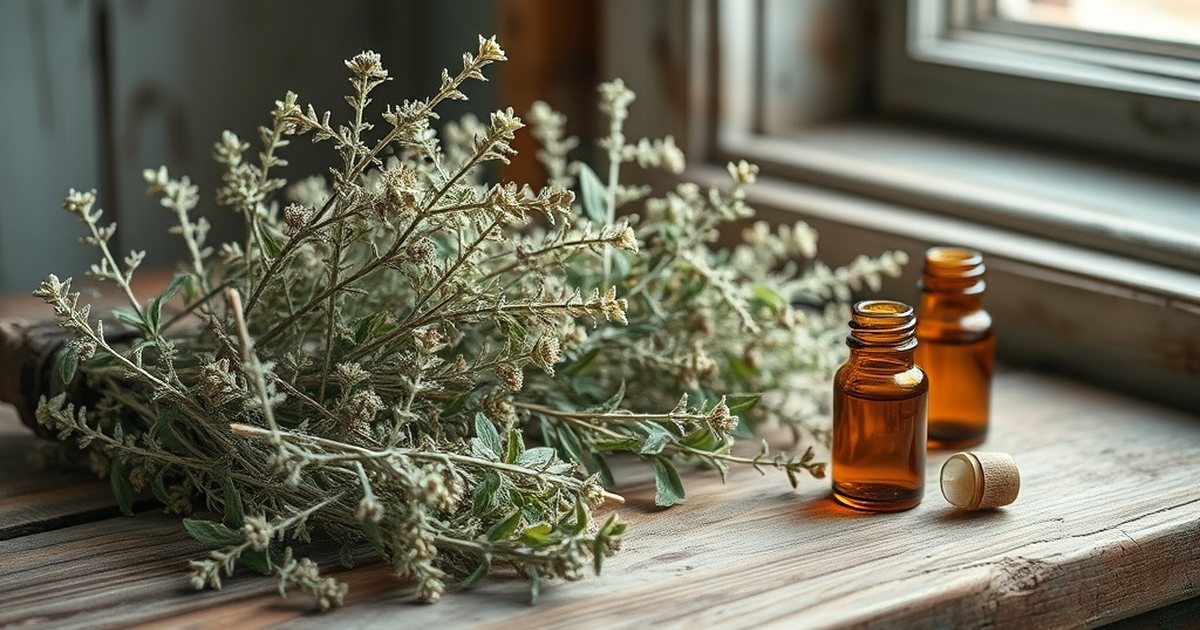
Artemisia absinthium is a woody-based perennial native to Europe, Asia, and North Africa, now naturalized in North America. It has finely divided, silvery-green leaves covered in fine hairs, small yellow flower heads, and an intensely bitter, sage-like aroma. The name ‘wormwood’ is an old reference to its historical use for expelling intestinal worms, not a description of its appearance.
It belongs to the same genus as several other well-known ‘artemisias,’ including tarragon (Artemisia dracunculus) and mugwort (Artemisia vulgaris). The most important lookalike, both botanically and in the supplement world, is Artemisia annua, or sweet wormwood, which is a distinct species discussed further below.
A Long History as a Bitter Tonic and Vermifuge
Wormwood has one of the longest documented histories of any European medicinal herb. It shows up in classical and medieval texts as a treatment for digestive complaints, poor appetite, fevers, and intestinal parasites (‘worms’), usually prepared as a bitter tea, tincture, or wine. Traditional use is a reason to investigate a plant, not evidence that it works, and it is worth holding that distinction firmly for a herb whose best-characterised pharmacological property is neurotoxicity rather than anti-parasitic action [1].

That bitterness is not incidental. Traditional herbal medicine grouped wormwood with other ‘bitter tonics’ thought to stimulate digestive secretions and appetite. Its parasite-related reputation comes from this same tradition of use, long before modern pharmacology could explain a mechanism.
Wormwood and Absinthe: The Cultural Side Story
Wormwood is best known to most people as the namesake ingredient of absinthe, the high-proof spirit popular in 19th-century Europe, and as a flavoring component in some vermouths. Absinthe’s reputation for causing hallucinations or ‘absinthism’ was later tied to its thujone content, though modern analyses suggest historical absinthe’s effects were driven mostly by very high alcohol content rather than thujone alone. This has been tested on the actual product rather than argued from theory: thirteen authentic pre-ban absinthes bottled before 1915 were chemically analysed and found to contain total thujone between 0.5 and 48.3 mg/L, well below the levels the folklore assumed, with concentrations similar to those of modern absinthes made to historical recipes. The authors concluded that nothing besides ethanol was present in the samples capable of explaining the syndrome described as ‘absinthism’ [2].
This history is worth knowing because it’s the origin of most people’s association between wormwood and neurological effects, an association that turns out to be biologically real, just not in the dramatic way absinthe folklore suggests.
The Proposed Anti-Parasitic Mechanism
Wormwood’s compounds of interest fall into two main groups: sesquiterpene lactones (including absinthin and artabsin), which give the plant its intense bitterness, and a volatile essential oil that contains thujone along with other terpenes.
In laboratory (in vitro) and animal studies, these compounds are proposed to disrupt parasite cell membranes and interfere with parasite metabolism. This is a plausible mechanism at the bench level, but it is important to be clear that most of the evidence for wormwood’s anti-parasitic activity in humans comes from traditional use and preclinical studies, not large, well-controlled randomized trials in people.
One clarification is worth making, because it is easy to overcorrect in the other direction. Wormwood HAS been studied in controlled human trials — just not for parasites. Two controlled trials have been published, both in Crohn’s disease rather than in any infection: a double-blind, placebo-controlled study at five German sites gave 40 patients a herbal blend containing wormwood alongside a steroid taper [3], and a smaller controlled trial of twenty patients using dried powdered wormwood reported a fall in serum TNF-alpha and in disease activity scores [4]. Both are small, both are in inflammatory bowel disease rather than infection, and the first dosed a multi-herb blend that cannot isolate wormwood’s contribution. They do not support using wormwood to clear a parasite. What they do show is that the evidence gap here is specific: the herb has been through human trials, and the indication it is actually sold for is not the one that was tested. That gap matters when deciding how much weight to put on wormwood as a treatment rather than a traditionally used herb.

Wormwood vs. Sweet Wormwood (Artemisia annua): Don't Confuse Them
This is one of the most common points of confusion in herbal medicine. Artemisia absinthium (common wormwood) is not the same plant as Artemisia annua (sweet wormwood, also called qinghao). They are related species with overlapping folk names but very different evidence profiles.
Artemisia annua is the source of artemisinin, a compound that was developed into artemisinin-based combination therapies, now a validated, frontline class of antimalarial drugs used worldwide. That validated evidence belongs to sweet wormwood and its derived pharmaceutical compounds, not to common wormwood (Artemisia absinthium). Products or articles that blur these two species can create a false impression that common wormwood carries the same level of clinical evidence as artemisinin. It does not.
Thujone: Why Wormwood Isn't a Casual Herb
The compound that most distinguishes wormwood from an ordinary bitter herb is thujone, a neurotoxic terpene concentrated in its essential oil. At high doses, or with prolonged, unsupervised use, thujone can cause seizures and other neurological effects. This is the main reason wormwood extracts sold as supplements are typically thujone-controlled or thujone-free, and why traditional use emphasized short courses rather than ongoing daily use.
Wormwood also carries specific contraindications and interaction risks: it should be avoided in pregnancy and breastfeeding, and it can interact with anticonvulsant medications, antidepressants, and other drugs that are metabolized by the liver. Anyone taking prescription medication, especially for seizures, mood disorders, or liver-related conditions, should not start wormwood without talking to a clinician first.
🛒 Where to Buy Wormwood (Artemisia absinthium)
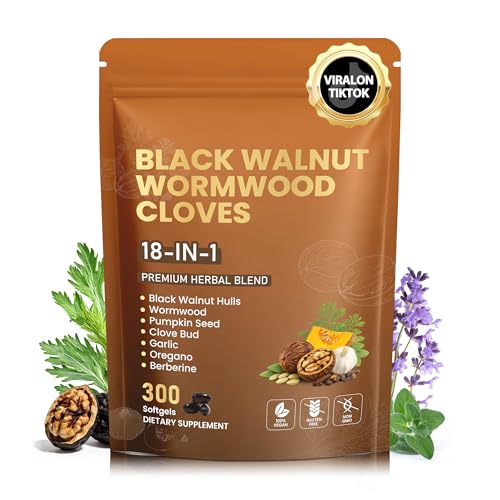
- CleanseParasites Herbal Parasite Cleanse Powder Editor’s Pick
Contains wormwood alongside black walnut hull, cloves, and other traditional parasite-cleanse herbs. - Herb Pharm Intestinal Tract Defense with Wormwood
liquid, 1 fl oz — A Herb Pharm herbal formula containing wormwood extract, not a single-herb wormwood tincture - AlchePharma Organic Wormwood Capsules
capsules, 90 vegan capsules — Single-herb organic Artemisia absinthium, non-GMO and gluten-free - Nature’s Answer Black Walnut and Wormwood Alcohol-Free Extract
liquid, 2 fl oz, 2,000 mg per serving — Alcohol-free dropper extract; a black walnut and wormwood combination, not single-herb wormwood - Frontier Co-op Wormwood Herb, Cut and Sifted
cut and sifted dried herb, 16 oz bulk bag — Bulk dried herb for traditional tea preparation, kosher certified
As an Amazon Associate we earn from qualifying purchases. Quality varies widely — always choose a product with a published third-party test (COA) before buying.
A Note on the Evidence
Much of what’s known about wormwood’s anti-parasitic effects comes from traditional use and small in-vitro or animal studies rather than robust human clinical trials, and its thujone content carries real neurological risk at high doses or with prolonged use. This article is for informational purposes only; consult a doctor before using wormwood, especially if pregnant, breastfeeding, or taking anticonvulsant, antidepressant, or liver-metabolized medications, and seek proper medical diagnosis for any suspected parasitic infection.
Frequently Asked Questions
Is wormwood the same as sweet wormwood or Artemisia annua?
No. Common wormwood (Artemisia absinthium) and sweet wormwood (Artemisia annua) are related but distinct species. Sweet wormwood is the source of artemisinin, a validated antimalarial drug class, while common wormwood’s parasite-related evidence is largely traditional and preclinical.
Can wormwood actually kill intestinal parasites?
Traditional use and some in-vitro and animal studies suggest its sesquiterpene lactones and oil compounds may disrupt parasite membranes and metabolism, but this has not been confirmed in large human trials, so it should not be relied on to treat a suspected infection without medical diagnosis.

Is wormwood the same thing that's in absinthe?
Yes, Artemisia absinthium is the herb that gives absinthe its name and bitter flavor. Historical concerns about absinthe causing hallucinations are now understood to be driven mostly by high alcohol content, with thujone playing a smaller, though real, role.
What is thujone and why is it a concern?
Thujone is a neurotoxic compound found in wormwood’s essential oil. At high doses or with prolonged use it can trigger seizures, which is why commercial wormwood extracts are typically thujone-controlled and meant for short courses only.
Who should avoid wormwood?
Pregnant or breastfeeding people should avoid it entirely, as should anyone taking anticonvulsant medications, antidepressants, or drugs that are heavily processed by the liver, due to interaction risk. Anyone with a seizure disorder should be especially cautious.
Should I use wormwood instead of seeing a doctor for a parasite infection?
No. Wormwood is not a substitute for medical diagnosis and treatment of a suspected parasitic infection. Its human evidence base is limited, and untreated parasitic infections can have serious consequences.
References
- Hold KM et al. Alpha-thujone (the active component of absinthe): gamma-aminobutyric acid type A receptor modulation and metabolic detoxification. Proc Natl Acad Sci U S A (2000). PMID 10725394
- Lachenmeier DW et al. Chemical composition of vintage preban absinthe with special reference to thujone, fenchone, pinocamphone, methanol, copper, and antimony concentrations. J Agric Food Chem (2008). PMID 18419128
- Omer B et al. Steroid-sparing effect of wormwood (Artemisia absinthium) in Crohn’s disease: a double-blind placebo-controlled study. Phytomedicine (2007). PMID 17240130
- Krebs S et al. Wormwood (Artemisia absinthium) suppresses tumour necrosis factor alpha and accelerates healing in patients with Crohn’s disease – A controlled clinical trial. Phytomedicine (2010). PMID 19962291
These statements have not been evaluated by the Food and Drug Administration. This information is not intended to diagnose, treat, cure, or prevent any disease. Content is for informational purposes only and is not medical advice; consult a qualified healthcare provider before starting any supplement. As an Amazon Associate we earn from qualifying purchases.