Wormwood (Artemisia absinthium) is a bitter herb historically used for digestive complaints and as the defining flavoring in absinthe and vermouth. Its proposed anti-parasitic activity is attributed to sesquiterpene lactones such as absinthin and artabsin, along with volatile oil compounds that disrupt parasite membranes in vitro, though robust human trial data are lacking.
Critically, wormwood contains thujone, a monoterpene ketone with documented neurotoxic potential that can lower the seizure threshold at high doses or with prolonged use. This article reviews the established contraindications — pregnancy and breastfeeding, seizure disorders, and clinically relevant drug interactions mediated by liver enzyme modulation — drawing on available pharmacological evidence for Artemisia species.
Key Takeaways
- Wormwood (Artemisia absinthium) contains thujone, a neurotoxic compound that can provoke seizures at high doses or with prolonged use; extracts should be thujone-controlled and limited to short courses.
- Wormwood should be avoided in pregnancy and breastfeeding: an ethanolic wormwood extract reduced sites of implantation and the rate of born pups in pregnant rats, and the European Medicines Agency records its use as not recommended during pregnancy and lactation [1]. Whether thujone reaches human breast milk has never been measured.
- Artemisia species (including sweet wormwood, A. annua) demonstrate irreversible inhibition of CYP3A4 and CYP2B6 in vitro [2], raising concern for clinically significant drug interactions with wormwood.
- Patients taking anticonvulsants, antidepressants, anticoagulants, immunosuppressants, or other CYP3A4/2B6 substrates should avoid wormwood or use only under close medical supervision.
- Human evidence for wormwood’s anti-parasitic efficacy is limited to traditional use and small studies; it should not replace medical diagnosis or prescription antiparasitic therapy.
Botanical Distinction: Wormwood vs. Sweet Wormwood
Artemisia absinthium (common wormwood) and Artemisia annua (sweet wormwood) are distinct species within the same genus. Sweet wormwood is the source of artemisinin, a validated frontline antimalarial drug. That distinction carries most of the weight on this page, because a large share of the pharmacology people cite when they discuss “Artemisia” drug interactions was generated in A. annua rather than in the plant actually sold as wormwood.
Wormwood (A. absinthium) does not produce significant artemisinin; its characteristic bitter principles are absinthin and artabsin, and its essential oil is rich in thujone. This phytochemical distinction is clinically important because the safety profile, contraindications, and drug interaction potential of wormwood derive primarily from its thujone content and sesquiterpene lactone profile, not from artemisinin. However, both species share membership in the Asteraceae family and may exhibit overlapping effects on drug-metabolizing enzymes.
Thujone Neurotoxicity and Seizure Risk
Thujone (alpha- and beta-isomers) is a GABA-A receptor antagonist that can cause central nervous system excitation and convulsions at sufficient doses. The mechanism is well characterised: alpha-thujone competitively inhibits binding at the GABA-gated chloride channel, and the poisoning signs it produces in mice are relieved by diazepam and phenobarbital [3]. In wormwood, thujone concentrations vary widely depending on chemotype, growing conditions, and preparation method. A toxicological assessment of thujone-containing herbal and botanical products put the best estimate of an allowable daily intake at roughly 3 to 7 mg per day [4], and the European Medicines Agency requires licensed wormwood preparations to specify their thujone content and keep daily exposure below 6.0 mg [1]. Historical absinthe-related neurotoxicity was attributed to high thujone exposure, though modern regulatory limits restrict thujone in food and beverages.

Animal and in vitro data demonstrate that thujone-induced seizures are dose-dependent and reversible upon discontinuation. Human case reports link excessive or chronic wormwood oil ingestion to tonic-clonic seizures, particularly in individuals with pre-existing epilepsy or lowered seizure thresholds. For this reason, wormwood extracts should be thujone-controlled (ideally quantified by GC-MS), limited to short courses (typically ≤4 weeks), and avoided entirely in patients with seizure disorders or those taking anticonvulsant medications.
Pregnancy and Breastfeeding Contraindications
Wormwood is classified as a uterine stimulant and emmenagogue in traditional herbal medicine, and A. absinthium is described in the pharmacological literature as a plant traditionally used as an emmenagogue and abortifacient [5]. The animal evidence is more specific than a general claim about uterine contractility. In reproductive-toxicity testing summarised by the European Medicines Agency, a dry ethanolic extract of wormwood herb administered orally to pregnant rats produced reduced sites of implantation and a reduced rate of born pups, and the agency records thujone as known for uterus-stimulating activity [1]. No controlled human pregnancy data exist. Wormwood essential oil is also rich in sabinyl acetate, close to 12% of the oil in one gas-chromatography analysis [5], and both trans-sabinyl acetate and thujone appear among the essential-oil constituents reviewed for maternal reproductive toxicity, where the stated concerns include abortion, teratogenicity and embryo-fetotoxicity [6].
Lactation is a data gap rather than a documented hazard, and the difference is worth stating plainly. No published study has measured whether thujone passes into human breast milk, so a claim that it does, or that it does not, would be equally unsupported. The European Medicines Agency position rests on that absence: it records that there are no or limited data from use during pregnancy and lactation, and that use is not recommended during pregnancy and lactation [1]. Given the absent safety data and the established neuropharmacology of thujone, wormwood in any form (tea, tincture, essential oil, or extract) should be avoided throughout pregnancy and breastfeeding.
Cytochrome P450 Modulation and Drug Metabolism Interactions
Artemisia annua extracts have been shown to irreversibly inhibit the major drug-metabolizing enzymes CYP2B6 and CYP3A4 in vitro [2]. CYP3A4 alone metabolizes an estimated 50% of clinically used drugs, including many antidepressants, anticonvulsants, immunosuppressants, and cardiovascular agents. Irreversible (mechanism-based) inhibition is particularly concerning because enzyme activity recovers only after new protein synthesis, prolonging interaction risk beyond the herb’s plasma half-life.
A broader review of complementary medicines used in ulcerative colitis identified unintended interactions with cytochrome P450-dependent drug-metabolizing enzymes, highlighting that herbal products frequently modulate CYP isoforms in ways that can alter the pharmacokinetics of co-administered drugs [7]. While direct CYP inhibition data for A. absinthium are more limited than for A. annua, the shared genus and overlapping sesquiterpene lactone chemistry suggest a plausible risk that wormwood preparations may similarly inhibit CYP3A4, CYP2B6, and potentially other isoforms such as CYP2C9 and CYP1A2. There is, however, constituent-specific evidence that does not require the cross-species leap: thujone itself is metabolised principally by CYP2A6, followed by CYP3A4 and to a lesser extent CYP2B6, and that CYP-associated metabolism is the recognised route by which pharmacogenetic variation and metabolic interactions could arise [4]. The direction of that finding matters: it establishes thujone as a CYP substrate, not as a proven inhibitor. The European Medicines Agency monograph for wormwood herb currently reports no interactions with other medicinal products [1]. The drug-class precautions below are therefore precautionary, reasoned from mechanism and from a related species, and not drawn from documented clinical interaction reports.

A narrative review of drug-drug interactions with artemisinin-based combination therapies in malaria treatment documented numerous clinically significant interactions involving CYP-mediated metabolism, P-glycoprotein transport, and pharmacodynamic synergy or antagonism [8]. Although artemisinin itself is not a major constituent of wormwood, these findings underscore the broader principle that Artemisia-derived sesquiterpene lactones and associated phytochemicals can participate in complex, multi-pathway drug interactions.
Specific Drug Classes of Concern
Anticonvulsants: Many antiseizure medications (e.g., carbamazepine, phenytoin, valproate, lamotrigine) are metabolized by CYP3A4, CYP2C9, or CYP2B6. Wormwood-induced CYP inhibition could elevate anticonvulsant levels, increasing toxicity risk (ataxia, nystagmus, hepatic injury), while its thujone content independently lowers seizure threshold — a dual hazard.
Antidepressants and Psychotropics: SSRIs (e.g., sertraline, fluoxetine), SNRIs, tricyclics, and antipsychotics are extensively metabolized by CYP2D6, CYP2C19, and CYP3A4. CYP3A4 inhibition by wormwood could increase plasma concentrations, raising the risk of serotonin syndrome, QT prolongation, or other dose-dependent adverse effects.
Anticoagulants and Antiplatelets: Warfarin (CYP2C9, CYP3A4) and direct oral anticoagulants (substrates of CYP3A4 and P-gp) have narrow therapeutic indices. Herbal CYP modulation can unpredictably alter anticoagulant effect, increasing bleeding or thrombotic risk.
Immunosuppressants and Transplant Medications: Tacrolimus, cyclosporine, and sirolimus are CYP3A4/P-gp substrates with critical therapeutic windows. Even transient herbal inhibition can precipitate toxicity or rejection.
Patients on any chronic medication should disclose wormwood use to their prescribing clinician and pharmacist for interaction screening.
Evidence Gaps and Clinical Context
Most human evidence for wormwood’s anti-parasitic effects derives from traditional use, open-label studies, and animal/in vitro models rather than large, randomized controlled trials. A 2018 trial in Crohn’s disease (not a parasitic indication) suggested possible benefit of an A. absinthium herbal preparation, but the study was small and not replicated.
The pharmacokinetics of wormwood constituents in humans — including thujone absorption, distribution, metabolism (including CYP-mediated pathways), and excretion — remain incompletely characterized. Without standardized, thujone-quantified extracts and defined dosing regimens, the margin between putative therapeutic effect and neurotoxicity cannot be reliably established.
Regulatory status varies: in the U.S., wormwood is permitted as a flavoring agent only if thujone-free per FDA regulation (21 CFR 172.510), while thujone-containing wormwood products are sold as dietary supplements subject to DSHEA. In the EU, thujone limits in food are set by Regulation (EC) No 1334/2008. Practitioners and consumers should verify product specifications and sourcing.

🛒 Where to Buy Wormwood (Artemisia absinthium)
- CleanseParasites Herbal Parasite Cleanse Powder Editor’s Pick
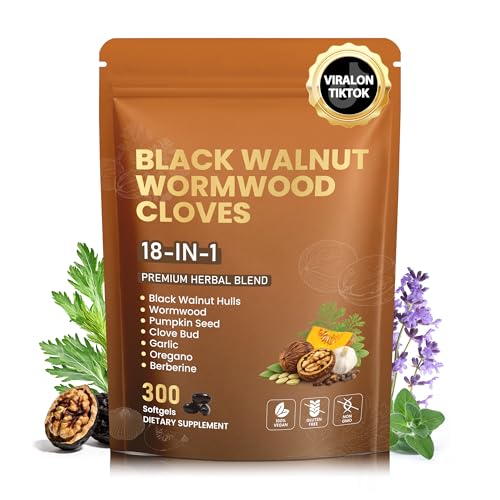
Contains wormwood alongside black walnut hull, cloves, and other traditional parasite-cleanse herbs. - Herb Pharm Intestinal Tract Defense with Wormwood
liquid, 1 fl oz — A Herb Pharm herbal formula containing wormwood extract, not a single-herb wormwood tincture - AlchePharma Organic Wormwood Capsules
capsules, 90 vegan capsules — Single-herb organic Artemisia absinthium, non-GMO and gluten-free - Nature’s Answer Black Walnut and Wormwood Alcohol-Free Extract
liquid, 2 fl oz, 2,000 mg per serving — Alcohol-free dropper extract; a black walnut and wormwood combination, not single-herb wormwood - Frontier Co-op Wormwood Herb, Cut and Sifted
cut and sifted dried herb, 16 oz bulk bag — Bulk dried herb for traditional tea preparation, kosher certified
As an Amazon Associate we earn from qualifying purchases. Quality varies widely — always choose a product with a published third-party test (COA) before buying.
A Note on the Evidence
This article summarizes pharmacological and safety data from in vitro, animal, and limited human studies; it does not constitute medical advice. Wormwood products vary widely in thujone content and quality. Anyone with a seizure disorder, taking prescription medications, or who is pregnant or breastfeeding should avoid wormwood unless explicitly directed by a qualified healthcare professional.
Frequently Asked Questions
Is wormwood safe to use during pregnancy?
No. Wormwood is traditionally classified as a uterine stimulant and abortifacient, and in reproductive-toxicity testing summarised by the European Medicines Agency, a dry ethanolic wormwood extract given to pregnant rats reduced sites of implantation and the rate of born pups [1]. The agency wording is that data in pregnancy and lactation are absent or limited and that use is not recommended during pregnancy and lactation, which is a “not recommended” rather than a formal contraindication. The practical advice is the same: do not use it.
Can wormwood cause seizures?
Yes. Thujone, a major constituent of wormwood essential oil, is a GABA-A receptor antagonist that lowers the seizure threshold. Case reports document tonic-clonic seizures after excessive or chronic wormwood oil ingestion, particularly in individuals with epilepsy.

Does wormwood interact with prescription medications?
Evidence from the related species Artemisia annua shows irreversible inhibition of CYP3A4 and CYP2B6 [2], enzymes that metabolize many drugs. Complementary medicines including Artemisia species have documented unintended interactions with cytochrome P450 enzymes [7]. Wormwood should be assumed to carry similar interaction potential, though no interactions have yet been documented for wormwood herb preparations themselves [1].
How does wormwood differ from sweet wormwood (Artemisia annua)?
Wormwood (A. absinthium) contains thujone and the bitter sesquiterpene lactones absinthin and artabsin, but negligible artemisinin. Sweet wormwood (A. annua) produces artemisinin, a potent antimalarial. Their safety profiles and clinical uses are distinct, which is exactly why evidence generated in one is not automatically evidence about the other.
Should I use wormwood to treat a suspected parasitic infection?
Wormwood has traditional use and in vitro anti-parasitic activity, but large randomized controlled trials in humans are lacking. Self-treating a suspected parasitic infection with wormwood risks delayed diagnosis, neurotoxicity from thujone, and drug interactions. Consult a healthcare provider for appropriate testing and prescription therapy.
What should I discuss with my doctor before considering wormwood?
Disclose all current medications (especially anticonvulsants, antidepressants, anticoagulants, immunosuppressants), any history of seizures or epilepsy, pregnancy or breastfeeding status, and liver conditions. Ask specifically about CYP3A4/2B6 interaction risk and whether a thujone-quantified, standardized extract is appropriate for your situation.
References
- Committee on Herbal Medicinal Products (HMPC). European Union herbal monograph on Artemisia absinthium L., herba. EMA/HMPC/751490/2016 Corr. 1. European Medicines Agency (2020). EMA HMPC monograph
- Kondža M et al. Artemisia annua L. Extracts Irreversibly Inhibit the Activity of CYP2B6 and CYP3A4 Enzymes. Biomedicines (2023). PMID 36672740
- Höld KM et al. Alpha-thujone (the active component of absinthe): gamma-aminobutyric acid type A receptor modulation and metabolic detoxification. Proceedings of the National Academy of Sciences (2000). PMID 10725394
- Pelkonen O et al. Thujone and thujone-containing herbal medicinal and botanical products: toxicological assessment. Regulatory Toxicology and Pharmacology (2013). PMID 23201408
- Demirel MA et al. Exploring the Effects of Artemisia absinthium L. Essential Oil on Pseudopregnancy Model in Rats. Veterinary Medicine and Science (2025). PMID 40844671
- Dosoky NS et al. Maternal Reproductive Toxicity of Some Essential Oils and Their Constituents. International Journal of Molecular Sciences (2021). PMID 33673548
- Şen A et al. Complementary medicines used in ulcerative colitis and unintended interactions with cytochrome P450-dependent drug-metabolizing enzymes. Turkish journal of medical sciences (2022). PMID 36422483
- Hernandez Maldonado J et al. Drug-Drug Interactions of Artemisinin-Based Combination Therapies in Malaria Treatment: A Narrative Review of the Literature. Journal of clinical pharmacology (2022). PMID 35543380
These statements have not been evaluated by the Food and Drug Administration. This information is not intended to diagnose, treat, cure, or prevent any disease. Content is for informational purposes only and is not medical advice; consult a qualified healthcare provider before starting any supplement. As an Amazon Associate we earn from qualifying purchases.