Wormwood (Artemisia absinthium) is a traditional bitter herb used for digestive complaints and as the defining flavor in absinthe and vermouth. While it has a long history of use, its safety profile requires careful attention due to the presence of thujone, a neurotoxic compound that can cause seizures and other adverse effects at high doses or with prolonged use.
This article outlines the specific groups who should avoid wormwood, the known contraindications, and important safety considerations based on its pharmacological constituents. It is intended for informational purposes only and does not constitute medical advice.
Key Takeaways
- Wormwood contains thujone, a neurotoxic compound that can trigger seizures; it is contraindicated in people with seizure disorders or epilepsy.
- Pregnant and breastfeeding individuals must avoid wormwood due to fetal/infant neurotoxicity risks and emmenagogue effects.
- Wormwood interacts with anticonvulsants, antidepressants, and drugs metabolized by liver CYP450 enzymes; consult a provider if taking any medications.
- People with ulcers, GERD, or Asteraceae family allergies should avoid wormwood due to gastric stimulation and allergy cross-reactivity.
- Most human evidence for anti-parasitic effects comes from tradition and in-vitro/animal studies, not large clinical trials; wormwood should not replace medical diagnosis or treatment for suspected parasitic infections.
Thujone Neurotoxicity and Seizure Risk
The primary safety concern with wormwood is its thujone content. Thujone is a monoterpene ketone that acts as a GABA receptor antagonist, which can lower the seizure threshold and cause neurotoxicity at high doses or with prolonged exposure. This mechanism is distinct from the sesquiterpene lactones (absinthin, artabsin) and volatile oils that contribute to wormwood’s proposed anti-parasitic activity in vitro.
Because thujone accumulates in the body and its neurotoxic effects are dose-dependent, wormwood extracts should be thujone-controlled and limited to short courses. Individuals with a history of seizures or epilepsy are at significantly increased risk and should avoid wormwood entirely.
Pregnancy and Breastfeeding Contraindications
Wormwood is contraindicated during pregnancy and breastfeeding. Thujone’s neurotoxic properties raise concerns for fetal neurodevelopment, and the herb has traditional use as an emmenagogue (stimulating menstrual flow), which could pose risks to pregnancy maintenance. No safety data exist to support its use in these populations.
Whether thujone and the other volatile constituents reach human breast milk has not been measured in any published study, so infant exposure is projected from the chemistry rather than demonstrated. The European Medicines Agency records that data on use in pregnancy and lactation are absent or limited and that use is not recommended during pregnancy and lactation; its reproductive-toxicity summary notes that a dry ethanolic wormwood extract given orally to pregnant rats produced reduced sites of implantation and a reduced rate of born pups [1]. Given the lack of safety studies and the known neurotoxicity profile, complete avoidance is recommended during pregnancy and lactation.

Drug Interactions: Anticonvulsants, Antidepressants, and Hepatic Metabolism
Wormwood can interact with several classes of medications. Because thujone lowers the seizure threshold, it may counteract the effects of anticonvulsant medications, potentially reducing their efficacy and increasing seizure risk. The mechanism is specific rather than vague: alpha-thujone is a GABA-A receptor antagonist, competitively blocking the channel and suppressing GABA-induced currents, and its poisoning signs are relieved by diazepam and phenobarbital [2]. Because several anticonvulsants work precisely by strengthening GABA signalling, wormwood opposes them at the same target. This interaction is particularly concerning for individuals managing epilepsy or other seizure disorders.
The herb’s constituents may also interact with antidepressants, particularly those affecting GABAergic or serotonergic systems, though specific clinical interaction studies are lacking. Additionally, wormwood components are metabolized by hepatic cytochrome P450 enzymes, and the specific enzymes are known: in human liver preparations alpha-thujone is metabolised chiefly by CYP2A6, with CYP3A4 and CYP2B6 playing smaller roles [3] [4]. Thujone also inhibits CYP2A6 and CYP2B6 [3], which means the plausible direction of an interaction is that a co-administered drug cleared by those enzymes builds up rather than clearing faster. That is laboratory evidence rather than a measured clinical interaction, but it applies to a great many common medications. Anyone taking prescription medications should consult a healthcare provider before using wormwood.
Gastrointestinal Conditions and Sensitivity
As a potent bitter herb, wormwood stimulates digestive secretions including gastric acid, bile, and pancreatic enzymes. While this is the basis for its traditional use in digestive complaints, it can exacerbate certain conditions. Individuals with active gastric or duodenal ulcers, gastroesophageal reflux disease (GERD), or hyperacidity may experience worsening symptoms due to increased gastric acid production.
Those with known allergies to plants in the Asteraceae (Compositae) family — which includes ragweed, chrysanthemums, marigolds, and daisies — may experience cross-reactivity with wormwood. This is not folklore: a review of allergy to Asteraceae medicinal plants describes panallergens found in Asteraceae pollen and identified prominently in Artemisia species, which drive cross-reactivity across the family, and notes that the sesquiterpene lactones these plants contain are themselves sensitisers capable of provoking skin irritation and inflammation [5]. Since sesquiterpene lactones are exactly what makes wormwood bitter, the allergenic constituent and the active constituent are the same class of compound. Allergic reactions can range from mild contact dermatitis to more severe systemic responses.
Pediatric and Geriatric Considerations
Wormwood is not recommended for children due to their lower seizure threshold, smaller body mass, and the lack of safety data in pediatric populations. The neurotoxic effects of thujone pose a disproportionate risk in developing nervous systems.
Older adults may be more susceptible to wormwood’s adverse effects due to age-related changes in hepatic metabolism, polypharmacy (increasing interaction potential), and potentially lowered seizure thresholds from comorbid conditions or medications. Frail elderly individuals should avoid wormwood unless under close medical supervision.

Important Distinction: Wormwood vs. Sweet Wormwood (Artemisia annua)
It is critical to distinguish Artemisia absinthium (common wormwood) from Artemisia annua (sweet wormwood). Sweet wormwood is the source of artemisinin, a validated frontline antimalarial drug with a well-established safety and efficacy profile in specific medical contexts. Common wormwood does not contain significant artemisinin and has a different constituent profile dominated by thujone.
Confusing these two species could lead to inappropriate use or false expectations. The anti-parasitic mechanisms attributed to common wormwood (sesquiterpene lactones and volatile oils disrupting parasite membranes in vitro) are distinct from artemisinin’s mechanism and are supported primarily by traditional use and in-vitro/animal studies rather than large randomized controlled trials in humans.
🛒 Where to Buy Wormwood (Artemisia absinthium)
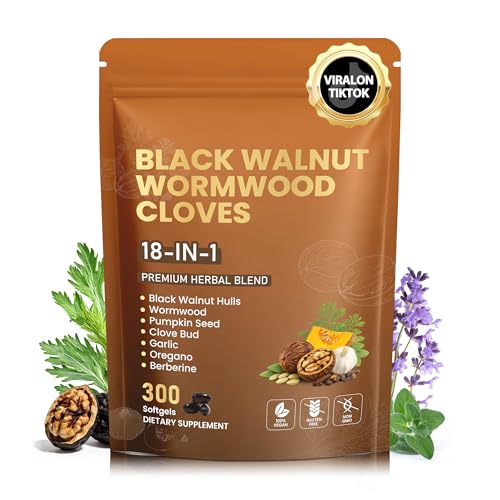
- CleanseParasites Herbal Parasite Cleanse Powder Editor’s Pick
Contains wormwood alongside black walnut hull, cloves, and other traditional parasite-cleanse herbs. - Herb Pharm Intestinal Tract Defense with Wormwood
liquid, 1 fl oz — A Herb Pharm herbal formula containing wormwood extract, not a single-herb wormwood tincture - AlchePharma Organic Wormwood Capsules
capsules, 90 vegan capsules — Single-herb organic Artemisia absinthium, non-GMO and gluten-free - Nature’s Answer Black Walnut and Wormwood Alcohol-Free Extract
liquid, 2 fl oz, 2,000 mg per serving — Alcohol-free dropper extract; a black walnut and wormwood combination, not single-herb wormwood - Frontier Co-op Wormwood Herb, Cut and Sifted
cut and sifted dried herb, 16 oz bulk bag — Bulk dried herb for traditional tea preparation, kosher certified
As an Amazon Associate we earn from qualifying purchases. Quality varies widely — always choose a product with a published third-party test (COA) before buying.
A Note on the Evidence
This article is for informational purposes only and does not constitute medical advice. Wormwood’s anti-parasitic effects in humans are not well-established by clinical trials. Thujone neurotoxicity is a serious concern. Always consult a qualified healthcare provider before using wormwood, especially if you have a medical condition, take medications, are pregnant or breastfeeding, or suspect a parasitic infection.
Frequently Asked Questions
Can I use wormwood if I have a history of seizures?
No. Wormwood contains thujone, a GABA antagonist that lowers the seizure threshold. Individuals with epilepsy or a history of seizures should avoid wormwood entirely due to significant neurotoxicity risk.
Is wormwood safe during pregnancy?
Wormwood is contraindicated in pregnancy. Thujone is neurotoxic and may affect fetal neurodevelopment, and the herb has traditional emmenagogue properties that could threaten pregnancy maintenance.
Does wormwood interact with medications?
Yes. Wormwood may reduce the effectiveness of anticonvulsants, interact with antidepressants, and alter the metabolism of drugs processed by hepatic CYP450 enzymes. Consult a healthcare provider before combining wormwood with any prescription medication.
What is the difference between wormwood and sweet wormwood?
Artemisia absinthium (wormwood) contains thujone and is used as a bitter digestive herb and in absinthe. Artemisia annua (sweet wormwood) contains artemisinin, a validated antimalarial drug. They have different constituent profiles, uses, and safety considerations.
Can wormwood treat a parasitic infection?
Wormwood has traditional use and in-vitro evidence for anti-parasitic activity, but large human randomized controlled trials are lacking. It should not replace medical diagnosis or prescribed antiparasitic treatment for a suspected infection.
How long can wormwood be taken safely?
Due to thujone accumulation and neurotoxicity risk, wormwood extracts should be thujone-controlled and limited to short courses only. Prolonged or high-dose use increases seizure and toxicity risk.
References
- Committee on Herbal Medicinal Products (HMPC). European Union herbal monograph on Artemisia absinthium L., herba. EMA/HMPC/751490/2016 Corr. 1. European Medicines Agency (2020). EMA HMPC monograph
- Hold KM et al. Alpha-thujone (the active component of absinthe): gamma-aminobutyric acid type A receptor modulation and metabolic detoxification. Proc Natl Acad Sci U S A (2000). PMID 10725394
- Abass K et al. Metabolism of alpha-thujone in human hepatic preparations in vitro. Xenobiotica (2011). PMID 21087116
- Pelkonen O et al. Thujone and thujone-containing herbal medicinal and botanical products: toxicological assessment. Regul Toxicol Pharmacol (2013). PMID 23201408
- Kljucevsek T et al. Allergic Potential of Medicinal Plants From the Asteraceae Family. Health Sci Rep (2025). PMID 39995792
These statements have not been evaluated by the Food and Drug Administration. This information is not intended to diagnose, treat, cure, or prevent any disease. Content is for informational purposes only and is not medical advice; consult a qualified healthcare provider before starting any supplement. As an Amazon Associate we earn from qualifying purchases.
