Bitter herbs have a long history of use across traditional medicine systems for stimulating digestion and appetite. Three of the most commonly encountered bitters — wormwood (Artemisia absinthium), gentian (Gentiana lutea), and dandelion (Taraxacum officinale) — share a bitter taste profile but differ considerably in their phytochemistry, traditional indications, and safety considerations.
This article compares these three herbs based on available pharmacological data, traditional use records, and known safety profiles. It is intended for informational purposes only and does not constitute medical advice. Anyone with a suspected parasitic infection, liver condition, or other medical concern should consult a qualified healthcare provider before using herbal preparations.
Key Takeaways
- Wormwood, gentian, and dandelion are all bitter herbs that stimulate digestive reflexes via bitter taste receptors, but they differ in phytochemistry, traditional emphasis, and safety.
- Gentian is the classic pure bitter tonic for appetite and gastric secretion; dandelion adds hepatic and mild diuretic support; wormwood has historical anti-parasitic use but carries neurotoxicity risk from thujone.
- Human clinical evidence for all three as single agents is limited to small or low-quality studies; no large RCTs establish clear superiority for specific indications.
- Wormwood requires thujone-controlled extracts and short-term use only; it is contraindicated in pregnancy, seizure disorders, and with several drug classes.
- Dandelion is generally the safest of the three but can cause allergic reactions in Asteraceae-sensitive individuals and may interact with diuretics or lithium.
Botanical Background and Primary Constituents
Wormwood (Artemisia absinthium) belongs to the Asteraceae family and is known for its sesquiterpene lactones (including absinthin and artabsin), volatile oils, and the monoterpene thujone. Thujone is neurotoxic at high doses and can lower the seizure threshold[1], which limits the duration and dosage of wormwood preparations. Gentian (Gentiana lutea), also in its own family Gentianaceae, owes its intense bitterness primarily to secoiridoid glycosides such as gentiopicroside, amarogentin, and swertiamarin. Dandelion (Taraxacum officinale), another Asteraceae member, contains sesquiterpene lactones (eudesmanolides and germacranolides), phenolic acids, inulin (a prebiotic fructan), and potassium salts. These distinct phytochemical profiles underlie their different traditional applications and physiological effects.
Traditional Uses and Historical Context
Wormwood has been used since antiquity for digestive complaints, intermittent fevers, and as an anthelmintic (anti-parasitic) agent. It gained notoriety as the defining botanical in absinthe and as a flavoring in vermouth. Gentian root has a similarly long record as a pure bitter tonic — used to stimulate appetite, support gastric secretions, and aid recovery from exhaustion or illness. Dandelion root and leaf have been employed across European, Native American, and Traditional Chinese Medicine systems for liver and gallbladder support, as a diuretic, and for mild digestive stimulation. While all three are classified as “bitters,” wormwood’s historical use leans more toward anti-parasitic and antimicrobial applications, gentian toward appetite and digestive secretion stimulation, and dandelion toward hepatic and renal support.

Proposed Mechanisms of Action
The bitter taste itself — detected by T2R receptors on the tongue and throughout the gastrointestinal tract[2] — initiates a cephalic-vagal reflex that can increase salivation, gastric acid secretion, bile flow, and pancreatic enzyme release. This shared mechanism likely accounts for the general digestive benefits attributed to all three herbs. Beyond this common pathway, wormwood’s sesquiterpene lactones and volatile oils have demonstrated in vitro activity against certain parasites and microbes, with proposed mechanisms including membrane disruption and metabolic interference. Gentian’s secoiridoids have been studied for their effects on gastric motility and acid secretion in animal models. Dandelion’s sesquiterpene lactones, phenolic compounds, and high potassium content may contribute to its traditional choleretic (bile-stimulating) and diuretic effects. However, most mechanistic data for all three herbs come from in vitro or animal studies rather than human trials.
Human Evidence and Clinical Data
Clinical evidence for these herbs as single agents is limited. Gentian root is a component of some proprietary herbal combinations (e.g., Iberogast/STW 5) that have been studied in functional dyspepsia and irritable bowel syndrome with some positive findings, though the contribution of gentian alone cannot be isolated. Dandelion has been evaluated in small pilot studies for diuretic effect and liver enzyme modulation, but trials are few, small, and often lack rigorous controls. Wormwood has been investigated in a small number of controlled trials for Crohn’s disease[3][4] and as an adjunct in parasite clearance, but studies are limited in size and methodological quality[5]. No large, high-quality randomized controlled trials establish the superiority of any one of these bitters for a specific clinical indication. Most human evidence remains at the level of traditional use, case series, or small open-label studies.
Safety Profiles and Contraindications
The safety profiles of these three herbs differ significantly. Wormwood contains thujone, which is neurotoxic and can provoke seizures at high doses or with prolonged use; it is contraindicated in pregnancy, breastfeeding, and in individuals with seizure disorders. It may also interact with anticonvulsants, antidepressants, and drugs metabolized by hepatic cytochrome P450 enzymes[1][6]. Gentian is generally well tolerated but may exacerbate gastric hyperacidity or peptic ulcer symptoms due to its strong stimulation of acid secretion; it is also contraindicated in pregnancy. Dandelion is considered safe for most people when used as food or in moderate medicinal amounts, but it can cause allergic reactions in individuals sensitive to Asteraceae plants, may potentiate diuretic or lithium therapy, and should be used cautiously in bile duct obstruction or gallstones. All three herbs should be sourced from reputable suppliers to ensure correct species identification and absence of contaminants.

Practical Considerations for Use
In practice, the choice among these bitters often depends on the specific clinical picture and safety profile. Gentian is frequently selected as a pure bitter tonic for appetite loss and sluggish digestion, typically used at low doses (e.g., 1–2 g dried root or equivalent tincture) before meals. Dandelion root or leaf is chosen when hepatic, biliary, or mild diuretic support is desired, often as a tea or tincture. Wormwood, due to its thujone content and neurotoxicity risk, is generally restricted to short-term use (typically no more than 2–4 weeks) in thujone-controlled preparations and is not a first-line bitter for general digestive support. Combination formulas exist that blend these herbs with others (e.g., angelica, chamomile, caraway), but the evidence for specific combinations over single herbs remains limited. Quality control — including verification of species, marker compounds, and contaminant testing — is essential for all herbal products.
🛒 Where to Buy Wormwood (Artemisia absinthium)
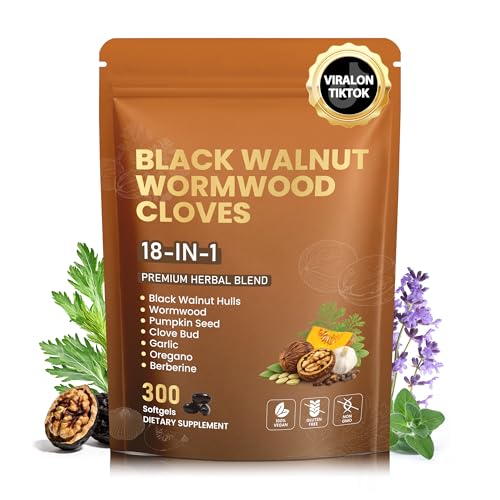
- CleanseParasites Herbal Parasite Cleanse Powder Editor’s Pick
Contains wormwood alongside black walnut hull, cloves, and other traditional parasite-cleanse herbs. - Herb Pharm Intestinal Tract Defense with Wormwood
liquid, 1 fl oz — A Herb Pharm herbal formula containing wormwood extract, not a single-herb wormwood tincture - AlchePharma Organic Wormwood Capsules
capsules, 90 vegan capsules — Single-herb organic Artemisia absinthium, non-GMO and gluten-free - Nature’s Answer Black Walnut and Wormwood Alcohol-Free Extract
liquid, 2 fl oz, 2,000 mg per serving — Alcohol-free dropper extract; a black walnut and wormwood combination, not single-herb wormwood - Frontier Co-op Wormwood Herb, Cut and Sifted
cut and sifted dried herb, 16 oz bulk bag — Bulk dried herb for traditional tea preparation, kosher certified
As an Amazon Associate we earn from qualifying purchases. Quality varies widely — always choose a product with a published third-party test (COA) before buying.
A Note on the Evidence
This article summarizes traditional use and available pharmacological data; it does not constitute medical advice. Human clinical evidence for wormwood, gentian, and dandelion as single agents is limited. Wormwood carries specific neurotoxicity risks and drug interactions. Consult a licensed healthcare provider before using any herbal product, especially if you are pregnant, breastfeeding, have a medical condition, or take prescription medications.
Frequently Asked Questions
Can wormwood be used as a daily digestive bitter like gentian or dandelion?
No. Due to its thujone content and potential neurotoxicity, wormwood is not appropriate for daily or long-term use as a general digestive bitter. It should be limited to short courses in thujone-controlled preparations under professional guidance.
Is there evidence that wormwood treats parasitic infections in humans?
Most evidence for wormwood’s anti-parasitic effects comes from in vitro and animal studies. A few small human trials have been conducted, but they are insufficient to support wormwood as a standalone treatment for parasitic infections. Medical diagnosis and treatment should not be delayed.
Which bitter herb is best for stimulating appetite?
Gentian root is traditionally considered the most reliable pure bitter for stimulating appetite and gastric secretions, and it is commonly used for this purpose at low doses before meals.

Can dandelion replace prescription diuretics?
No. While dandelion leaf has demonstrated mild diuretic activity in small human studies, it is not a substitute for prescribed diuretic therapy. Patients on diuretics should not adjust or discontinue medication without medical supervision.
Are these herbs safe during pregnancy?
Wormwood and gentian are contraindicated in pregnancy. Dandelion as a food is generally considered safe, but medicinal doses should be avoided during pregnancy unless directed by a qualified healthcare provider.
Do these herbs interact with medications?
Yes. Wormwood may interact with anticonvulsants, antidepressants, and hepatically metabolized drugs. Dandelion may potentiate diuretics and lithium. Gentian may worsen acid-related conditions. Always disclose herbal use to your prescribing clinician.
References
- Pelkonen O et al. Thujone and thujone-containing herbal medicinal and botanical products: toxicological assessment. Regulatory toxicology and pharmacology (2013). PMID 23201408
- Sternini C et al. Bitter taste receptors as sensors of gut luminal contents. Nature reviews. Gastroenterology & hepatology (2025). PMID 39468215
- Omer B et al. Steroid-sparing effect of wormwood (Artemisia absinthium) in Crohn’s disease: a double-blind placebo-controlled study. Phytomedicine (2007). PMID 17240130
- Krebs S et al. Wormwood (Artemisia absinthium) suppresses tumour necrosis factor alpha and accelerates healing in patients with Crohn’s disease – A controlled clinical trial. Phytomedicine (2010). PMID 19962291
- Ng SC et al. Systematic review: the efficacy of herbal therapy in inflammatory bowel disease. Alimentary pharmacology & therapeutics (2013). PMID 23981095
- Höld KM et al. Detoxification of alpha- and beta-Thujones (the active ingredients of absinthe): site specificity and species differences in cytochrome P450 oxidation in vitro and in vivo. Chemical research in toxicology (2001). PMID 11368559
These statements have not been evaluated by the Food and Drug Administration. This information is not intended to diagnose, treat, cure, or prevent any disease. Content is for informational purposes only and is not medical advice; consult a qualified healthcare provider before starting any supplement. As an Amazon Associate we earn from qualifying purchases.