Wormwood (Artemisia absinthium) has a long history as a bitter digestive herb and a traditional anti-parasitic remedy, but it is inseparable from one compound: thujone. Thujone is a monoterpene ketone present in the plant’s essential oil, and it is the reason wormwood carries real safety caveats rather than being a simple ‘more is better’ herb.
This article focuses specifically on thujone: what it does in the body, why concentration and duration change the risk profile, and why the historical absinthe scare is more complicated than the popular story suggests. It is not a guide to using wormwood for parasites, and it is not medical advice.
Key Takeaways
- Thujone modulates GABA-A receptors in the brain, and at high enough exposure this can trigger seizures, not just stimulation [1] [2]
- Toxicological assessments describe thujone risk as dose- and duration-dependent, favoring short, controlled courses over ongoing high-dose use [3]
- Thujone exposure can come from several plants at once (wormwood, sage, tansy, thuja), so combining them can stack risk [4]
- The historical ‘absinthism’ epidemic was substantially overstated, alcohol itself was the bigger driver, but a real seizure link to thujone appears in the forensic record [5] [6] [7]
- Pregnancy, breastfeeding, seizure disorders, anticonvulsant or antidepressant use, and liver impairment are reasons for particular caution
What Thujone Actually Does in the Body
Thujone exists as two stereoisomers, alpha- and beta-thujone, both found in wormwood oil in varying ratios depending on plant chemotype and preparation. Alpha-thujone is the isomer most studied for its central nervous system effects, and it acts primarily as a modulator of GABA type A receptors, the brain’s main inhibitory signaling system [1]. By interfering with GABA-A receptor function, thujone reduces the brain’s normal ‘braking’ signal, which is the mechanistic basis for its stimulant, convulsant, and at high doses seizure-inducing effects.
More detailed receptor work has shown that alpha-thujone doesn’t affect all GABA-A-mediated inhibition equally, it differentially inhibits the phasic (fast, synaptic) and tonic (slower, extrasynaptic) forms of GABAergic inhibition [2]. This distinction matters toxicologically because tonic inhibition is especially important for keeping overall brain excitability in check, so disrupting it disproportionately can lower the seizure threshold even at doses that seem modest.

The body does metabolize and clear thujone, and detoxification pathways exist, but they are finite. Studies in mice and isolated cells, not human data, show that alpha-thujone is quickly metabolized but still produces poisoning signs in mice, which is why high exposure remains a concern [1].
Dose, Duration, and Species Differences: What Toxicology Studies Show
Formal toxicological assessments of thujone-containing herbal products conclude that risk is dose-dependent and that regulatory limits exist specifically because thujone’s margin between a traditionally used amount and a neurotoxic amount is not large [3]. This is the core reason short-course, thujone-controlled extracts are recommended over open-ended, high-dose use.
Animal toxicokinetic studies add detail here: research administering alpha-thujone alone versus mixed alpha- and beta-thujone to rats and mice by both intravenous and oral (gavage) routes found that absorption, distribution, and elimination differ by sex, species, and thujone isomer ratio [8]. That variability is one reason it’s difficult to extrapolate a single ‘safe dose’ across humans, and why more conservative dosing and shorter durations are the more defensible default.

Broader reviews of monoterpenes and essential oils rich in these compounds reinforce that toxicity is not unique to thujone in isolation. It sits within a class of plant monoterpenes where concentration, route of exposure, and duration of use are the main variables determining whether an oil behaves as a mild bitter/aromatic or as a neurotoxic agent [9]. Older clinical and experimental toxicology work on essential oils more broadly found similar dose-response patterns, underscoring that ‘natural’ does not equal ‘dose-independent safety’ [10].
Thujone-Containing Plants Aren't Limited to Wormwood
Wormwood is the best-known thujone source, but it is not the only common one. A comparative toxicological review of thujone and thujone-containing essential oils looked specifically at Salvia officinalis (sage), Artemisia absinthium (wormwood), Thuja occidentalis (cedar/arborvitae), and Tanacetum vulgare (tanacetum/tansy), documenting behavior-modulating and toxic properties across all four [4].
The practical takeaway is that thujone exposure can stack across multiple sources. Someone using a wormwood extract alongside sage tea, tansy, or thuja-containing products may be getting a cumulative thujone load higher than any single product’s label suggests, which is another argument for short, defined courses rather than casual, ongoing use of several thujone-containing botanicals at once.
The Absinthe History: What Really Happened, and What Didn't
Wormwood’s modern reputation is tangled up with 19th-century absinthe and the supposed syndrome of ‘absinthism,’ a cluster of symptoms including hallucinations, seizures, and psychiatric decline blamed on the drink. Later forensic and historical analysis found that ‘absinthism’ as originally described functioned largely as a fictitious or overstated syndrome, one shaped more by the moral panic and temperance politics of the era than by pharmacological reality [5].
A dedicated forensic review of the thujone-absinthism question concluded that thujone plays none, or only a minor role, in absinthism, and that the very high thujone concentrations reported in the 19th century could not be confirmed, with alcohol itself as the dominant factor in the drink’s harms [6]. A contemporaneous clinical commentary made the same point plainly: it is alcohol in general, not some unique absinthe-specific toxin, that deserves the greater share of concern [11].
That said, thujone’s neurological signature was not entirely fabricated. Historical case documentation by the 19th-century physician Valentin Magnan linked absinthe use to epileptic-type seizures, and later scholarly review of this work found it holds up as an early, if crude, description of a real thujone-related seizure risk rather than pure myth [7]. Separately, epidemiological-style review work has also examined a possible association between absinthe and suicidality, though this line of evidence is far less mechanistically clear and more historically contested than the seizure data [12].
What This Means for Anyone Considering Wormwood
Put together, the toxicology points to a consistent picture: thujone’s risk is not fixed, it scales with concentration, isomer ratio, duration of use, and individual factors like species-level metabolic differences that likely have human parallels [8] [3]. A short course of a thujone-controlled, standardized extract is a fundamentally different exposure than long-term use of a home-prepared tincture or tea of unknown thujone content.

The GABA-A receptor mechanism [1] [2] also explains why certain people carry extra risk: those with a seizure disorder or on anticonvulsant medication, anyone on other centrally acting drugs like antidepressants, pregnant or breastfeeding people, and anyone with significant liver impairment, since thujone’s clearance depends on hepatic metabolism. None of the cited evidence supports open-ended or high-dose wormwood use as being without neurological risk.
🛒 Where to Buy Wormwood (Artemisia absinthium)
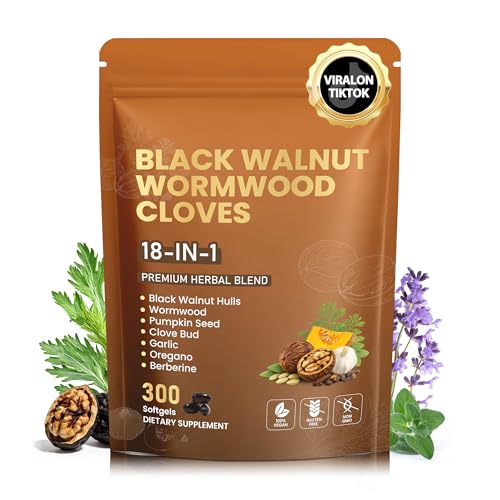
- CleanseParasites Herbal Parasite Cleanse Powder Editor’s Pick
Contains wormwood alongside black walnut hull, cloves, and other traditional parasite-cleanse herbs. - Herb Pharm Intestinal Tract Defense with Wormwood
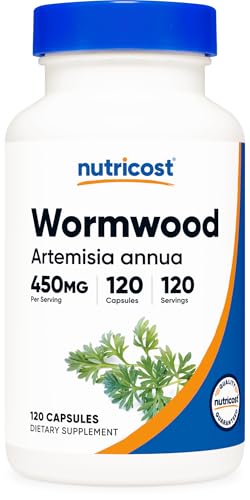
liquid, 1 fl oz — A Herb Pharm herbal formula containing wormwood extract, not a single-herb wormwood tincture - AlchePharma Organic Wormwood Capsules
capsules, 90 vegan capsules — Single-herb organic Artemisia absinthium, non-GMO and gluten-free - Nature’s Answer Black Walnut and Wormwood Alcohol-Free Extract
liquid, 2 fl oz, 2,000 mg per serving — Alcohol-free dropper extract; a black walnut and wormwood combination, not single-herb wormwood - Frontier Co-op Wormwood Herb, Cut and Sifted
cut and sifted dried herb, 16 oz bulk bag — Bulk dried herb for traditional tea preparation, kosher certified
As an Amazon Associate we earn from qualifying purchases. Quality varies widely — always choose a product with a published third-party test (COA) before buying.
A Note on the Evidence
Most human evidence on thujone’s effects comes from historical case reports, forensic analysis, and animal/in-vitro toxicology rather than large controlled human trials, so exact safe-dose thresholds in people are not firmly established. This article is informational only, not medical advice; anyone considering wormwood, especially at higher doses or for extended periods, should consult a physician, particularly if pregnant, breastfeeding, managing a seizure disorder, or taking anticonvulsant, antidepressant, or liver-metabolized medications.

Frequently Asked Questions
What is thujone and why does it matter for wormwood?
Thujone is a monoterpene ketone in wormwood’s essential oil that modulates GABA-A receptors in the brain, the system responsible for inhibitory (calming) signaling [1]. Because of this mechanism, high doses or prolonged use are linked to neurotoxic effects including seizures, which is why thujone content and duration of use are the central safety issues with wormwood.
Is a small amount of thujone dangerous?
Toxicological assessments treat thujone risk as dose-dependent, meaning low, controlled exposures carry a different risk profile than high or prolonged ones [3]. This is why regulated, thujone-controlled extracts used for short periods are viewed differently from unregulated, long-term use of homemade preparations.
Did absinthe really cause a unique syndrome called 'absinthism'?
Historical review suggests ‘absinthism’ as a distinct disease was largely a fictitious or exaggerated construct of its era, with alcohol itself responsible for most of the harms attributed to absinthe [5] [11]. A forensic analysis of absinthes made to historic recipes found low thujone concentrations and concluded that thujone plays none, or only a minor role, in absinthism [6].
Can thujone cause seizures?
Yes, this is one of the better-supported findings. Thujone’s disruption of GABA-A receptor inhibition, particularly tonic inhibition, provides a plausible mechanism for lowering seizure threshold [2], and historical clinical documentation by Valentin Magnan linked absinthe exposure to epileptic-type seizures [7].
Are all thujone-containing herbs the same risk?
No. Thujone content, isomer ratio (alpha vs beta), and total exposure vary by plant and preparation, and a comparative review found meaningful toxicological differences across sage, wormwood, thuja, and tansy [4]. Using more than one thujone-containing herb at once can also increase cumulative exposure beyond what any single product’s dosing implies.
Who should avoid wormwood or thujone-containing products?
Based on the mechanism and toxicology data, caution is warranted for pregnant or breastfeeding individuals, people with seizure disorders or on anticonvulsants, those on antidepressants or other centrally acting medications, and people with liver impairment, since thujone clearance depends on hepatic metabolism [1] [8]. This is general safety information, not a personalized medical recommendation.
References
- Höld KM et al. Alpha-thujone (the active component of absinthe): gamma-aminobutyric acid type A receptor modulation and metabolic detoxification. Proceedings of the National Academy of Sciences of the United States of America (2000). PMID 10725394
- Czyzewska MM et al. Monoterpene α-thujone exerts a differential inhibitory action on GABA(A) receptors implicated in phasic and tonic GABAergic inhibition. European journal of pharmacology (2013). PMID 23376563
- Pelkonen O et al. Thujone and thujone-containing herbal medicinal and botanical products: toxicological assessment. Regulatory toxicology and pharmacology : RTP (2013). PMID 23201408
- Radulović NS et al. Toxic essential oils. Part V: Behaviour modulating and toxic properties of thujones and thujone-containing essential oils of Salvia officinalis L., Artemisia absinthium L., Thuja occidentalis L. and Tanacetum vulgare L. Food and chemical toxicology : an international journal published for the British Industrial Biological Research Association (2017). PMID 28472675
- Padosch SA et al. Absinthism: a fictitious 19th century syndrome with present impact. Substance abuse treatment, prevention, and policy (2006). PMID 16722551
- Lachenmeier DW et al. Thujone–cause of absinthism?. Forensic science international (2006). PMID 15896935
- Eadie MJ et al. Absinthe, epileptic seizures and Valentin Magnan. The journal of the Royal College of Physicians of Edinburgh (2009). PMID 19831287
- Waidyanatha S et al. Toxicokinetics of α-thujone following intravenous and gavage administration of α-thujone or α- and β-thujone mixture in male and female F344/N rats and B6C3F1 mice. Toxicology and applied pharmacology (2013). PMID 23669748
- Wojtunik-Kulesza KA et al. Toxicity of Selected Monoterpenes and Essential Oils Rich in These Compounds. Molecules (Basel, Switzerland) (2022). PMID 35268817
- Millet Y et al. Toxicity of some essential plant oils. Clinical and experimental study. Clinical toxicology (1981). PMID 7333081
- Strang J et al. Absinthe: what's your poison? Though absinthe is intriguing, it is alcohol in general we should worry about. BMJ (Clinical research ed.) (1999). PMID 10600949
- Rizvi N et al. Absinthe and suicidality. Irish journal of psychological medicine (2010). PMID 30282294
These statements have not been evaluated by the Food and Drug Administration. This information is not intended to diagnose, treat, cure, or prevent any disease. Content is for informational purposes only and is not medical advice; consult a qualified healthcare provider before starting any supplement. As an Amazon Associate we earn from qualifying purchases.