SIBO, small intestinal bacterial overgrowth, is one of the most-searched digestive conditions among people who already take bitter herbs like wormwood for gut health, and the two rarely get connected directly. This article covers what SIBO actually is, what human evidence exists for wormwood specifically (not just herbal antimicrobials in general), why a related but different species is the one actually being studied in a clinical trial right now, and what the safety tradeoffs look like if you’re considering a wormwood-based approach instead of, or alongside, standard treatment.
This site earns a commission from qualifying purchases made through Amazon links below, at no extra cost to you. This does not change what we recommend or how we describe the evidence.
Key Takeaways
- There is no published human trial testing wormwood (Artemisia absinthium) by itself against diagnosed SIBO — the strongest related evidence comes from multi-herb antimicrobial formulas, and a separate registered trial studying sweet wormwood (Artemisia annua, a different species) for hydrogen-type SIBO.
- A 2014 retrospective study found herbal antimicrobial therapy produced a similar (not statistically significant) negative breath-test rate as rifaximin, the standard antibiotic — 46% vs. 34% — but the herbal products tested were commercial multi-ingredient blends, not wormwood alone.
- SIBO treatment guidelines from major gastroenterology societies (ACG 2020, AGA 2022) are built around antibiotics like rifaximin and do not endorse herbal antimicrobials as first-line therapy, specifically because of this evidence gap.
- Wormwood’s thujone content is the main safety concern for any extended antimicrobial protocol, since SIBO treatment courses (typically 2-6 weeks) run longer than most short-term wormwood use.
What SIBO Is and Why Bitter Herbs Get Suggested for It
SIBO happens when bacteria that normally live mostly in the colon migrate into, and overgrow within, the small intestine, where bacterial counts are usually much lower. It’s typically diagnosed with a lactulose or glucose breath test that measures hydrogen and methane gas production after a sugar challenge, and it’s associated with bloating, gas, diarrhea or constipation, and nutrient malabsorption in more severe cases. Wormwood gets suggested in natural-health circles for SIBO because of its long history as a digestive bitter and its documented in-vitro antimicrobial activity against several gut bacteria species, the same general antimicrobial reputation that puts wormwood in parasite-cleanse protocols and antifungal discussions elsewhere on this site.
The Herbal-vs-Rifaximin Study, and Why It Doesn’t Prove Wormwood Works
The most-cited comparative study in this space is a 2014 retrospective chart review that offered newly diagnosed SIBO patients a choice between rifaximin (the standard antibiotic) or a commercial herbal antimicrobial regimen, then re-tested with a follow-up breath test. Of the patients who chose herbal therapy, 46% had a negative follow-up test compared to 34% of rifaximin patients, a difference that did not reach statistical significance (P=.24) [1]. Patients who failed rifaximin and then tried herbal therapy as a rescue treatment had a 57% response rate.
The important detail that gets lost when this study is cited as general support for “herbal antimicrobials”: the products tested were named commercial combination formulas (Dysbiocide and FC-Cidal, or Candibactin-AR and Candibactin-BR), not an isolated wormwood extract, and the study didn’t publish which specific botanicals drove the effect. Wormwood-family botanicals may be part of similar commercial blends, but this trial cannot be read as evidence for wormwood specifically, and it was a retrospective, patient-preference study rather than a randomized trial, which limits how much weight the result can carry either way.
The Trial Actually Studying a Wormwood Species for SIBO Is on a Different Plant
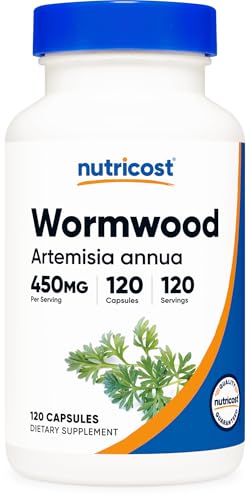
As of this writing, there is a registered phase II trial evaluating dried Artemisia annua leaf, commonly called sweet wormwood, specifically for hydrogen-type SIBO, based on prior lab evidence that it has antimicrobial activity against E. coli and Klebsiella, two bacteria linked to that SIBO subtype. This is a genuinely relevant, targeted study, and it’s worth watching. But Artemisia annua is a different species from Artemisia absinthium, the common wormwood covered throughout this site and the ingredient in most wormwood supplements sold for digestive or antiparasitic use. The two share some phytochemistry but are not interchangeable, and a positive result for Artemisia annua would not automatically extend to Artemisia absinthium products without its own testing.
What This Means If You’re Considering Wormwood for SIBO Symptoms
If you have diagnosed SIBO, rifaximin and other guideline-recommended antibiotic protocols have a larger and more consistent evidence base than any herbal approach, including wormwood, and gastroenterology society guidelines build their recommendations around them for that reason. If you’re specifically drawn to a non-antibiotic route, the honest position is that general herbal antimicrobial blends have some retrospective support roughly comparable to rifaximin in one study, wormwood specifically has not been isolated and tested for this use, and self-treating a suspected but undiagnosed case of SIBO with any bitter herb, wormwood included, means treating symptoms without confirming the underlying cause, which can also be small intestinal fungal overgrowth, motility disorders, or other conditions that a breath test and a clinician visit would distinguish.
Safety Considerations Specific to Extended SIBO-Length Use
SIBO treatment protocols, whether antibiotic or herbal, typically run 2 to 6 weeks, sometimes with a second round if breath testing doesn’t clear. That duration matters for wormwood specifically because of thujone, the volatile compound linked to seizures and neurotoxicity at high or prolonged exposure, which is why U.S.-sold wormwood products are required to be thujone-controlled or thujone-free. If you use a wormwood product as part of a longer gut-health protocol, choose one that discloses its thujone content, stay within the labeled dose rather than extending it to match a multi-week antibiotic-length course on your own judgment, and avoid it entirely if you are pregnant, breastfeeding, have a seizure disorder, or have kidney or liver disease. Anyone with a confirmed or suspected SIBO diagnosis should loop in a physician or gastroenterologist before adding wormwood to, or substituting it for, a prescribed treatment plan.
Frequently Asked Questions
Does wormwood cure SIBO?
There’s no published human trial testing wormwood by itself against diagnosed SIBO, so no, that claim isn’t supported by direct evidence. The closest related data is a study on multi-herb commercial antimicrobial blends and a separate ongoing trial on a different wormwood species (Artemisia annua).
Is Artemisia annua the same as the wormwood in most supplements?
No. Artemisia annua (sweet wormwood) and Artemisia absinthium (common wormwood, the species most supplements use) are related but distinct species with different primary compounds. A finding for one doesn’t automatically apply to the other.
Should I try wormwood instead of rifaximin for SIBO?
Rifaximin has a larger, guideline-backed evidence base for treating diagnosed SIBO. If you want to explore a non-antibiotic route, discuss it with your physician first, since untreated SIBO can lead to nutrient malabsorption over time, and self-selecting an herbal approach means going without the confirmation testing a clinician provides.
How would I know if wormwood is even worth trying for my symptoms?
Get a breath test to confirm SIBO first, since bloating and digestive symptoms have several possible causes. If SIBO is confirmed, discuss both antibiotic and herbal options with a physician or gastroenterologist rather than choosing based on general digestive-bitter traditions alone.


References
- Chedid V, Dhalla S, Clarke JO, Roland BC, Dunbar KB, Koh J, Justino E, Tomakin E, Mullin GE. Herbal therapy is equivalent to rifaximin for the treatment of small intestinal bacterial overgrowth. Global Advances in Health and Medicine (2014).PMID 24891990
These statements have not been evaluated by the Food and Drug Administration. This information is not intended to diagnose, treat, cure, or prevent any disease. Content is for informational purposes only and is not medical advice; consult a qualified healthcare provider before starting any supplement. As an Amazon Associate we earn from qualifying purchases.
