Wormwood, Artemisia absinthium, is the bitter herb behind absinthe and vermouth, and it has a long folk history as a remedy for digestive complaints, fevers, and worms. Its reputation as an anti-parasitic often gets blended with that of its relative Artemisia annua (sweet wormwood), whose compound artemisinin is a genuine frontline antimalarial drug. Common wormwood is a different plant with a different, much less established evidence base.
The research that does exist on wormwood and parasites is real, but it’s not what most people picture when they hear ‘evidence-based.’ It’s laboratory (in vitro) and livestock studies, mostly looking at nematodes and flukes in goats, sheep, cattle, donkeys, and fish, not controlled human trials on intestinal parasites. This article walks through what that research actually measured, what it suggests about mechanism, and where the evidence stops well short of supporting wormwood as a treatment for a suspected parasitic infection in people.
Key Takeaways
- Wormwood’s anti-parasitic evidence is almost entirely in vitro and veterinary (goats, sheep, cattle, donkeys, fish), not human clinical trials.
- The proposed mechanism involves sesquiterpene lactones (absinthin, artabsin) and volatile oils that appear to damage parasite membranes and tissue directly.
- Wormwood is not artemisinin. Its relative Artemisia annua contains the validated antimalarial compound; common wormwood’s evidence is a different, less established body of research.
- Wormwood contains thujone, a neurotoxic compound linked to seizures at high doses or with prolonged use, so any extract should be thujone-controlled and used only short-term.
- This research does not support self-treating a suspected human parasitic infection with wormwood in place of medical diagnosis and treatment.
What the research actually studied
Nearly all of the available evidence on wormwood’s anti-parasitic effects comes from veterinary parasitology, not human medicine. Studies have tested Artemisia absinthium extracts against gastrointestinal nematodes in free-grazing goats [1], strongyles in donkeys [2] and other equids [3], Haemonchus contortus in sheep [4], and related Artemisia species against strongyle-type worms in cattle [5].
Other studies moved into different parasite classes entirely: trematodes (flukes) exposed to crude alcoholic wormwood extracts in vitro [6], Fasciola hepatica (liver fluke) targeted with compounds isolated from wormwood [7], and even a monogenean parasite of goldfish [8]. This is a genuinely broad body of anti-parasitic screening work, but it is almost entirely conducted in livestock, aquaculture, or a test tube, not in humans with intestinal worms.

The proposed mechanism
Wormwood’s anti-parasitic activity is generally attributed to sesquiterpene lactones, including absinthin and artabsin, along with volatile oil compounds. In vitro work suggests these compounds disrupt parasite membranes and interfere with metabolic processes, killing or immobilizing worms directly on contact rather than working through the host’s immune system.
Structural studies back this up at the tissue level. One study used electron microscopy to show that an Artemisia extract caused visible damage to the tegument (outer covering) and internal tissues of Fasciola hepatica adults and their eggs, consistent with a direct membrane-disrupting effect rather than a subtle metabolic one [9]. Newer work has gone further, using in silico modeling alongside in vitro testing to identify specific wormwood compounds, Parishin C and Parishin B, as candidates that may hit multiple targets in the fluke [7]. This kind of multitarget mechanism is plausible pharmacologically, but ‘plausible in a dish’ is a long way from ‘effective in a person.’
Where the polyphenol and extract-type evidence points
Some studies have tried to isolate which chemical fraction of the plant is doing the work. One ethnopharmacology paper tested wormwood alongside other Paraguayan medicinal plants specifically to build a case that polyphenols contribute to anthelmintic activity, using chemical analysis (LC-HRMS) to characterize the extracts alongside the bioassays [10]. Another compared wormwood against thirteen other tropical plant extracts for activity against excysted Fasciola hepatica flukes, situating wormwood’s effect within a much larger screening panel rather than as a standalone finding [11].

Six aqueous plant extracts, including wormwood, were also screened head-to-head against donkey strongyles, a design that lets researchers compare relative potency rather than just confirm ‘yes, some effect exists’ [2]. Across these studies, wormwood generally performs comparably to, not dramatically better than, several other traditional anthelmintic plants, which is useful context: it isn’t presented in the literature as a uniquely powerful anti-parasitic, but as one of many plants with measurable in vitro activity.
A specific case: trichinellosis
One mouse study looked at sweet wormwood (Artemisia annua), a related species, as a potential therapeutic against Trichinella, the parasite responsible for trichinellosis, and reported that the extract reduced adult worm counts in the intestine [12]. This is one of the few papers cited here that explicitly discusses a wormwood relative, sweet wormwood, in a therapeutic-potential frame rather than a pure screening frame, but it’s still early-stage research, not a clinical evaluation in infected patients.
The gap between this evidence and 'wormwood treats human intestinal parasites'
Put together, this evidence base establishes that Artemisia absinthium and related Artemisia species show measurable anthelmintic and trematocidal activity in vitro across a range of parasite species, nematodes, trematodes, and at least one monogenean, while the two live-animal studies of wormwood cited here, in goats and in sheep, found no significant effect on egg counts at the doses tested. The in vitro finding is real and reasonably consistent.
What it does not establish is safety or effectiveness for treating intestinal parasites in humans. None of the cited studies are randomized controlled trials in people. Extrapolating from a goat, a donkey, or a petri dish to a human intestinal infection assumes similar dosing, similar parasite susceptibility, and similar safety margins, and none of those assumptions have been tested in a human trial.
🛒 Where to Buy Wormwood (Artemisia absinthium)
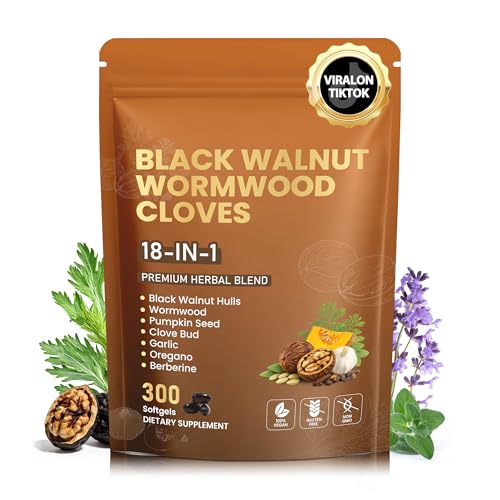
- CleanseParasites Herbal Parasite Cleanse Powder Editor’s Pick
Contains wormwood alongside black walnut hull, cloves, and other traditional parasite-cleanse herbs. - Herb Pharm Intestinal Tract Defense with Wormwood
liquid, 1 fl oz — A Herb Pharm herbal formula containing wormwood extract, not a single-herb wormwood tincture - AlchePharma Organic Wormwood Capsules
capsules, 90 vegan capsules — Single-herb organic Artemisia absinthium, non-GMO and gluten-free - Nature’s Answer Black Walnut and Wormwood Alcohol-Free Extract
liquid, 2 fl oz, 2,000 mg per serving — Alcohol-free dropper extract; a black walnut and wormwood combination, not single-herb wormwood - Frontier Co-op Wormwood Herb, Cut and Sifted
cut and sifted dried herb, 16 oz bulk bag — Bulk dried herb for traditional tea preparation, kosher certified
As an Amazon Associate we earn from qualifying purchases. Quality varies widely — always choose a product with a published third-party test (COA) before buying.
A Note on the Evidence
This evidence is limited to in vitro and animal/veterinary studies; no human randomized controlled trials are included here, and wormwood’s thujone content carries real neurotoxicity and drug-interaction risks. This is informational only, not medical advice, and isn’t a substitute for diagnosing or treating a suspected parasitic infection with a doctor.

Frequently Asked Questions
Does wormwood kill intestinal parasites in humans?
The available evidence shows anthelmintic activity against nematodes and trematodes mainly in vitro, while live goats given the extract showed no significant effect at the dose tested [1], and lambs fed wormwood did not differ in egg counts from untreated lambs [4]; worms taken from cattle were immobilized or killed in laboratory tests of a related species [5], and there are no human clinical trials of wormwood for intestinal parasites. It should not be assumed to work the same way in people.
What's the difference between wormwood and sweet wormwood (Artemisia annua)?
They’re related plants with different chemistry. Sweet wormwood contains artemisinin, a proven antimalarial drug, while common wormwood’s anti-parasitic effects come from sesquiterpene lactones and volatile oils studied mainly in vitro and in livestock, not in validated human antimalarial or antiparasitic trials.
How is wormwood thought to affect parasites?
Researchers attribute the effect to sesquiterpene lactones like absinthin and artabsin, plus volatile oil compounds, that appear to disrupt parasite cell membranes and metabolism. Electron microscopy of Fasciola hepatica exposed to an Artemisia extract showed visible tegument and tissue damage, supporting a direct structural effect [9].
Is wormwood safe to take for parasites?
Wormwood contains thujone, which is neurotoxic and can cause seizures at high doses or with prolonged use. It’s contraindicated in pregnancy and breastfeeding, can interact with anticonvulsants, antidepressants, and liver-metabolized drugs, and any use should be thujone-controlled and short-term under medical guidance.

Has wormwood been tested against a specific parasite like Trichinella?
Only in a related species: one mouse study evaluated sweet wormwood (Artemisia annua) as a potential therapeutic candidate against trichinellosis, framing it as worth further investigation rather than a proven treatment [12]. This remains early-stage research.
Should I use wormwood instead of seeing a doctor for a suspected parasite infection?
No. The evidence for wormwood against parasites comes from lab and animal studies, not human clinical trials, and wormwood carries real safety risks including neurotoxicity. A suspected parasitic infection should be diagnosed and treated by a medical professional.
References
- Flores-Prado V et al. In vitro and in vivo anthelmintic activity of Artemisia absinthium against gastrointestinal nematodes of free-grazing goats from Ayacucho, Peru. Journal of advanced veterinary and animal research (2025). PMID 41328231
- Buza V et al. In vitro anthelmintic activity assessment of six medicinal plant aqueous extracts against donkey strongyles. Journal of helminthology (2020). PMID 32430089
- Peachey LE et al. An evidence-based approach to the evaluation of ethnoveterinary medicines against strongyle nematodes of equids. Veterinary parasitology (2015). PMID 25868847
- Mravčáková D et al. Anthelmintic Activity of Wormwood (Artemisia absinthium L.) and Mallow (Malva sylvestris L.) against Haemonchus contortus in Sheep. Animals : an open access journal from MDPI (2020). PMID 32013192
- Hoshiki A et al. The anthelmintic activity of the white wormwood (Artemisia herba Alba) against Haemonchus contortus in beef cattle. Scientific reports (2025). PMID 39754020
- Ferreira JF et al. In vitro trematocidal effects of crude alcoholic extracts of Artemisia annua, A. absinthium, Asimina triloba, and Fumaria officinalis: trematocidal plant alcoholic extracts. Parasitology research (2011). PMID 21562762
- Zulqarnain M et al. Integrated in vitro and in silico analysis of Artemisia absinthium identifies Parishin C and Parishin B as promising multitarget antifasciolic agents. Fitoterapia (2026). PMID 41407002
- Huang AG et al. Screening of plant extracts for anthelmintic activity against Dactylogyrus intermedius (Monogenea) in goldfish (Carassius auratus). Parasitology research (2013). PMID 24005478
- Ezeta-Miranda A et al. Ultrastructural Changes in the Tegument and Tissues of Fasciola hepatica Adults and Their Eggs Due to the Effect of an Ethyl Acetate Extract of Artemisia ludoviciana Nutt. spp Mexicana. Acta parasitologica (2024). PMID 39453590
- Meza Ocampos G et al. Two in vitro anthelmintic assays of four Paraguayan medicinal plants for proof of concept of the role of polyphenols in their biological activities and LC-HRMS analysis. Journal of ethnopharmacology (2023). PMID 37019160
- Alvarez-Mercado JM et al. In vitro antihelmintic effect of fifteen tropical plant extracts on excysted flukes of Fasciola hepatica. BMC veterinary research (2015). PMID 25890066
- El-Kady AM et al. A potential herbal therapeutic for trichinellosis. Frontiers in veterinary science (2022). PMID 36082215
These statements have not been evaluated by the Food and Drug Administration. This information is not intended to diagnose, treat, cure, or prevent any disease. Content is for informational purposes only and is not medical advice; consult a qualified healthcare provider before starting any supplement. As an Amazon Associate we earn from qualifying purchases.