Wormwood (Artemisia absinthium) is a traditional bitter herb used for digestive support and as the defining flavor in absinthe and vermouth. Its historical applications include addressing intestinal parasites and fevers, with proposed mechanisms involving sesquiterpene lactones and volatile oil compounds that show anti-parasitic activity in laboratory studies.
Despite its long history of use, wormwood contains thujone, a compound that blocks the GABA-A receptor and produces convulsions in animals at sufficient doses [1]. The case for avoiding it in pregnancy and lactation is precautionary rather than measured, and it is worth being precise about that. No published study has quantified how much thujone reaches a human fetus or appears in human breast milk. What does exist is reproductive-toxicity testing recorded in the European Union herbal monograph for this plant, in which a dry ethanolic wormwood extract given orally to pregnant rats reduced implantation sites and the number of pups born [2]. On that basis the monograph does not recommend use during pregnancy or lactation.
Key Takeaways
- Wormwood (Artemisia absinthium) should not be used during pregnancy or lactation: the European herbal monograph does not recommend it, on grounds of thujone neurotoxicity and reproductive toxicity seen in animals.
- No study has measured thujone transfer across the human placenta or into human breast milk; the concern is inferred from its chemistry and from animal data, not demonstrated directly.
- No safe dose or thujone threshold has been established for use in pregnancy or lactation.
- Thujone inhibits CYP2A6 and CYP2B6, the enzymes that clear it, so the plausible direction of an interaction is that a co-administered drug’s levels rise rather than fall.
- Artemisia absinthium (wormwood) is distinct from Artemisia annua (sweet wormwood), the source of artemisinin antimalarials.
Why Wormwood Is Contraindicated in Pregnancy
The primary safety concern with wormwood during pregnancy is its thujone content. Thujone is a monoterpene ketone that acts as a GABA-A receptor antagonist, producing excitation and convulsions in a dose-dependent way in animal studies [1]. Whether it crosses the human placenta has not been measured, and it is more useful to say so than to assert it. The concern rests on two indirect lines of evidence. First, laboratory work on human placenta-derived cells found that alpha,beta-thujone caused mitochondrial depolarisation, calcium overload and apoptosis in them, although that study used choriocarcinoma cell lines and set out to explore thujone as a possible cancer treatment rather than to model a normal pregnancy [3]. Second, the European Union herbal monograph records reproductive-toxicity testing in pregnant rats showing reduced implantation sites and fewer pups born, and states that thujone is known for uterus-stimulating activity [2]. Wormwood’s traditional reputation as an emmenagogue and abortifacient is consistent with that, but a tradition is not a controlled finding.
Traditional herbal medicine texts consistently list wormwood as an herb to avoid during pregnancy. The regulatory position is more specific than that, and it is often quoted wrongly. The European Union herbal monograph for Artemisia absinthium herb reserves the word contraindication for hypersensitivity to the Asteraceae family and for obstruction of the bile duct, cholangitis or liver disease; pregnancy and lactation sit in a separate section, where the monograph records that there are no or limited data from such use and states that use is not recommended [2]. The practical advice is the same, but the reason is absence of evidence rather than proof of harm, and that distinction is worth keeping straight. No threshold for safe thujone exposure in pregnancy has been set at all; the best available estimate of a tolerable daily intake from herbal preparations and the diet generally is in the region of 3 to 7 mg per day, and it was not derived with pregnancy in mind [4].
Risks During Breastfeeding
Thujone is lipophilic, which is the usual basis for expecting a compound to appear in breast milk, but nobody has measured it there, so the risk to a nursing infant is projected rather than observed. The reason that projection is taken seriously is that a nursing infant’s blood-brain barrier and metabolic detoxification pathways are still immature. One idea often repeated about wormwood should be set aside here, because it is not what the pharmacology shows: thujone does not stockpile in the body between doses. It is metabolised quickly, with hydroxylation accounting for more than 90 percent of its primary metabolism in human liver preparations and a single enzyme, CYP2A6, responsible for roughly 70 to 80 percent of the clearance [5], and the primary pharmacology literature describes it as rapid-acting and readily detoxified [1]. What toxicokinetic work in rats and mice did find is that peak concentration and total exposure rose faster than the dose, which points to elimination becoming saturated as intake goes up rather than to a compound building up between doses [6]. That is still a reason to keep any exposure low, but it is a different mechanism, and the difference matters if you are trying to reason about a repeated maternal dose.

Because wormwood extracts vary widely in thujone content depending on the plant chemotype, growing conditions, and extraction method, it is not possible to guarantee a thujone-free or low-thujone product without rigorous batch testing. Even thujone-controlled extracts carry theoretical risk during lactation, and the precautionary principle applies.
Thujone Toxicity and Neurotoxicity Mechanism
Thujone exerts its neurotoxic effects primarily through antagonism of the GABA-A receptor, reducing inhibitory neurotransmission in the central nervous system. This can lower the seizure threshold and, at high doses, precipitate tonic-clonic convulsions. Animal studies demonstrate dose-dependent neurotoxicity, with the convulsant effect being the most sensitive endpoint.
The clearest human evidence of harm comes from concentrated wormwood oil rather than from ordinary preparations: a case published in the New England Journal of Medicine reported acute renal failure caused by oil of wormwood bought over the internet [7]. The older picture of absinthe causing hallucinations and lasting mental derangement is on much weaker ground, and this article will not repeat it. When historic recipes were reconstructed and a vintage pre-ban bottle was analysed by GC-MS, thujone concentrations came out low, inside modern limits, and nothing like the figures quoted in the nineteenth century; the authors concluded that thujone plays no more than a minor role in what was called absinthism, which was more plausibly chronic alcohol intoxication [8]. The honest summary is that the well-supported hazards are seizure risk and acute toxicity from concentrated preparations, and that is reason enough to leave the herb alone while fetal neurodevelopment is ongoing.
Drug Interactions Relevant to Perinatal Health
Wormwood may interact with medications commonly used during pregnancy and postpartum, and the enzymes involved have been identified rather than guessed at. In human liver preparations alpha-thujone is metabolised principally by CYP2A6, with CYP3A4 and CYP2B6 contributing less [5], and a regulatory toxicological assessment reached the same ordering [4]. The likely direction is worth stating plainly, because it runs opposite to the vague idea of drugs competing for metabolism: thujone inhibits CYP2A6 and CYP2B6, with half-maximal inhibitory concentrations of 15.4 and 17.5 micromolar [5]. Inhibiting an enzyme that clears another drug tends to raise that drug’s levels rather than lower them. For someone on anticonvulsant therapy there is a second and separate problem: wormwood’s GABA-antagonist effect works against seizure control regardless of any metabolic interaction.
The herb’s bitter principles stimulate digestive secretions and motility, which could theoretically affect absorption of concurrently administered medications. Given the narrow therapeutic index of many perinatal medications, these interaction potentials warrant avoidance rather than monitored co-administration.

Distinction from Artemisia annua (Sweet Wormwood)
It is important to distinguish Artemisia absinthium (common wormwood) from Artemisia annua (sweet wormwood). The latter is the source of artemisinin, the basis of the most effective antimalarials available. Its use in pregnancy was for years held back to the second and third trimesters, but that caution has been revisited: a prospective study on the Thai-Myanmar border that analysed 25,485 pregnancies found no increase in miscarriage or in major congenital malformation with first-trimester artemisinin treatment compared with quinine, while first-trimester falciparum malaria itself raised the hazard of miscarriage 1.61-fold [9]. Artemisinin derivatives do not contain significant thujone and act through a different mechanism (endoperoxide bridge activation by heme iron).
Confusion between these two Artemisia species could lead to inappropriate avoidance of artemisinin-based combination therapies (ACTs) for malaria in pregnancy, or conversely, inappropriate use of wormwood based on artemisinin’s safety data. They are distinct botanicals with different constituent profiles and safety considerations.
Regulatory Status and Professional Guidance
The regulatory picture is often summarised inaccurately, so it is worth setting out. In the United States wormwood is not banned as an unsafe herb: Artemisia species appear in the FDA’s list of natural flavouring substances that may be used in food, subject to the condition that the finished food be thujone free [10]. That is a restriction on thujone in the finished product, not a prohibition on the plant. In the European Union the herbal monograph for wormwood herb sets its formal contraindications as hypersensitivity to the Asteraceae, obstruction of the bile duct, cholangitis and liver disease, and separately states that use is not recommended during pregnancy and lactation because the data are absent or limited [2]. Neither authority has concluded that wormwood is safe in pregnancy. The point is that the reason to avoid it is missing evidence plus a plausible reproductive signal in animals, and overstating the regulatory language does not make the advice any sounder.
Practitioners trained in botanical safety treat wormwood as a herb to withhold during pregnancy and breastfeeding, which is also the position the European monograph takes [2]. Alternative bitter herbs with a longer record of use in pregnancy, such as gentian root in moderate doses, are generally preferred for digestive support when needed, though a longer record of use is not the same thing as an established safety profile and none of these should be started without asking your prenatal care provider.
🛒 Where to Buy Wormwood (Artemisia absinthium)
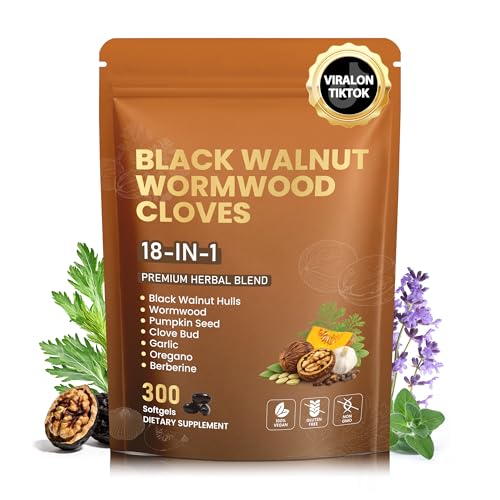
- CleanseParasites Herbal Parasite Cleanse Powder Editor’s Pick
Contains wormwood alongside black walnut hull, cloves, and other traditional parasite-cleanse herbs. - Herb Pharm Intestinal Tract Defense with Wormwood
liquid, 1 fl oz — A Herb Pharm herbal formula containing wormwood extract, not a single-herb wormwood tincture - AlchePharma Organic Wormwood Capsules
capsules, 90 vegan capsules — Single-herb organic Artemisia absinthium, non-GMO and gluten-free - Nature’s Answer Black Walnut and Wormwood Alcohol-Free Extract
liquid, 2 fl oz, 2,000 mg per serving — Alcohol-free dropper extract; a black walnut and wormwood combination, not single-herb wormwood - Frontier Co-op Wormwood Herb, Cut and Sifted
cut and sifted dried herb, 16 oz bulk bag — Bulk dried herb for traditional tea preparation, kosher certified
As an Amazon Associate we earn from qualifying purchases. Quality varies widely — always choose a product with a published third-party test (COA) before buying.
A Note on the Evidence
This article is informational and not medical advice. There is no body of human pregnancy research on wormwood to draw on: the European monograph itself records that data from use in pregnancy and lactation are absent or limited [2]. Everything above is mechanistic work, animal data, or regulatory judgement made in the absence of evidence, and it is presented that way on purpose. Individuals with seizure disorders, on anticonvulsants or psychiatric medications, or with liver or bile duct conditions should be especially careful. Always consult a qualified healthcare provider before using any botanical product during pregnancy or lactation.
Frequently Asked Questions
Can I use wormwood tea during pregnancy if I steep it for a shorter time?
No. Thujone is volatile and water-soluble; even brief infusions extract thujone. Shorter steeping does not eliminate the risk, and no safe preparation method has been established for pregnancy.
Is thujone-free wormwood extract safe during pregnancy?
Products labeled thujone-free or thujone-controlled may still contain trace amounts, and the herb’s other constituents (including uterine-stimulating compounds) remain a concern. The regulatory caution applies to the whole herb, not only to its thujone content.

What if I took wormwood before I knew I was pregnant?
Single or short-term exposures before pregnancy recognition are unlikely to cause harm, but you should inform your healthcare provider. They can evaluate timing, dose, and any needed follow-up based on your specific situation.
Can I resume wormwood immediately after giving birth if I'm not breastfeeding?
If you are not breastfeeding, wormwood may be used with appropriate precautions (thujone-controlled extract, short course, no seizure history, no interacting medications). Consult a qualified practitioner for individualized guidance.
Are there safe alternatives to wormwood for digestive bitters during pregnancy?
Gentian root (Gentiana lutea) in moderate culinary or therapeutic doses has a longer safety record in pregnancy. Chamomile and lemon balm are also generally considered safe. Always discuss herbal use with your prenatal care provider.
Does wormwood essential oil pose greater risk than the whole herb?
Yes. Essential oils concentrate thujone and other volatile compounds to much higher levels than aqueous or hydroalcoholic extracts. Wormwood essential oil is considered highly toxic and should never be used during pregnancy or breastfeeding.
References
- Höld KM et al. Alpha-thujone (the active component of absinthe): gamma-aminobutyric acid type A receptor modulation and metabolic detoxification. Proc Natl Acad Sci U S A (2000). PMID 10725394
- Committee on Herbal Medicinal Products (HMPC). European Union herbal monograph on Artemisia absinthium L., herba. European Medicines Agency, EMA/HMPC/751490/2016 Corr. 1. ema.europa.eu
- Lee JY et al. Alpha,beta-thujone suppresses human placental choriocarcinoma cells via metabolic disruption. Reproduction (2020). PMID 32240978
- Pelkonen O et al. Thujone and thujone-containing herbal medicinal and botanical products: toxicological assessment. Regul Toxicol Pharmacol (2013). PMID 23201408
- Abass K et al. Metabolism of alpha-thujone in human hepatic preparations in vitro. Xenobiotica (2011). PMID 21087116
- Waidyanatha S et al. Toxicokinetics of alpha-thujone following intravenous and gavage administration of alpha-thujone or alpha- and beta-thujone mixture in male and female F344/N rats and B6C3F1 mice. Toxicol Appl Pharmacol (2013). PMID 23669748
- Weisbord SD et al. Poison on line – acute renal failure caused by oil of wormwood purchased through the Internet. N Engl J Med (1997). PMID 9297113
- Lachenmeier DW et al. Thujone – cause of absinthism? Forensic Sci Int (2006). PMID 15896935
- Moore KA et al. Safety of artemisinins in first trimester of prospectively followed pregnancies: an observational study. Lancet Infect Dis (2016). PMID 26869377
- U.S. Food and Drug Administration. Natural flavoring substances and natural substances used in conjunction with flavors. 21 CFR 172.510 (“Artemisia (wormwood), Artemisia spp. — Finished food thujone free”). ecfr.gov
These statements have not been evaluated by the Food and Drug Administration. This information is not intended to diagnose, treat, cure, or prevent any disease. Content is for informational purposes only and is not medical advice; consult a qualified healthcare provider before starting any supplement. As an Amazon Associate we earn from qualifying purchases.